
The National Automobile Museum in Reno, Nevada, takes fourth place for giving a broad vehicle collection a setting that visitors can read as social history. Its official visitor information describes galleries, historical street scenes and theatre presentations. Those elements offer a route into motoring for people who care more about everyday life than engine codes. Cars appear in relation to the places and activities around them, which encourages questions about how transport changed routines. The museum's name should not be taken as a claim that every important vehicle or every national experience can fit into a single collection.
Begin with one street scene and examine how the surrounding facades affect your interpretation of a car. A vehicle outside a suggested shop or theatre can evoke a journey, a purchase or a leisure activity. That setting is interpretation, rather than proof that the specific car once stood on that exact street. Read the labels to distinguish original objects from reconstructed context. The distinction does not weaken the display; it helps explain what a museum is doing when it uses space to communicate history. You can enjoy an evocative scene while still asking what evidence supports the story it tells.
What to look for and plan
The collection's range makes it useful to follow a change across several objects. Try comparing access to the passenger compartment, visibility or how the body separates people from the mechanical parts. Those are features that can be examined without needing to memorize a specification table. The museum's text can then connect the observations to the particular vehicles. Do not infer that a luxurious car was typical of its period or that a striking experiment reshaped the whole industry. A collection necessarily selects. Part of a thoughtful visit is noticing which stories the selection makes easy to see and which remain beyond its scope.
The museum presents the visit as self-guided and asks visitors to confirm docent availability when a guided experience is important. That practical distinction matters. A visitor who expects continuous personal explanation may need to plan differently from someone happy to use written interpretation and presentations. Likewise, designated interactive or photo opportunities do not create permission to touch all the vehicles. Check the current visitor page for the activities that are offered and follow the local instructions. If your group needs a particular route, seating arrangement or form of assistance, seek specific information before travelling rather than treating a broad accessibility label as a complete answer.
The ranking and alternatives
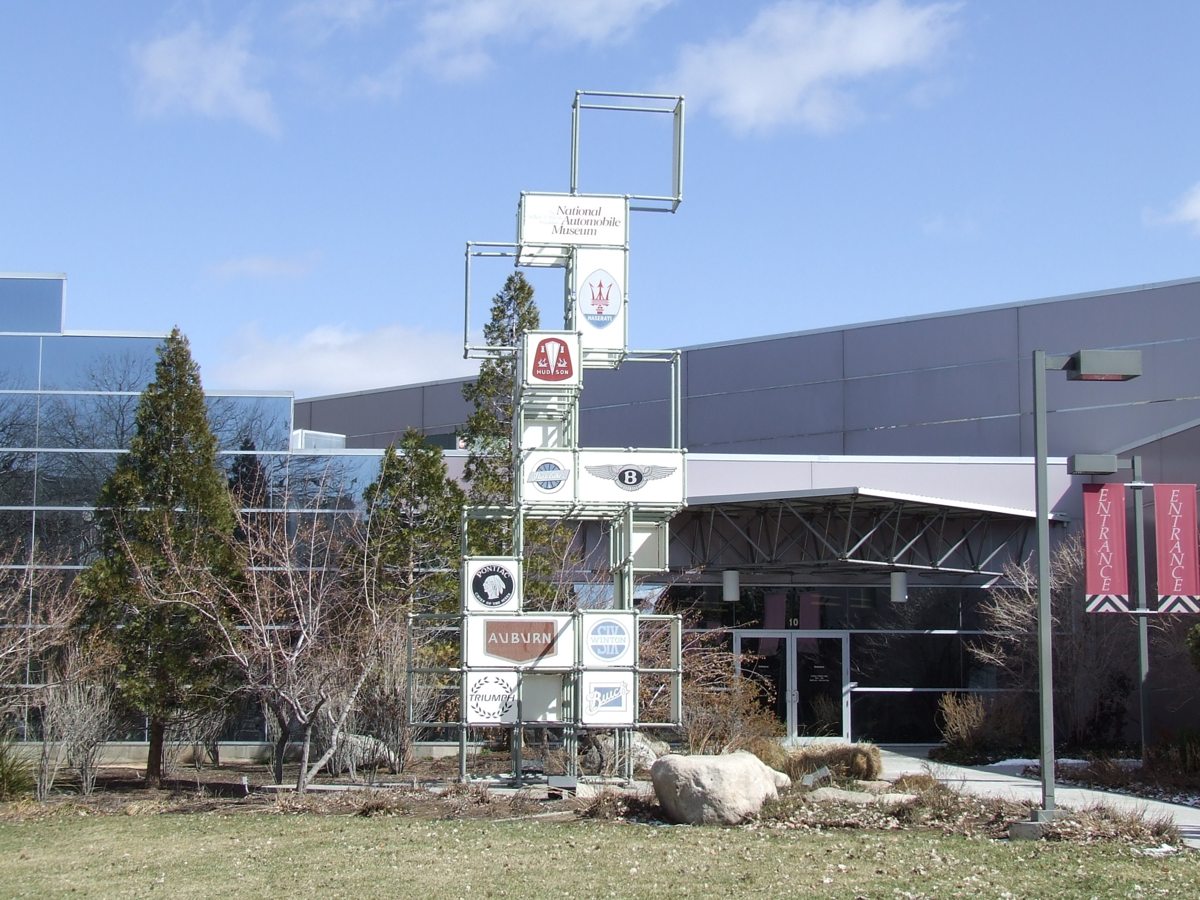
Reno's photography rules deserve special attention. At the research date, its official page allowed personal handheld photography but required permission for reproduction or sale of photographs. That is why this article uses a licensed exterior photograph rather than assuming that an interior image on a sharing site would be suitable for commercial publication. Visitors taking family snapshots and publishers preparing an illustrated article face different questions. The dated exterior image also cannot establish which cars are currently on display. Clear image context protects the distinction between a useful illustration and a claim about what a ticket will provide on a particular day.
We place Reno ahead of Lane for a mixed first visit because its historical setting supplies a broad starting point, while Lane has the stronger appeal for unconventional engineering. Petersen and Dearborn rank higher for the breadth and clarity of their competing educational propositions. Reno remains a particularly good choice when you want to connect objects with imagined everyday situations and then check those impressions against labels. Before leaving, explain one car without mentioning its price, rarity or top speed. If you can describe the human activity it helped organize, the museum has given you something more lasting than recognition of a famous model.
Source: Official museum research and visitor information 1.
Photo: Jaydec at English Wikipedia · CC BY-SA 3.0. National Automobile Museum exterior in Reno, 10 March 2010. Resized/recompressed with orientation corrected; framing retained, no AI or added color treatment. Image remains under the linked original license; no endorsement.
