
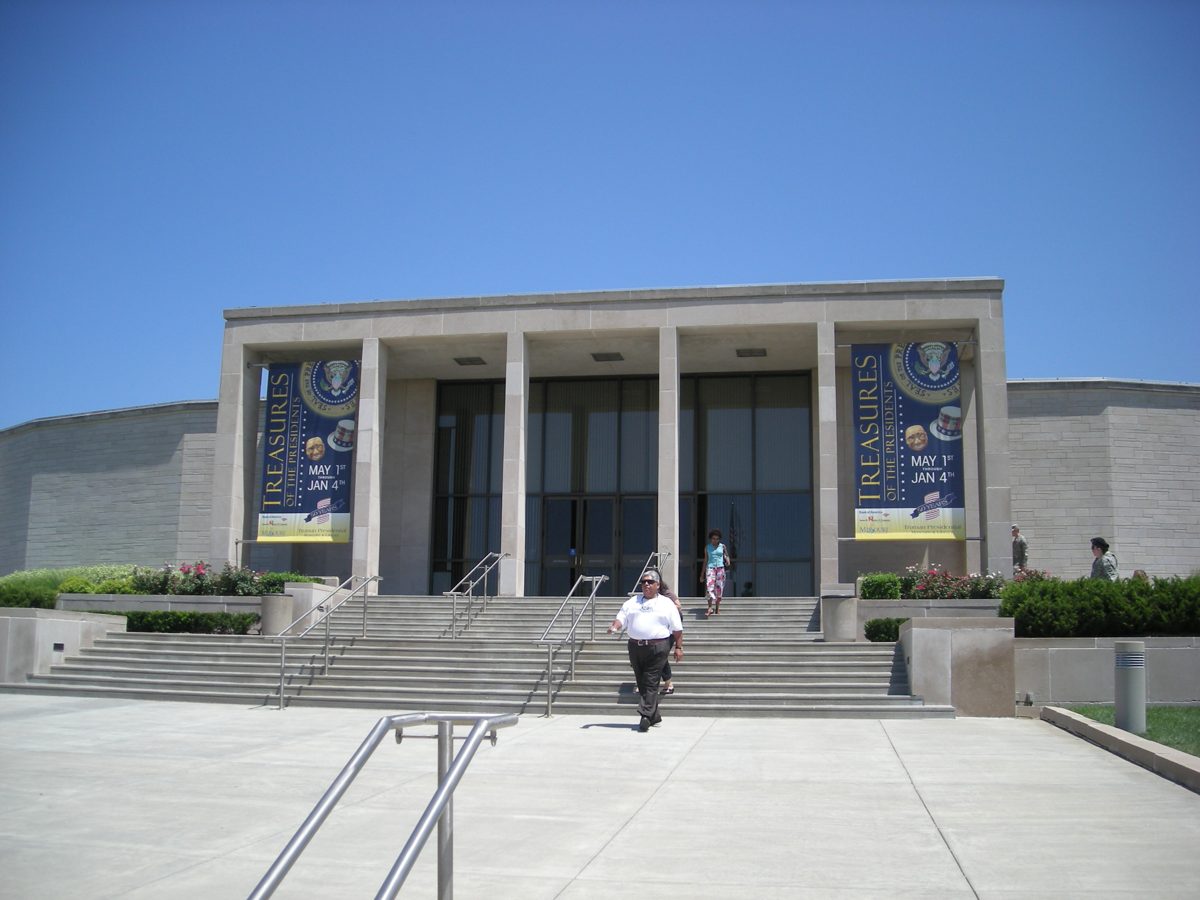
The Harry S. Truman Presidential Library and Museum in Independence, Missouri, ranks fourth for a route that connects an individual biography with the responsibilities of office. Its permanent presentation, An Ordinary Man, His Extraordinary Journey, is organized through sections including the first months in office, the postwar world and the branches of government. Those headings offer a useful way to choose a theme before arriving. Rather than trying to absorb every event associated with a president, you can investigate how a museum explains the relationship between a person entering office, the circumstances already in motion and the institutions through which decisions must be made.
The first-months theme is especially productive. A new president does not enter an empty world in which every problem waits to be introduced in a convenient sequence. Look at how the exhibition establishes the situation inherited, the information available and the people involved. A timeline can make a series of decisions appear neat, so pause to distinguish the chronology created for visitors from the uncertainty faced by historical participants. This is a question about how to read the display, not a claim that every decision can be justified by its circumstances. Context helps you understand a choice while leaving room to evaluate its consequences and alternatives.
Choose a historical question
The museum's three-branches section gives another route into presidential history beyond personality. A visitor can ask which actions belong to the executive and where other institutions enter the story. You do not need a legal background to notice whether the narrative includes lawmakers, courts, advisers or the public. A useful exercise is to select one displayed decision and identify the additional people or institutions needed to explain it. That approach can turn a museum named for one president into a more substantial encounter with government. It also guards against the misleading idea that a single person performs all of the work represented by an administration's historical record.
The current program provides a dated 2026 addition. America 250: The Story of US is listed from 20 April through 30 December 2026, placing the visit within a longer account of national history. Treat it as a temporary layer alongside the permanent presentation. Comparing those two scales can be illuminating: what changes when a single presidency is placed within a timeline extending far beyond it? A special exhibition may supply a wider frame without replacing the need to examine specific sources carefully. Choose enough material to make that comparison meaningful instead of attempting to turn a first visit into a complete survey of American history.
Plan around current access
The official museum information also states that the courtyard is temporarily closed during exterior landscaping work. Plan the galleries as the central visit and check the current notice if the courtyard or gravesites are important to your trip. The archive exterior photograph is not a guarantee of an open outdoor route. Museum hours, tours and research services should be checked through their own current information. For a group, agree on one question to discuss afterward, such as how the exhibition explains a transition into office. That gives each person a reason to observe, without making previous knowledge of every major event a condition of participation.
Fourth place rewards the combination of biography, institutional questions and a clear route through a demanding period. It can be the strongest option for a visitor interested in the transition from wartime to postwar responsibilities or in the way a museum connects citizenship with an individual life. The title of an exhibition is an invitation to inquiry, not a conclusion you must adopt. Leave with one source and a description of what it establishes. A well-defined question about a decision, a branch of government or a changing public role will carry more value into later reading than a general impression that you have now seen the entire story of a presidency.
Source: Harry Truman · Harry Truman.
Photo: Michael Barera · CC BY-SA 4.0. Archive photograph; current exhibitions and access may differ. Resized and recompressed without cropping; source image license retained.
