
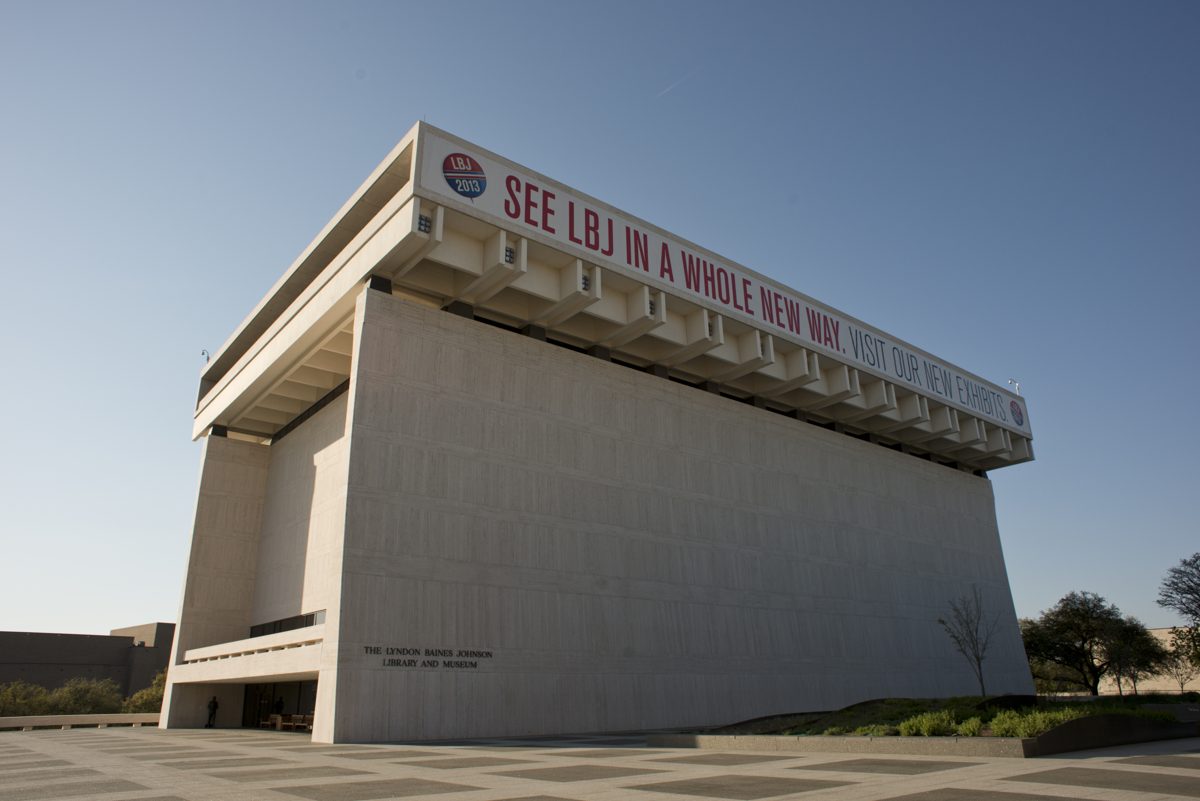
The Lyndon Baines Johnson Presidential Library and Museum in Austin ranks third for making the work of government a particularly compelling subject for a museum visit. The official exhibition program includes the Great Hall, a First Lady's Gallery and Lady Bird Johnson's office, alongside other permanent and changing presentations. Those settings offer different ways to consider a presidential institution: its records, its public narrative and the work of people beyond the president alone. Begin with that variety rather than assuming the visit should be a sequence of the most famous speeches. A library museum can make the organization and presentation of historical evidence part of what you notice.
The Great Hall offers a useful starting question about scale. A presidential story rests on more material than can fit into a single exhibition route. Think about what happens when a museum asks visitors to become aware of records as a collection rather than only displaying a few selected pages. Which questions can a gallery introduce, and which might lead a researcher further into the archive? You do not need to plan a scholarly appointment to appreciate the distinction. It helps you recognize that an engaging museum narrative is a path through a larger body of evidence, with choices about what to show and how to connect it.
Choose a historical question
Lady Bird Johnson's office and the First Lady's Gallery provide another perspective. A museum named for a president can still help visitors examine the work and public presence of other people. When looking at a workspace, ask what activities its arrangement makes imaginable and what would require additional records to explain. Avoid treating a room as direct access to private thoughts. Its value is more concrete: it can show how an institution presents a role, a working environment and a relationship to public life. For companions with different interests, this offers an alternative route into the same historical period without requiring everybody to follow an identical theme.
The current America250 program adds a clearly dated reason to inspect the listings. The American Experiment: Pursuing Our Promise is scheduled from 30 May 2026 through 10 January 2027 and draws on a partnership involving the National Archives and the Briscoe Center for American History. That provides a wider frame alongside the permanent presidential story. Use the actual exhibition page to decide how it fits your visit. A temporary program can connect an administration with a longer national conversation, but its closing date matters. It should not be described as a feature guaranteed to remain whenever a future reader reaches Austin.
Plan around current access
Arrival planning deserves attention on this university campus. The visitor page warns that University of Texas home football games bring heavy traffic near the library and can complicate rideshare drop-offs. Check the current road information and schedule for your chosen day rather than assuming an ordinary arrival pattern. Research appointments, public events and museum admission are also distinct activities. If you are visiting with a group, choose one manageable comparison, perhaps the presentation of records and the interpretation of a working room. Leaving space to discuss that comparison can make the visit more useful than trying to complete every item in a busy program.
Third place reflects the strength of these institutional and personal routes into political history. Johnson can be the best choice for a reader who wants to think about the machinery surrounding presidential decisions, while Kennedy and Roosevelt offer the broader combinations we favor for a general first visit. The ordering does not settle an argument about an administration's policies. Choose the museum for the questions it helps you examine. A valuable outcome is a clearer sense that public government involves documents, offices, colleagues and audiences as well as a leading figure, and that understanding those relationships gives a presidential biography much more historical depth.
Source: Lyndon Baines Johnson · Lyndon Baines Johnson.
Photo: Lauren Gerson / LBJ Library · Public domain. Archive photograph; current exhibitions and access may differ. Resized and recompressed without cropping; source image license retained.

