
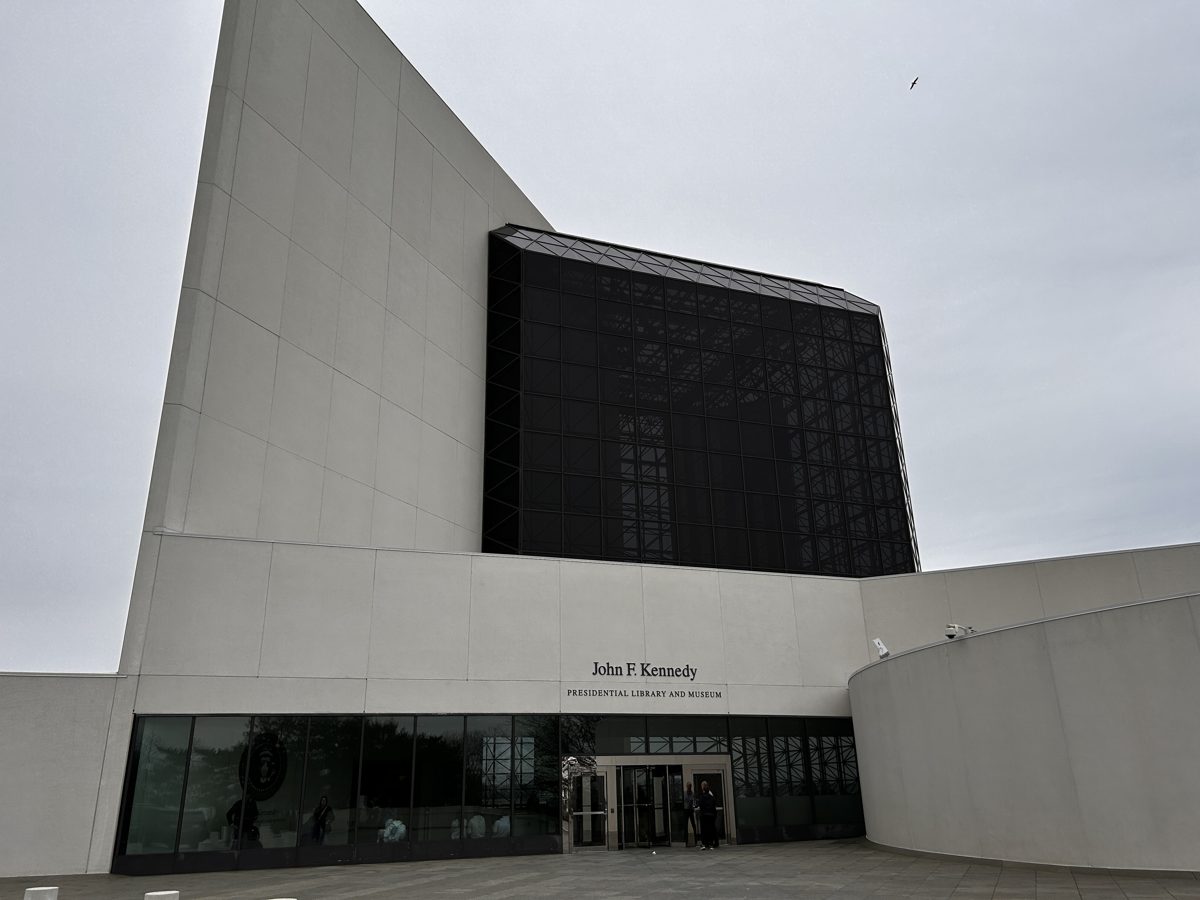
The John F. Kennedy Presidential Library and Museum at Columbia Point in Boston ranks second for connecting political communication with a clear first-visit route. Its permanent-exhibit listings include the 1960 election, the inauguration, presidential encounters with the press, the Peace Corps and the United States space program. That range gives a visitor several connected questions rather than a single object to recognize. How is a public message created? How does an incoming administration present its goals? What happens when a proposal becomes a program that other people help carry out? These are productive questions even for someone arriving with little prior knowledge of the period.
The election material is a useful beginning. A campaign item speaks to a particular audience and tries to create an impression within a competitive setting. Look at the relationship between an image, a short phrase and the person addressed. You do not need to decide whether a slogan was the decisive reason for an election outcome. A more defensible observation concerns how it presents a choice to a voter. Comparing that material with the inauguration then creates a second question: how does communication change once the candidate speaks from the position of an incoming president? The change of role can become visible in the sources themselves.
Choose a historical question
The press presentation offers another route into the same theme. A prepared statement and an exchange with journalists are different forms of public communication. Notice how a museum presents questions, answers and the setting in which they were heard. An excerpt can be vivid while still leaving context to investigate. Ask what information the visitor receives about the occasion and what might need further reading. This approach lets you enjoy the immediacy of a recorded voice without treating every short clip as a complete account. The interesting subject is the relationship between the office, the media and an audience encountering the exchange.
The Peace Corps and space-program exhibits broaden the visit from message to initiative. They can prompt questions about how a presidential goal becomes work performed by many people and institutions. Choose one example and look for the steps between an announced ambition and its implementation. The museum's permanent listings establish the themes, but they should not be used to promise a particular historic artifact that an old travel article once described. Collections and displays change. A visit built around a question can remain rewarding even when the object that first attracted your attention in an archive photograph is not part of the current route.
Plan around current access
Use the current trip-planning information for Columbia Point, including arrival and any specific access needs. A museum visit differs from a research appointment, and a special exhibition or program may add its own arrangements. The archive exterior image introduces the Boston site; it does not document today's gallery contents. For families, consider asking each person to choose one example of communication and one example of work that followed a public proposal. Comparing the choices afterward creates a shared discussion without requiring agreement on a political conclusion or turning the visit into a test of which companion knows the most historical names and dates.
Second place rewards the coherence of those linked questions, with Roosevelt taking first for the wider combination of period, setting and explicit examination of contested issues. Kennedy could be the best choice for a reader interested in elections, media and the public language of leadership. The museum rank is not a ranking of presidents' overall merit. Choose it to examine how words and images connect with institutions and actions. A useful takeaway is one precise observation about a change in role or audience, supported by a source you can identify and revisit. That observation can make later encounters with both historical and present-day political communication more attentive.
Source: John F. Kennedy · John F. Kennedy.
Photo: Scott Edmunds · CC BY 2.0. Archive photograph; current exhibitions and access may differ. Resized and recompressed without cropping; source image license retained.
