
The Franklin D. Roosevelt Presidential Library and Museum in Hyde Park, New York, takes first place for combining a broad historical journey with explicit opportunities to examine difficult questions. Its permanent exhibitions connect the Depression, the New Deal and World War II with Franklin and Eleanor Roosevelt's relationship to the public. The setting and the range of interpretive approaches give it the strongest general first-visit case in this selection. The reason is not that a museum can settle every argument about the era. It is that visitors are offered several ways to connect an object, a voice or a document with a larger historical problem.
The museum's Confront the Issues presentations are particularly important to that choice. The institution describes documents, photographs and historians' perspectives assembled around contested subjects. Approach one as a small research exercise. Identify the question being asked, the source that most affects your initial view and the additional perspective you would want to examine. This gives disagreement a concrete form. Instead of arriving with a complete judgment and searching only for confirmation, you can ask how the evidence supports, complicates or changes an interpretation. A useful museum experience can preserve uncertainty while making the reasons for it clearer and more specific.
Choose a historical question
The Fireside Chat environments supply another way to connect leadership with reception. The museum describes radio listening settings followed by readings of letters representing different public opinions. That combination makes the audience part of the historical experience. A speech is one source; a response to it is another. Listen for the relationship between the message a leader sends and the different ways people understand it. You do not need to infer that the selected letters measure national opinion. Their value is to show that receiving a public message involves interpretation, experience and judgment, which can vary even when the words being heard are the same.
The current special exhibition gives the visit an additional 2026 context. Declaring the Revolution: America's Printed Path to Independence is scheduled from 26 June through 6 December 2026. Its subject creates a useful comparison between the political work of print and the later communication environments explored elsewhere in the museum. Treat the exhibition as a dated addition, not part of the permanent promise to future visitors. A reader interested in the movement of political ideas can also use our historical newspaper archives guide after the visit to investigate how public arguments circulated in other periods and through publications serving different audiences.
Plan around current access
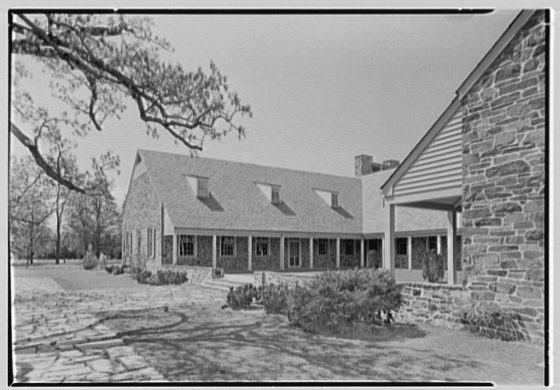
Plan the museum and nearby historic-site interests through their own current visitor information. A house tour, a research appointment and a museum admission are different activities, even when they form part of a satisfying day in Hyde Park. The archive photograph introduces the library setting at the date recorded; it cannot guarantee a specific display or future operating arrangement. Choose enough time for one question to develop rather than attempting to treat every label as an item to complete. For a mixed group, comparing a document-based interpretation with a listening experience can provide a manageable and genuinely shared way to discuss what the museum makes possible.
Roosevelt wins our museum comparison, with Kennedy the strongest alternative for political communication and Johnson a compelling choice for the institutions and work surrounding a presidency. Other priorities can reasonably change the order. We have not converted a visitor selection into a verdict on an entire political record or a poll of all museumgoers. The aim is a more informed choice and a more attentive encounter with sources. Which would you choose first: Roosevelt's questions and public responses, Kennedy's campaign-to-office journey, Johnson's institutional setting, or a different museum whose objects make a particular part of presidential work easier for you to understand?
Source: Franklin D. Roosevelt · Franklin D. Roosevelt.
Photo: Gottscho-Schleisner Collection · Public domain. Archive photograph; current exhibitions and access may differ. Resized and recompressed without cropping; source image license retained.