
The 39 Steps earns its place through movement. Robert Donat's Richard Hannay becomes entangled in espionage and must establish his innocence while being pursued. Madeleine Carroll plays Pamela, an important part of the film's mixture of suspicion and reluctant cooperation. The premise gives Hitchcock a reason to move between places, encounters and changes of identity, but the pleasure comes from how quickly those changes become fresh problems. We place it tenth because its energy and comic tension remain persuasive even when the machinery is visible, while the films above it offer a more sustained emotional or formal challenge.
Watch the transitions rather than looking only for individual highlights. A new location is not simply scenery; it changes what Hannay can plausibly claim, who might believe him and what kind of performance he must give. The viewer is asked to keep adjusting alongside him. That flexibility is central to the film's appeal. It lets comedy arise from urgency without removing the urgency altogether. Our argument for its inclusion is not that every coincidence would survive a literal investigation, but that the shifts create a coherent experience of improvising while other people keep defining you incorrectly.
The relationship between Hannay and Pamela is another reason to keep it in the ten. Suspense does not remain separate from their changing responses to one another. Trust has practical consequences: it affects movement, choices and the possibility of being heard. A useful question is when irritation becomes cooperation, and whether the situation or the people themselves produce that change. This does not require treating every convention as timeless romance. You can recognise the film's wit and still notice the assumptions behind its treatment of a man and woman forced into the same adventure.
Its strongest case for a higher position is economy. Compared with the heavier emotional entanglements of the later films, the storytelling can feel unusually light on its feet. A viewer seeking Hitchcock as an entertainer might reasonably prefer that directness to the weight of Rebecca or the confinement of Rope. We keep those films higher because the spaces and relationships in them generate questions that persist beyond the chase. That preference reflects our criteria rather than a deficiency that every audience must feel. Speed is an artistic achievement, even when it is not the decisive one for this particular ranking.
On another viewing, follow how public situations become awkward for a private person. Hannay must navigate what strangers think they are seeing, and that gap between appearance and reality provides both danger and humour. The useful exercise is to identify a moment when his predicament is clear to us but not to the people around him. Then ask how the scene uses that imbalance. Does it invite sympathy, embarrassment or anticipation? This approach makes the craft easier to appreciate without reducing the film to a collection of plot turns or treating the story merely as a puzzle with one correct answer.
Begin here if you want to see the British adventure-comedy side of the director before moving to his American work. Pair it with North by Northwest, higher in this list, and compare how an innocent person's unstable identity can support very different scales of spectacle. Neither needs to be called a flawless blueprint for the other. The comparison is useful because the recurring situation changes with tone, performers and setting. Tenth place recognises a film whose momentum still carries an argument: suspense can be exhilarating and funny without becoming emotionally empty, even if other Hitchcock films take that argument further.
Sources: Film reference 1.
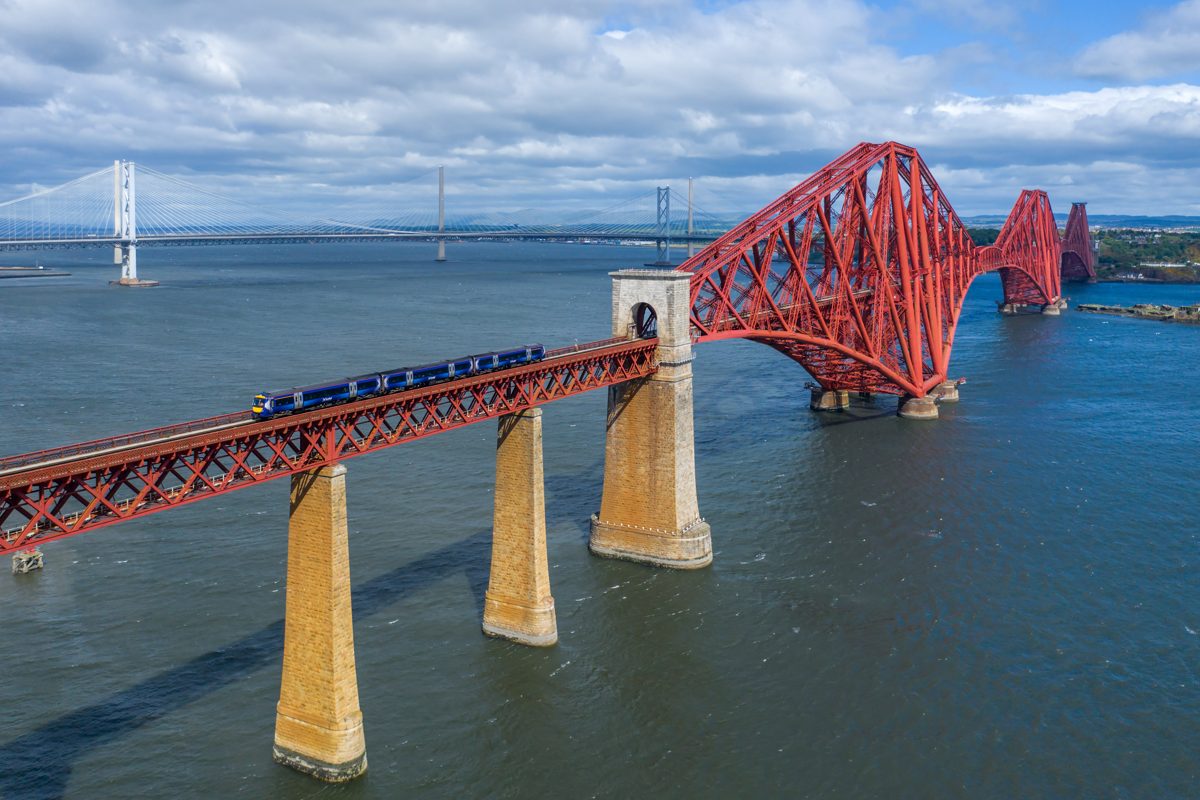
Photo: Kabelleger / David Gubler · CC BY-SA 4.0. A modern train on the Forth Bridge, 27 May 2022; later location context, not a scene or filming record from The 39 Steps. Resized and recompressed without cropping or upscaling; source license retained. Image derivative retains the stated license; no endorsement implied.
