
Rope makes a room feel like a problem that cannot be left behind. John Dall and Farley Granger play the young men at the centre of its crime, while James Stewart plays their former teacher. The audience is not simply invited to identify an unknown culprit. Instead, the film creates tension around knowledge, concealment and the behaviour of people sharing a social space. We rank it eighth for the concentration of that design. Its formal experiment is a reason to watch closely, but the moral pressure matters more to our case than the ability to admire a technical exercise.
The extended-take style encourages attention to continuous movement. Watch where people stand, what blocks a view and how the camera changes the significance of a familiar part of the room. The film creates an impression of sustained time through constructed filmmaking; calling it literally one unbroken shot would be inaccurate. More useful than counting transitions is asking why a movement occurs at that moment. A camera can withhold, redirect or disclose without a character explaining anything. Rope makes those choices unusually visible, which can be exciting or distracting depending on how strongly you respond to its controlled environment.
Conversation supplies another layer of tension. Ideas that might sound abstract in a classroom or at a dinner become alarming when actions give them consequences. The film asks viewers to hear the distance between intellectual confidence and responsibility. Our reading does not require adopting any character's claims as the director's conclusions. In fact, keeping those levels separate makes the film more disturbing: a polished argument can be part of a person's self-deception. Notice when a remark is made to impress someone, evade something or assert superiority, rather than treating all dialogue as transparent philosophical instruction.
The strongest objection to this position is that the experiment can feel more memorable than the people. A viewer might admire the staging yet remain emotionally outside the drama, in which case the warmth and variety of The Lady Vanishes could deserve the higher rank. We put Rope above it because its form and subject exert a distinctive pressure together. The room's continuity makes evasion feel temporary, and polite interaction becomes difficult to separate from what is concealed. That is our preferred experience here, not a claim that confinement is inherently a more sophisticated way to make a thriller.
On a second viewing, follow the guests rather than the most conspicuously anxious people. They do not all possess the same knowledge, and their ordinary movements can acquire meaning for a better-informed audience. Ask when you are waiting for someone to notice something and when you are hoping that they will not. That shift reveals the uncomfortable flexibility of identification. A thriller can recruit attention without giving us a morally uncomplicated position. The exercise helps explain why this film remains interesting after its basic situation is known, even though its appeal is not built on preserving a single final surprise.
Rope suits viewers curious about how staging can organise suspense, and it pairs well with Rear Window's different use of a restricted vantage point. Both invite us to examine what a space makes possible, but one concentrates on people circulating within a room while the other arranges separate lives across a distance. Eighth place rewards the force of Rope's particular construction while acknowledging its limits as an emotional experience. Its best claim is not that difficulty deserves automatic admiration. It is that the experiment gives a troubling social encounter a shape that could not simply be replaced by more locations or faster cutting.
Sources: Film reference 1 · Film reference 2.
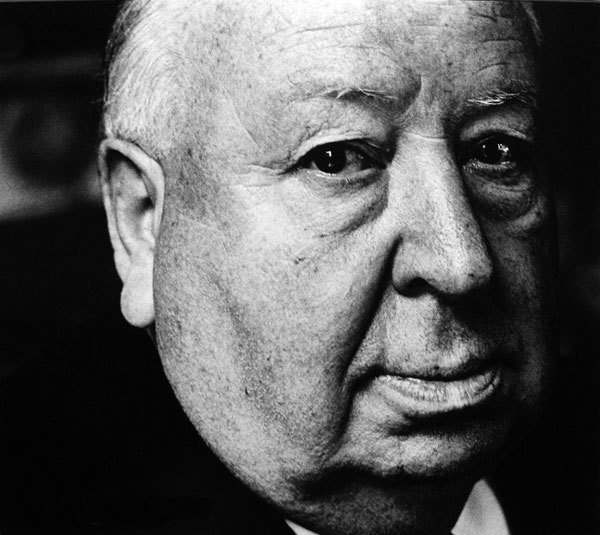
Photo: Jack Mitchell · CC BY-SA 4.0. Alfred Hitchcock photographed by Jack Mitchell, probably 1972; date uncertain, director portrait rather than a film still. Existing optimized JPEG reused unchanged; earlier resizing and recompression retained. Image derivative retains the stated license; no endorsement implied.
