
Rebecca gives a person who is absent an extraordinary presence. Joan Fontaine plays the young woman who marries Maxim de Winter, played by Laurence Olivier, and enters a home shaped by the memory of his first wife. Judith Anderson's Mrs Danvers is an essential part of that atmosphere. Adapted from Daphne du Maurier's novel, the film combines romantic uncertainty with a household whose past seems to possess authority over the present. We rank it sixth because its emotional problem is inseparable from its setting: entering a beautiful place does not necessarily mean being allowed to feel that you belong there.
The useful first question is who defines the standards by which the new wife judges herself. A comparison does not need to be spoken directly to become powerful. Objects, routines and other people's reactions can make an imagined predecessor feel like a continuous test. In our reading, the house becomes a system of expectations rather than simply a backdrop for secrets. Watch when a room offers privacy and when it makes someone feel exposed. That shifting relationship to space helps explain why the film can create pressure without requiring a fresh external danger in every scene.
Fontaine's performance gives hesitation a dramatic function. A pause or a change in confidence can tell us how precarious a character's position feels, even before the plot supplies another piece of information. This is one reason the film belongs above more straightforwardly mobile adventures in our ranking. Its tension comes from living inside an uncertain role. At the same time, admiration for the performance need not turn the character's vulnerability into an ideal. The film invites attention to unequal confidence and power; it does not require viewers to admire a relationship simply because it occupies the centre of a romantic narrative.
A competing case would put Rebecca in the top three for the completeness of its atmosphere and its emotional accessibility. Another would place it lower because the later suspense films make Hitchcock's handling of looking and knowledge feel more concentrated. We put it between those positions. Its strength is the way setting and insecurity reinforce each other, while our leaders offer a sharper transformation of the viewer's own relationship to the story. That distinction is open to argument. A richly inhabited emotional world can be as important as a formally striking premise, even when it is not this list's deciding preference.
On another viewing, follow the difference between a remembered person and the image assembled by everyone who speaks about that person. Those are not necessarily identical things. Ask how a description changes the new wife's behaviour and what evidence she has when she acts. The exercise turns attention from simply waiting for an explanation toward the process by which a past acquires power. It also leaves room for ambiguity without making every object a code that must be solved. Much of the film's effect comes from how ordinary domestic details feel under the pressure of comparison and incomplete knowledge.
Rebecca is a strong choice when you want Hitchcock's suspense to emerge through atmosphere and relationships rather than a pursuit across the map. Pair it with Shadow of a Doubt to compare homes that become difficult to inhabit for different reasons. Sixth place is an argument for its sustained emotional enclosure, not a dismissal of its scale or craft. The question that remains is how much of a person's life can be organised by an image of someone else. In this film, that question has a physical setting, and moving through that setting becomes part of the drama of trying to acquire a voice.
Sources: Film reference 1.
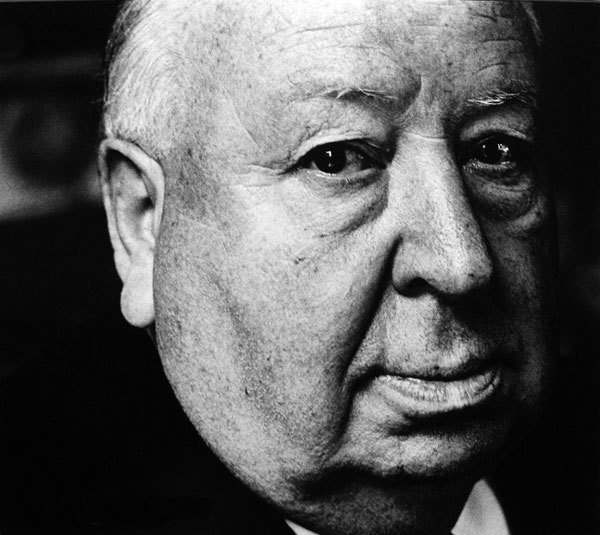
Photo: Jack Mitchell · CC BY-SA 4.0. Alfred Hitchcock photographed by Jack Mitchell, probably 1972; date uncertain, director portrait rather than a film still. Existing optimized JPEG reused unchanged; earlier resizing and recompression retained. Image derivative retains the stated license; no endorsement implied.
