
Psycho has the strongest claim to overturning our winner if greatness means the power to unsettle an audience's sense of what story it is watching. Janet Leigh and Anthony Perkins anchor a film in which a flight with stolen money leads to a motel and an encounter that changes the terms of attention. We place it second without setting out its major revelations. Its force is not limited to possessing a surprise. The filmmaking makes ordinary actions feel vulnerable, and the viewer's investment becomes something the film can redirect rather than a stable agreement established at the beginning.
Watch how practical concerns acquire disproportionate weight. An action can be simple while the circumstances make the audience attend to it intensely. The film does not need every moment to announce itself as a shock. Our reading gives particular weight to the transitions between anticipation, routine and unease. Those passages help explain why knowing the broad story need not make the experience inert. A revelation changes what you know, but the timing and emphasis of the surrounding actions determine how you occupy that knowledge. This is a more durable source of suspense than the hope that no viewer has heard anything about the film.
Perkins's performance is important because awkwardness and apparent ordinariness can coexist with discomfort. A conversation does not have to deliver a direct threat to change the atmosphere. Leigh likewise gives the opening movement an immediate human focus, making choices and hesitations register before the viewer has a complete account of where the film is going. We avoid converting the characters into clinical diagnoses or treating a fictional explanation as a statement about real mental health. The critical question here is how performance and framing guide sympathy, uncertainty and attention within a deliberately constructed story.
The argument for first place is straightforward: few films on this list make the act of following a narrative feel so unstable. If that is your decisive criterion, Psycho should beat Vertigo. Our winner receives the edge because its emotional relationship to desire and images continues to trouble us beyond the mechanics of narrative redirection. That is a preference about the experience left behind, not a claim that shock is shallow or that a thriller must be slow to be serious. Psycho's second place acknowledges an artistic achievement whose immediate force can be stronger than that of the film above it.
For a second viewing, resist the temptation to look only at the moments everyone discusses. Follow the quieter transfers of attention: what becomes important, what drops away, and which ordinary concern starts to organise a scene. This makes the construction visible without reducing it to a trick. A film can manipulate attention while still depending on precisely observed human behaviour. The useful exercise is to ask when you begin waiting for an outcome and what the film has done to recruit that waiting. It may reveal how much suspense grows from duration, emphasis and uncertainty between the most famous events.
Psycho pairs especially well with Vertigo because the comparison makes our final disagreement clear. One repeatedly alters the ground beneath the narrative; the other asks how an image can become an emotional demand. Both give viewers reason to reconsider their own investment. Choose Psycho first if you want an immediate encounter with Hitchcock's capacity to disturb the process of watching, while remembering that it contains violence and distressing material. Second place is not a compromise between reputation and preference. It is our recognition that the strongest challenger to the winner succeeds through a different, equally discussable conception of what a thriller can do.
Sources: Film reference 1.
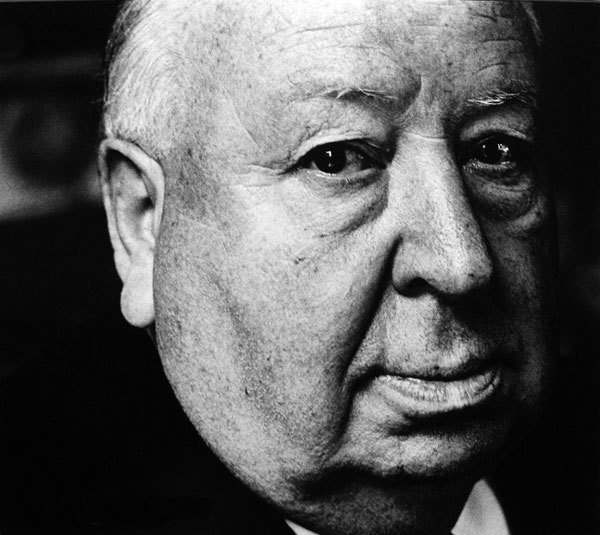
Photo: Jack Mitchell · CC BY-SA 4.0. Alfred Hitchcock photographed by Jack Mitchell, probably 1972; date uncertain, director portrait rather than a film still. Existing optimized JPEG reused unchanged; earlier resizing and recompression retained. Image derivative retains the stated license; no endorsement implied.
