
Shadow of a Doubt brings danger into an apparently familiar household. Teresa Wright plays a young woman whose admiration for her uncle, played by Joseph Cotten, becomes unsettled by suspicion. The attraction of the premise is the cost of asking questions about someone you want to trust. The setting does not need to be exotic to become threatening. We place the film seventh because it turns family closeness into a source of pressure, making the possibility of discovery inseparable from the fear of what discovery would do to ordinary life and the people who depend on it.
Watch the difference between how a person appears to the household and how that person appears in a more private exchange. The film gives social charm a practical role: it can ease entry, encourage affection and discourage scrutiny. Our interest is not in converting that observation into a rule about real families. It is in how the drama makes a familiar performance change meaning as the younger character's attention changes. The same conversation can feel reassuring at one stage and difficult at another. Suspense emerges through the relationship, rather than arriving solely as an outside threat imposed on it.
Wright's presence is central to our ranking. The film needs a developing point of view, not merely a target waiting to be frightened. A useful viewing question is when admiration stops organising what she notices. Does a new piece of information change everything immediately, or does it make an existing discomfort harder to ignore? The emotional interest lies in that adjustment. It gives the investigation a personal consequence that differs from an innocent stranger trying to escape a chase. Finding out more may offer clarity while taking away a cherished picture of someone and of the home itself.
There is a strong case for moving this much higher. A viewer who values intimate unease over flamboyant spectacle could prefer it to North by Northwest and perhaps even to some of our leaders. We place the larger adventure higher for its breadth of tonal control, while giving the top films the advantage of a more comprehensive relationship between visual form and emotional disturbance. Those are editorial preferences, not measurable distances. Shadow of a Doubt does not need a famous location or a spectacular set piece to compete. Its argument is that familiar affection can make a small gesture carry unusual weight.
For a second viewing, pay attention to the household around the central pair. Ordinary conversation and routine do not merely delay the thriller; they establish what is at stake in losing confidence. Ask which parts of daily life remain untouched and which begin to feel altered by what you know. This can make the surrounding texture more important than it seemed during a first pursuit of the mystery. The film's power does not require every person in the room to understand the danger at the same time. Unequal awareness is precisely what makes a supposedly shared domestic space feel divided.
Seventh place recognises a quieter kind of Hitchcock achievement. The film is worth pairing with Rebecca, which also makes a home carry emotional authority, although the two households exert very different pressures. One comparison concerns the stories that people tell themselves to preserve a reassuring image. Neither film should be reduced to a diagnosis of its characters or an instruction about trust. As cinema, Shadow of a Doubt makes uncertainty intimate. It earns its place because the question is not only what an uncle might have done, but how knowledge could change the meaning of a young woman's everyday world.
Sources: Film reference 1.
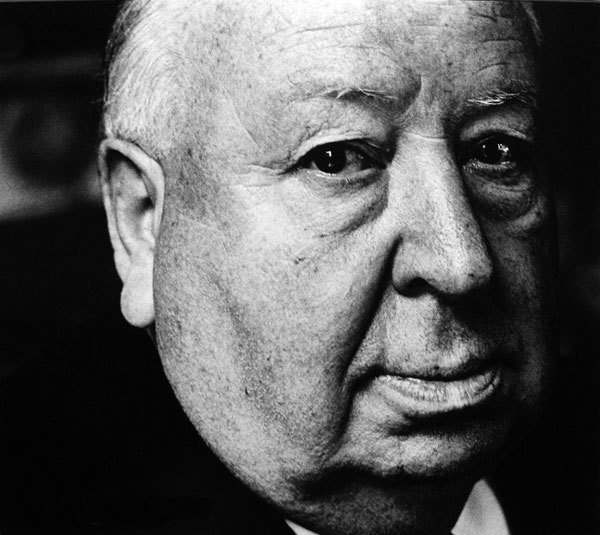
Photo: Jack Mitchell · CC BY-SA 4.0. Alfred Hitchcock photographed by Jack Mitchell, probably 1972; date uncertain, director portrait rather than a film still. Existing optimized JPEG reused unchanged; earlier resizing and recompression retained. Image derivative retains the stated license; no endorsement implied.
