
Pausing is the first action even though it ranks tenth as a source of evidence. It does not establish where a photograph came from; it creates room to ask a better question before a strong reaction becomes a public assertion. Write the post's claim in a short sentence: this photograph shows a particular event, in a particular place, at a particular time. If the post also says who caused it or why people acted, record that as an additional claim. Keeping these pieces separate prevents a striking image from silently doing more argumentative work than it can support.
Imagine an invented post showing a crowded station and saying that a transport failure has just stranded commuters. The picture may visibly show many people, but the failure, the timing and the passengers' circumstances need other evidence. Your first note could separate those propositions instead of deciding immediately whether the entire post is true. This makes later checks more efficient. A date search addresses one proposition; a service announcement might address another. Without that separation, a genuine photograph can feel like proof of every sentence beside it, even when some of those sentences describe things outside the frame.
Notice the pressure built into the presentation. A request to share urgently, an angry caption or a declaration that nobody else will report the story can make waiting feel like taking a side. None of those features proves deception. They are reasons to slow your own response rather than reasons to accuse the poster. Ask what would count as evidence against the claim as well as evidence for it. That question is especially useful when the image seems to confirm something you already believe, because agreement can make ordinary gaps in sourcing less noticeable.
Preserve enough context to understand what you are evaluating. A link, the visible caption and the time you encountered it are more useful than an isolated screenshot that loses the account or publication. Keep your record proportionate and avoid collecting private information that has no bearing on the public claim. You are not building a dossier on a person. You are keeping the assertion stable while you inspect it. If a caption changes later, this distinction can also help you explain what you checked without assuming that the current wording is identical to the wording you originally saw.
The limitation is straightforward: a careful pause does not produce evidence by itself. It cannot turn uncertainty into a verdict, and it should not become an excuse to reject every unfamiliar report. Its value is procedural. It helps you choose the next check and makes it easier to recognise when the answer supports only part of a post. A reader interested mainly in speed could rank it higher because it costs little. We leave it tenth because the other entries can add information about the image or its context, while this one mainly improves how you approach that information.
Before moving on, decide what you need to know to justify sharing the photograph in your own words. If all you can support is that an image is circulating, do not restate its unverified caption as an established event. A qualified statement should describe the actual gap, not merely add a vague question mark to a dramatic allegation. You can also wait for better reporting. The useful outcome of pausing is a precise inquiry and a proportionate choice, not the feeling that you have completed verification simply because you spent a moment being sceptical.
Sources: Commons Library: verifying images · AP: verification.
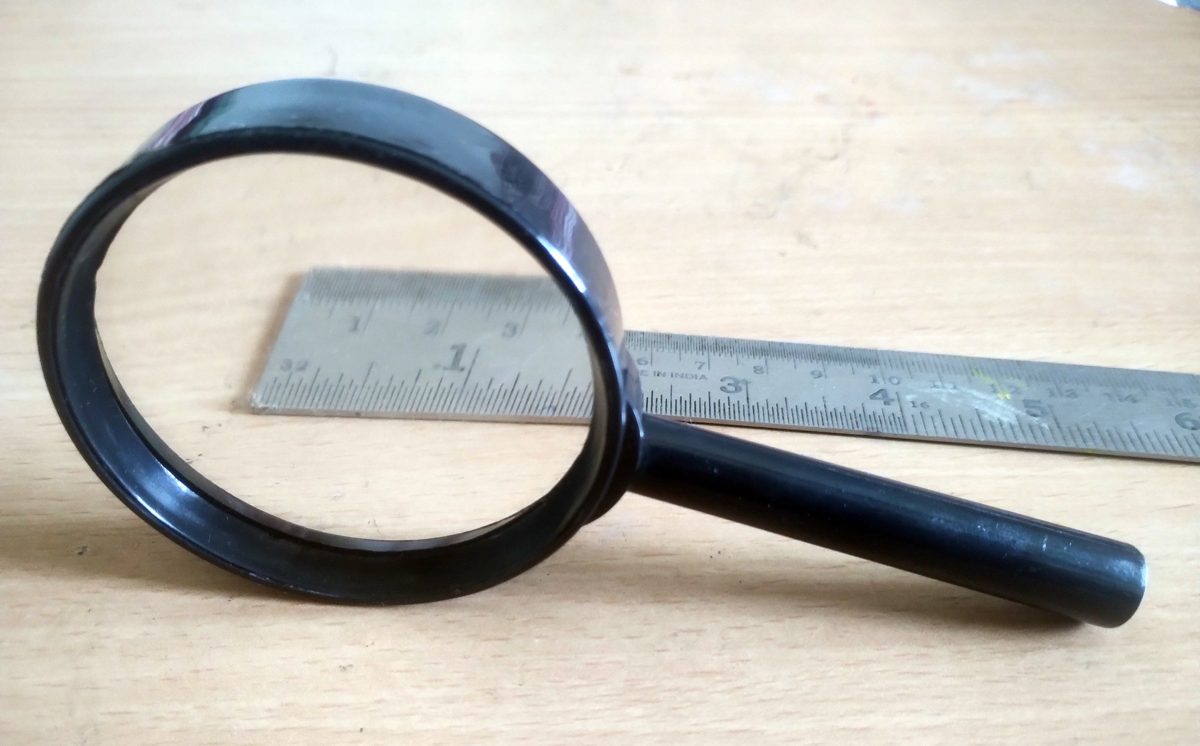
Photo: Gpkp (Magnifying glass (2026).jpg) · CC BY-SA 4.0. Magnifying glass photographed on 18 September 2026; conceptual illustration, not a photo-verification test or result. Orientation normalized; resized and recompressed without cropping or upscaling; source license retained. Image derivative retains the stated license; no endorsement implied.
