
A photograph can be genuine while the claim attached to it is wrong. An old crowd can acquire a new date, an ordinary street can acquire a dramatic location, and a tightly cropped view can encourage a conclusion the wider scene does not support. Before asking whether an image was generated by AI, ask what the post actually claims. This guide ranks ten checks for a reader considering sharing a breaking-news photograph. Its purpose is to improve the questions you ask, not promise that a quick inspection will certify every unfamiliar image as true or false.
The order reflects expected usefulness for an ordinary reader: tracing the source and testing a photograph's history generally give a stronger starting point than judging how convincing its pixels look. This is editorial judgment, not a measured accuracy trial. The countdown is not a compulsory sequence. Pausing, at number ten, should happen before the other steps, and a visible contradiction can redirect the whole investigation. No single check wins every case. An original upload can still contain a mistaken caption, a reverse search can miss a prior appearance, and a trusted publisher can issue a correction.
Our reference date is 25 October 2026. We consulted primary guidance from Google Search, the Associated Press, the House of Commons Library and the C2PA documentation. Their roles differ: a search feature helps find context, a newsroom describes its verification practices, and a provenance specification explains a technical record. None should be treated as a universal truth button. Interfaces and availability can vary by region and device, so the guide explains what evidence to seek rather than promising an identical sequence of taps for every reader or an automatic result from any particular service.
All worked situations here are invented examples. They do not accuse a named person, account, newsroom or political group of circulating a false image. A fictional flood photograph, for instance, lets us distinguish the date of capture from the date of a repost without presenting a rumour as news. Our own licensed images are explicitly contextual illustrations, not files analysed in the examples or evidence of a current event. We do not infer identities, motives or private locations from a picture. The aim is to evaluate a public claim with proportionate evidence, not turn curiosity into an investigation of a stranger.
Keep a small record of what you have established and what remains uncertain. A useful note might say that the photograph appeared online before the claimed event, while the exact capture date remains unknown. That is more precise than calling everything fake. Separate the authenticity of the file, its place and time, the caption's interpretation and your confidence in the available evidence. These can lead to different answers. You may establish that a photo is older without identifying its creator, or confirm a location without proving the reason people gathered there. Each conclusion should stay within the evidence that supports it.
Our fact-checking websites guide can help you find an investigation already addressing a claim, while the journalism investigations ranking shows why a trail of independent evidence matters. This article adds a practical photo-focused workflow rather than ranking those organisations again. If the available record does not support the caption, you do not have to forward it with a confident verdict. You can wait, describe the specific uncertainty or choose not to share. Which check most often changes your first impression: finding an earlier appearance, seeing the full frame or discovering that several reports all relied on the same original post?
Sources: Google: image context · AP: verification · Commons Library: verifying images · C2PA: provenance explainer · AP: visual standards.
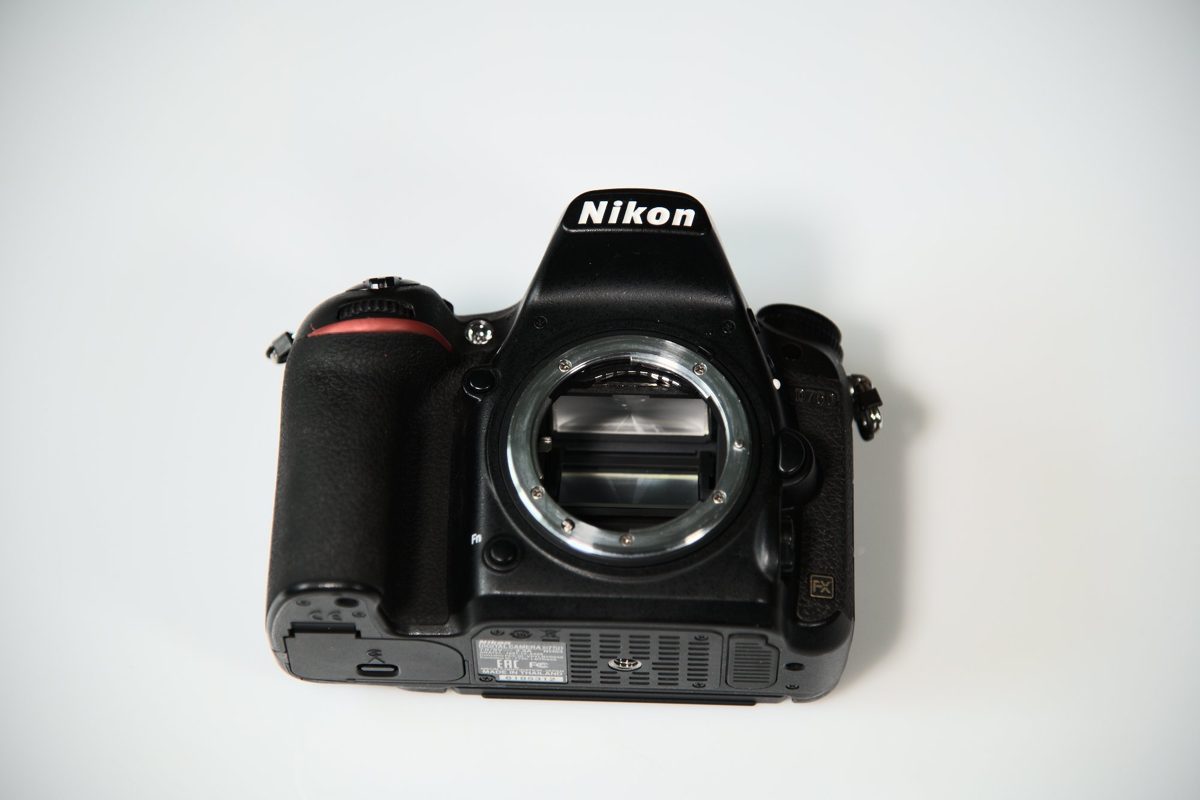
Photo: Jakub T. Jankiewicz (Nikon d750 cap off.jpg) · CC BY-SA 4.0. Nikon D750 photographed on 7 August 2022; contextual camera illustration, not a file analysed in the hypothetical examples. Orientation normalized; resized and recompressed without cropping or upscaling; source license retained. Image derivative retains the stated license; no endorsement implied.
