
A reverse-image search looks for the same image or visually similar material rather than beginning only with words. It can reveal earlier uses, a source credit or a larger version, making it a strong practical entry point. It ranks second because it opens several evidence trails at once, but the search result is a lead rather than a verdict. A close visual resemblance can be useful without proving identity. The reader's job is to inspect the returned pages, compare the image and understand what each match contributes to the claim being tested.
Begin with the public image or its source link when the chosen tool supports that method. A screenshot can work as a search input, although added text, borders or a heavy crop may affect results. If necessary, try a meaningful detail from the scene as a separate search and compare what changes. Do not confuse a tool's suggestion of a similar object with confirmation of the photograph's origin. A bridge, a crowd or a damaged vehicle can resemble many others. The match becomes useful when distinctive details connect the result to the actual file or scene you are examining.
Open promising results instead of relying only on thumbnails and snippets. Look for a photographer credit, a publication date, a caption and a larger image. The result list may rank a popular repost above an earlier source, and the page title may describe a different use of the image. Ask whether the page provides evidence or merely repeats the claim. Google Search's image-context features can supplement this work, though interfaces and availability vary. The aim is to recover context from the open web, not follow a memorised set of taps whose labels may differ on another device or in another region.
When you find multiple versions, compare them carefully. A mirrored image, a crop or an added graphic can make related files look different, while two photographs from the same event can look similar without being identical. Keep a note of why you consider a match convincing: a distinctive arrangement of objects, the same people in the same positions or a precise overlap in a larger frame. This makes the reasoning reproducible. It is more useful than saying that a search engine recognised the image, which can imply a level of certainty that the returned material does not actually supply.
No results is not a certificate of authenticity, and a result on a dubious page does not make the photograph inherently false. Search coverage is incomplete, and images move between contexts. Try another service or descriptive text when the first attempt is unhelpful, while keeping the investigation proportionate to what you intend to claim. Do not keep searching only until you find a result that agrees with your initial reaction. A useful search can weaken, strengthen or simply fail to resolve a proposition. Each outcome should be recorded honestly rather than forced into a true-or-fake binary.
Reverse search earns its place because it makes the photograph searchable as evidence, connecting a visual object to a possible history. Its value depends on reading the matches with the same care you bring to the original post. The strongest next step is often our number one: follow a credible match toward the original photographer or publishing source. Even then, the caption's date, place and interpretation need checking. A search is successful when it gives you a clearer trail and a more precise question, not only when it produces a dramatic debunk or a reassuring label you can forward unchanged.
Sources: Google: image context · Commons Library: verifying images.
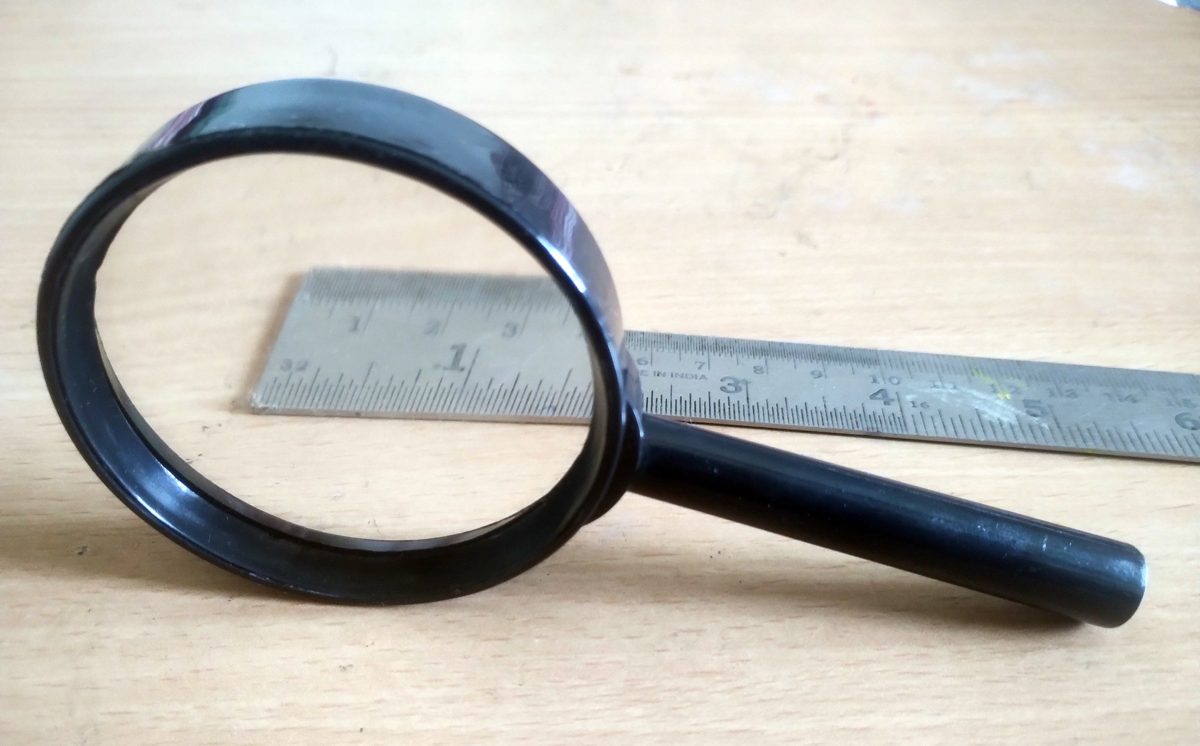
Photo: Gpkp (Magnifying glass (2026).jpg) · CC BY-SA 4.0. Magnifying glass photographed on 18 September 2026; conceptual illustration, not a photo-verification test or result. Orientation normalized; resized and recompressed without cropping or upscaling; source license retained. Image derivative retains the stated license; no endorsement implied.
