
An account's identity helps explain where a claim is entering your feed, but it does not settle the photograph's truth. Open the surrounding profile or publication page rather than relying on a cropped name, an avatar or a badge in a screenshot. Ask whether you are looking at a photographer, a newsroom, a commentary account, a parody page or a person reposting someone else's work. The distinction changes what evidence you should expect. A repost can be useful, but it is not automatically a first-hand account merely because the caption uses confident language or presents itself with familiar branding.
In an invented example, a page with a newspaper-like name shares a street photograph. Its presentation might initially suggest reporting from the scene, while its own description says it collects submissions or publishes satire. That context does not prove that this particular image is false. It tells you that the source relationship needs checking. Look for a byline, a credit, a link to the original item and a clear distinction between reporting and commentary. The question is what the publisher claims responsibility for, not whether the design looks professional enough to deserve automatic belief.
Read laterally as well as within the page. Search the organisation's name, check the address of its actual website and see whether the linked article exists there. A familiar logo can be copied, and a screenshot can detach a real headline from its original page. Conversely, an unfamiliar local outlet may have relevant reporting that a large distant publisher lacks. Avoid reducing the exercise to famous versus unknown. You are looking for a traceable identity and a record connected to the particular claim, with enough context to know whose work you are actually reading.
Account history can provide clues about the type of material being shared, but it should not become a shortcut for deciding every post. A long-established account can make a mistake; a newly created account can publish an authentic first-hand photograph. A verification badge, follower count or polished biography does not replace evidence about the image. If you mention account context in a discussion, describe what you found rather than inventing motives. Saying that a post supplies no photographer credit is a checkable observation. Saying that its author intended to deceive requires a different kind of evidence.
This check ranks ninth because it helps route your attention, while stronger entries examine the photograph's actual history and content. Its main failure mode is substituting reputation for verification. A reader can spend a long time evaluating an account and still learn nothing about when or where the picture was made. Use the context to locate the source trail, then follow that trail. Do not let a reassuring profile end the inquiry, or let an unattractive profile persuade you that a visible event could not have happened. The image and the claims still need their own tests.
A useful result is a short description of the source relationship: original photographer, credited syndication, unattributed repost or publication whose role remains unclear. That description makes the next step more concrete. It also helps explain why several apparently different posts may not provide several independent accounts. Keep the distinction visible when you share a link with someone else. The aim is not to rank people's worthiness from a profile. It is to understand who is asserting what, where their material came from and which part of the claim they can reasonably be expected to substantiate.
Sources: Commons Library: verifying images · AP: verification.
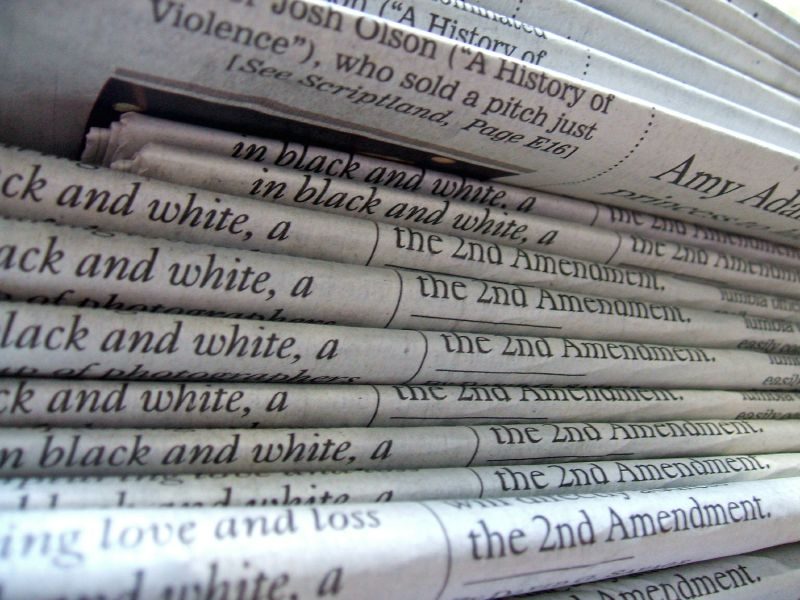
Photo: Daniel R. Blume (A stack of newspapers.jpg) · CC BY-SA 2.0. Stack of newspapers photographed on 21 November 2007; historical media context, not coverage or evidence of a current event. Orientation normalized; resized and recompressed without cropping or upscaling; source license retained. Image derivative retains the stated license; no endorsement implied.
