
Metadata and provenance records can add useful information, but they answer narrower questions than many readers expect. A file may contain a date field, software information or other details; a Content Credential can describe a signed provenance history and the assertions associated with it. These are not interchangeable with a guarantee that the caption is true. The C2PA explainer explicitly distinguishes provenance from factual truth. We rank this check eighth because a relevant record can help, while missing, altered or incomplete information can make it a poor first filter for an ordinary image encountered through social media.
Consider an invented photograph downloaded from a messaging conversation. It may lack the camera fields you expected because it has passed through a screenshot or a platform that removed information. That absence does not establish that AI generated it, and it does not establish that a camera captured it either. It means the available file does not supply that particular evidence. Likewise, a date field is something to investigate, not a reason to abandon all other checks. Distinguish the file you possess from the original file, whose embedded information may differ after ordinary sharing or conversion.
When a provenance viewer presents a record, read what the record actually asserts. Who signed it, what operations are listed, and what part of the history is available? A technically valid signature concerns a relationship between a record and an asset; it does not independently verify every real-world statement someone later attaches. An authentic photograph can still receive an inaccurate location or a misleading interpretation. The useful question is whether the provenance helps establish a specific part of the source trail, rather than whether a reassuring symbol allows you to treat the whole post as settled.
Be equally cautious about turning an absent label into a positive conclusion. Different creators and tools participate in different systems, and provenance can be incomplete. The lack of a Content Credential is not a general test for authenticity, manipulation or AI origin. If a tool reports that it found no credential, preserve that wording instead of translating it into a stronger claim. This small discipline prevents a technical result from growing into an unsupported verdict. It also makes comparisons clearer when two services inspect different kinds of signals or offer different scopes of analysis.
Use public files or files you are entitled to submit when a service requires an upload, and understand what is being sent. A private family image or a confidential document is not necessary for practising this workflow. For a news photograph already published openly, you can often begin with the linked source page and its visible credit rather than uploading anything immediately. This is a practical choice about the evidence you need and the material you provide, not a promise that every viewer stores files in the same way or that every tool has identical terms.
Metadata ranks below the broader checks because a reader frequently does not possess the original file and because a technical history still needs context. Its best role is as supporting evidence alongside a source, a timeline and corroboration. Record a positive finding precisely, and record an absence just as precisely. You might learn that a file carries a particular signed assertion while the scene's claimed date remains unconfirmed. That is useful progress. It is more informative than announcing that a photograph is proven real or proven fake because one badge, date field or inspection result appeared on a screen.
Sources: C2PA: provenance explainer · Google: image context.
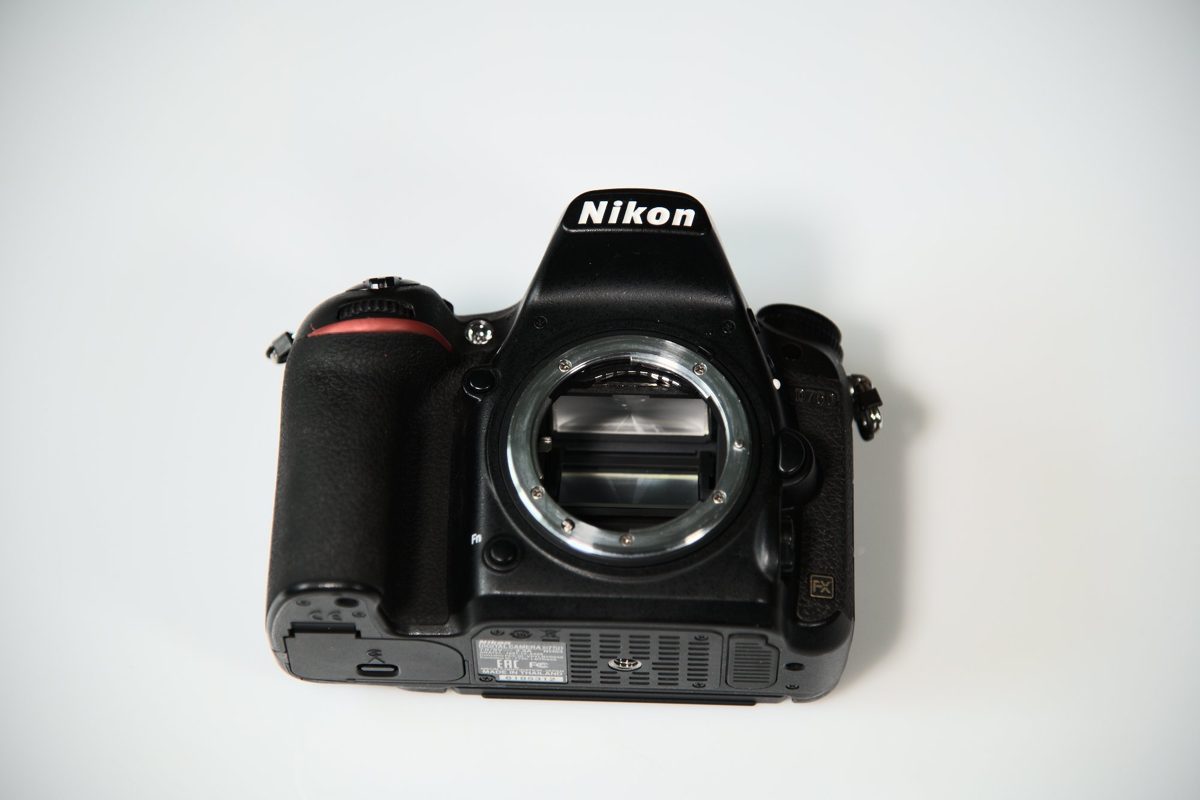
Photo: Jakub T. Jankiewicz (Nikon d750 cap off.jpg) · CC BY-SA 4.0. Nikon D750 photographed on 7 August 2022; contextual camera illustration, not a file analysed in the hypothetical examples. Orientation normalized; resized and recompressed without cropping or upscaling; source license retained. Image derivative retains the stated license; no endorsement implied.
