
A photograph records a view; a caption can add names, causes, dates, motives and conclusions. Separating those layers is one of the most useful ways to evaluate a viral image. Describe the visible scene in restrained language before repeating the interpretation. A crowd is visible; the reason it gathered may not be. Water on a street is visible; the cause, depth beyond the frame and date may require other evidence. This check ranks sixth because it can expose an unsupported leap quickly, even before you have found the original photograph or established its entire history.
Take an invented image of people standing near a public building. A post calls them demonstrators supporting a particular proposal. The image alone may not show that political position, and some people in the frame may be passers-by. You can state that a group is present without claiming that every person shares an intention. Look for contemporary reporting, identifiable public signs and a source caption that explains the occasion. Even then, avoid expanding a claim about an event into an unsupported claim about each individual visible in it. Group context and personal identity are different questions.
The same distinction matters for scale. A close photograph of a packed area cannot by itself establish the total number attending an event. A wide photograph may still exclude other spaces or moments. If a caption supplies a precise count, ask where the count comes from and what it measures. Do not manufacture an estimate from how impressive the image looks. You can discuss what is visible while leaving the overall attendance unresolved. A useful verification note identifies the missing evidence rather than replacing an unsupported number with another number that merely feels more plausible to you.
Causation is another common addition. A damaged object can be photographed accurately while the proposed explanation for the damage remains unverified. The scene may be compatible with several accounts, and compatibility is not confirmation. Ask what evidence connects the visible result to the named cause. A source report, a documented timeline or another independently recorded view might help. The image's emotional force does not supply that connection by itself. This is a reading exercise, not a demand to distrust every explanatory caption; good reporting often supplies exactly the context that a photograph cannot show alone.
The method's limitation is that an image can contain evidence you do not recognise. A specialist may identify a public landmark or technical detail that matters, while an ordinary reader misses it. Keep your description modest rather than declaring that the photograph proves nothing. It may prove something narrow and useful. If another person supplies an interpretation, ask how it follows from identifiable features or outside evidence. That keeps expertise open to examination without pretending that visual literacy means already knowing every language, place, uniform, object or event that might appear in a news image.
At the end of this check, keep two sentences if necessary: what the image appears to show, and what the post claims beyond that. Then direct your next search toward the gap. This makes the investigation more specific and reduces the temptation to use a broad label such as fake for several different problems. A real image with an unsupported motive attached is not the same problem as a fabricated scene. Both can mislead, but explaining the difference helps other readers understand the evidence and makes any correction more useful than a contest of confident reactions.
Sources: AP: verification · Commons Library: verifying images.
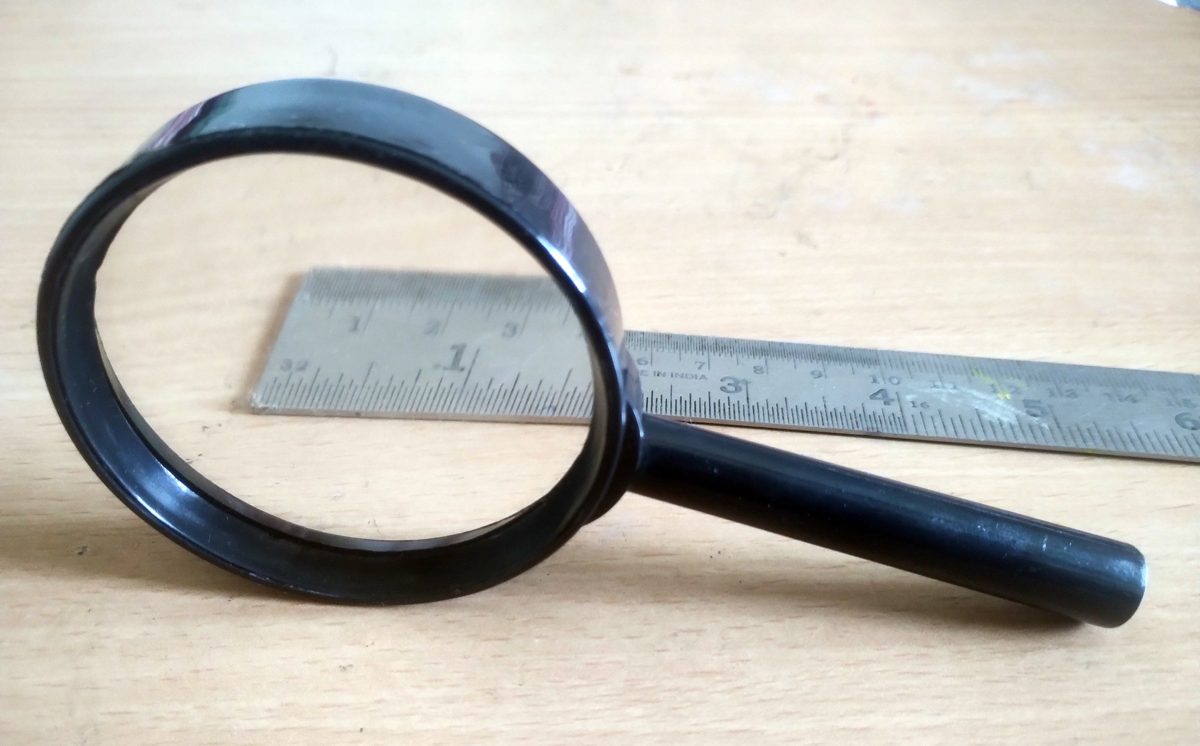
Photo: Gpkp (Magnifying glass (2026).jpg) · CC BY-SA 4.0. Magnifying glass photographed on 18 September 2026; conceptual illustration, not a photo-verification test or result. Orientation normalized; resized and recompressed without cropping or upscaling; source license retained. Image derivative retains the stated license; no endorsement implied.
