
A historical newspaper archive lets you ask a different question from a modern search engine: not simply what happened, but what a particular community could read about it at the time. A short notice, an advertisement and a front-page report can describe the same place in surprisingly different ways. This Top 10 selects free online starting points for that kind of research, checked on 19 October 2026. It includes national collections and a regional specialist. Free means that useful historical material can be read remotely without buying a newspaper subscription; it does not mean that every catalogued issue is open or that every image can be republished.
Our editorial order favors a clear path from a question to an identifiable newspaper page, useful geographic coverage and help that makes a first research session productive. Chronicling America leads for its combination of American historical coverage and practical Library of Congress guidance. Trove is a strong alternative for Australian questions, while Papers Past offers an especially coherent route into New Zealand and Pacific material. Someone investigating a Welsh village or a Dutch family should reasonably reverse our order. This is a selection of research tools, not a measurement of national importance, completeness or the historical reliability of every newspaper they contain.
How we choose a research starting point
Current search evidence supports the subject. In Google Trends Explore for the United States, past 90 days, all categories and Web Search, related rising searches included library of congress newspaper archives at 150 percent growth and library of congress at 80 percent. Searches for nys historical newspapers and northern ny historical newspapers were marked Breakout. We inspected those results on 19 October. They describe changes in relative search interest, not monthly keyword volumes or proof that a particular ancestor appears in a collection. Unrelated digital-archive queries were discarded rather than used to manufacture a seasonal story around the ranking.
Before typing a name, write down a place, a plausible date range and the kind of evidence you need. A marriage notice requires a different search from a report on an election or an advertisement for a shop. The place of publication may differ from the place mentioned in the story. A missing search hit can mean that the relevant issue was never digitized, that a column was recognized badly, or that the writer used another spelling. Treat full-text search as a way into the page, not as a complete inventory of everything printed there. Reading the original image remains essential.
Build a traceable investigation
Keep a small research log. Record the newspaper title, issue date, page, article heading where available, stable link and the words you actually searched. Separate a statement printed in a newspaper from your own inference about it. Two papers repeating identical wording may be copying a shared report rather than independently confirming a fact. Our fact-checking websites guide offers a useful companion when a historical claim resurfaces in present-day discussion. These habits matter even for a casual family-history project: they let you return to the evidence and explain a discovery without relying on a cropped screenshot whose date has disappeared.
The images here illustrate libraries or historical newspaper material; they are not screenshots proving today's interface or exhaustive holdings. Use each archive's current title and access information before planning a long investigation. Browse beyond the first result, compare neighboring issues and keep modern assumptions separate from the language of the period. Old newspapers can contain discriminatory descriptions and unverified allegations; preserving what was printed does not establish its truth. The most useful archive is the one that helps you reach a clearly identified source and ask better questions of it. Would you begin with a family notice, a local event or the competing ways several newspapers described one moment?
Source: Google Trends · Library of Congress.
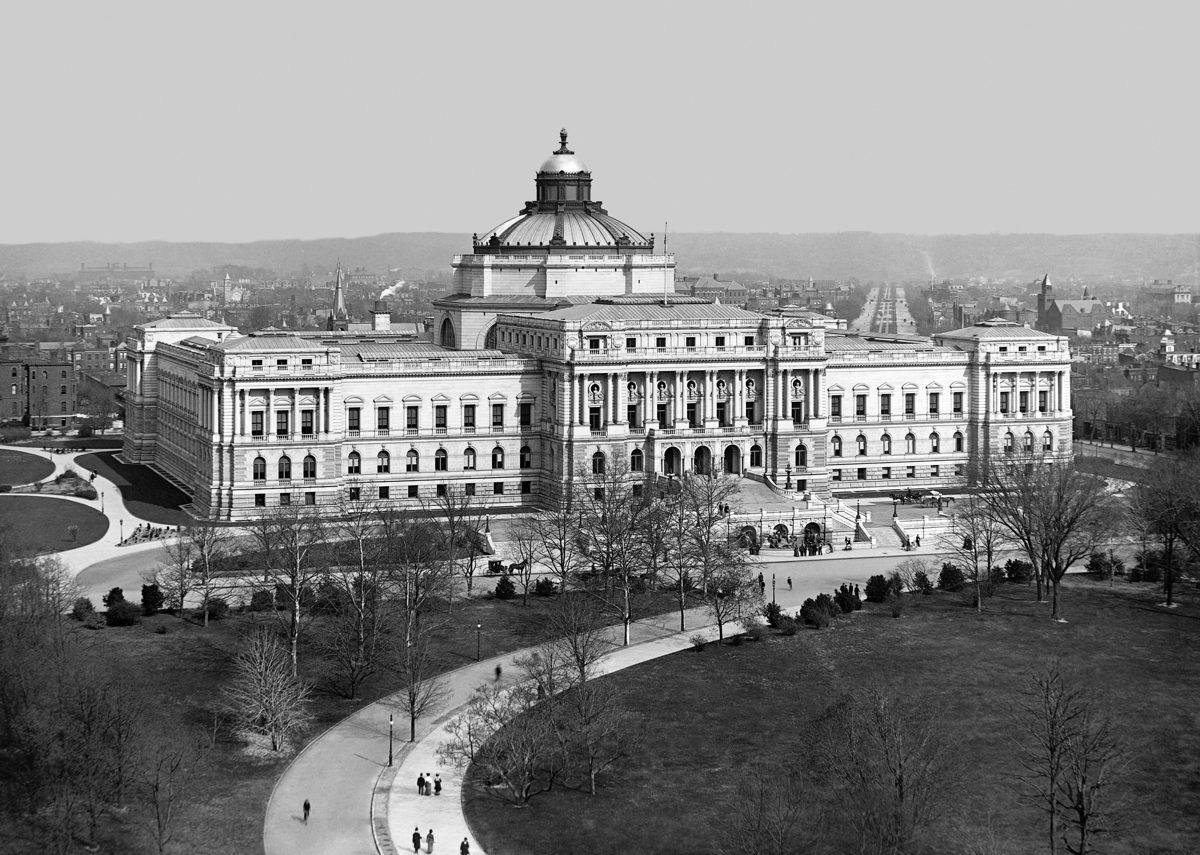
Photo: Library of Congress, Washington, D.C. - c. 1902.jpg · William Henry Jackson · Public domain. Archive illustration, not a current website screenshot or a guarantee of collection holdings. Resized and recompressed without cropping; source image license retained.

