
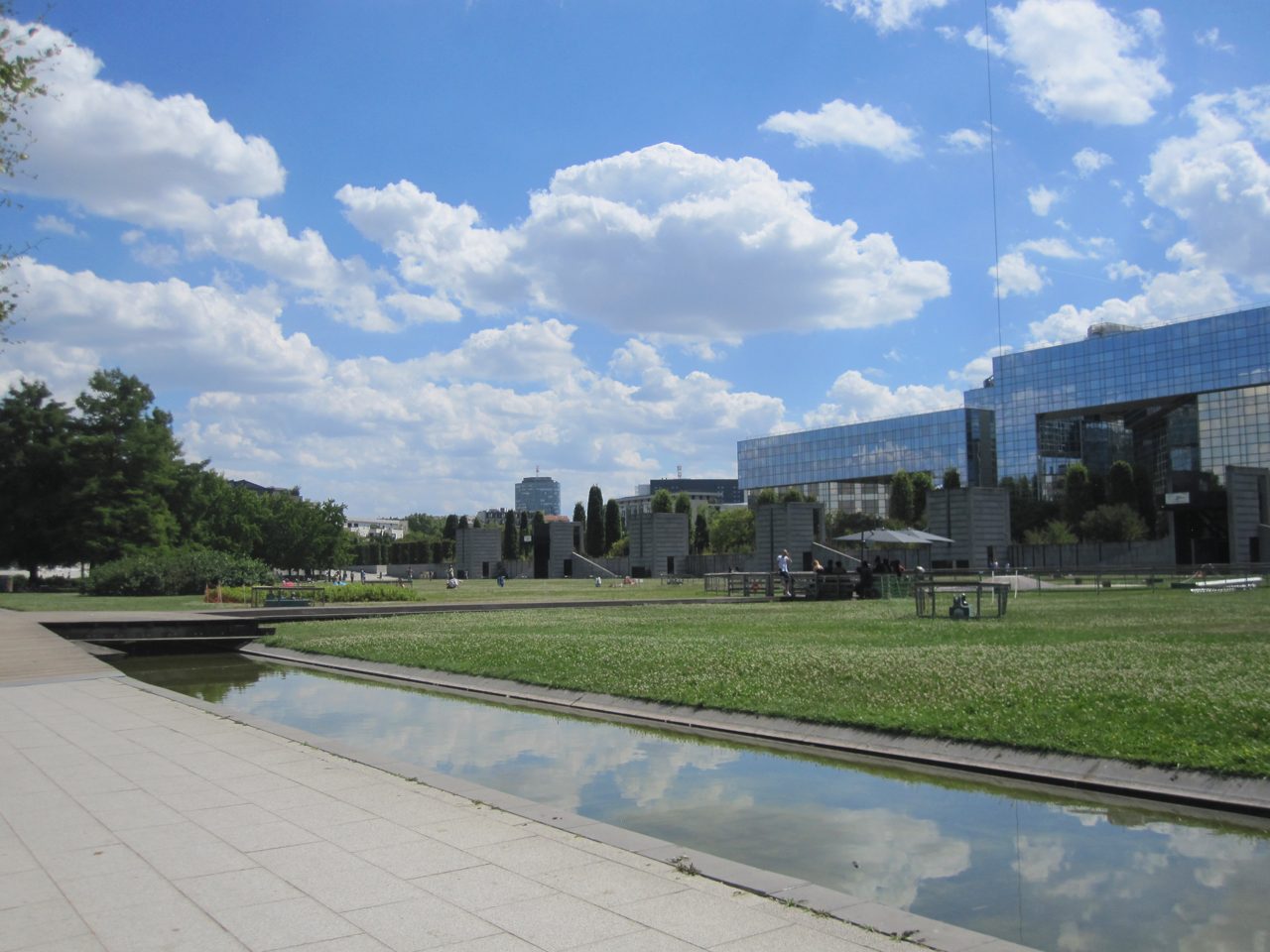
Parc André Citroën offers a different reading of a Paris garden: a late twentieth-century composition rather than a recreation of a royal setting. The City of Paris describes a central lawn and canal, contrasting garden areas and thematic planting. Those broad features give a walker several ways to compare space, enclosure and water. We place it eighth because it is particularly useful for a visitor interested in landscape design, while someone seeking a compact first encounter with central Paris may prefer the higher entries. Its value is the change in visual language, not an invented claim that it is less crowded.
A good first exercise is to compare an open view with a more contained one. Notice how far you can see, which elements hold the eye and whether the path makes the next decision obvious. Then move to another permitted area and ask the same questions. You are not required to recognise every design reference to understand the difference. This approach turns a stroll into a small investigation of how a garden directs attention. It also prevents the visit from becoming a search for one photograph followed by an immediate departure. The landscape itself supplies the subject.
Water deserves a careful reading here. The municipal source describes renovation of the canal and changes around its basins, so an old image cannot establish the exact appearance of a current visit. Treat photographs as illustrations of the place, not operating reports about jets, water levels or access to an edge. Look at what is actually open and working when you arrive. A dry or altered feature does not make the whole walk meaningless; it changes which relationships are visible. The useful question is how the composition works today, rather than whether it perfectly reproduces a memory or a picture.
This park can suit someone who wants to understand how different Paris landscapes answer different needs. Compare it mentally with a tightly framed central garden such as the Palais-Royal, or with the botanical emphasis of the Jardin des Plantes. There is no need to visit all three in one day to make that comparison. A few notes about open space, planted detail and the relationship to surrounding streets can make later walks more interesting. Keep the comparison descriptive. It should not become a claim that one style is inherently more natural, more democratic or better for every visitor.
Before travelling, consult the current operator listing and entrance information. A large lawn does not imply unrestricted use of every planted area, and a broad-looking path does not confirm that every connection is step-free. If your plan includes a separate attraction or organised activity, check that independently rather than treating ordinary park access as an all-inclusive ticket. This article ranks the outdoor walking experience. It does not promise the operation, price or availability of anything else. Keeping those decisions separate makes it easier to enjoy a simple visit without discovering that the central purpose depended on another booking.
Choose André Citroën when contrasting spaces and contemporary landscape ideas appeal more than collecting a famous historical view. It is a useful reminder that Paris has more than one garden vocabulary. Our eighth place reflects a specialised strength, not a penalty for being different from the centre. If design observation is your main interest, you could reasonably move it higher. If the day is already full of major sights and you need only a nearby interval, choose the garden that fits geographically. The best decision is the one that gives the walk enough attention to reveal its own character.
Sources: Official reference 1.
Photo: DiscoA340 · CC BY-SA 4.0. Parc André Citroën · 2022-07-30. Archive illustration, not present weather, foliage, water operation or access. Resized and recompressed without cropping or upscaling; original license retained. No endorsement implied.
