
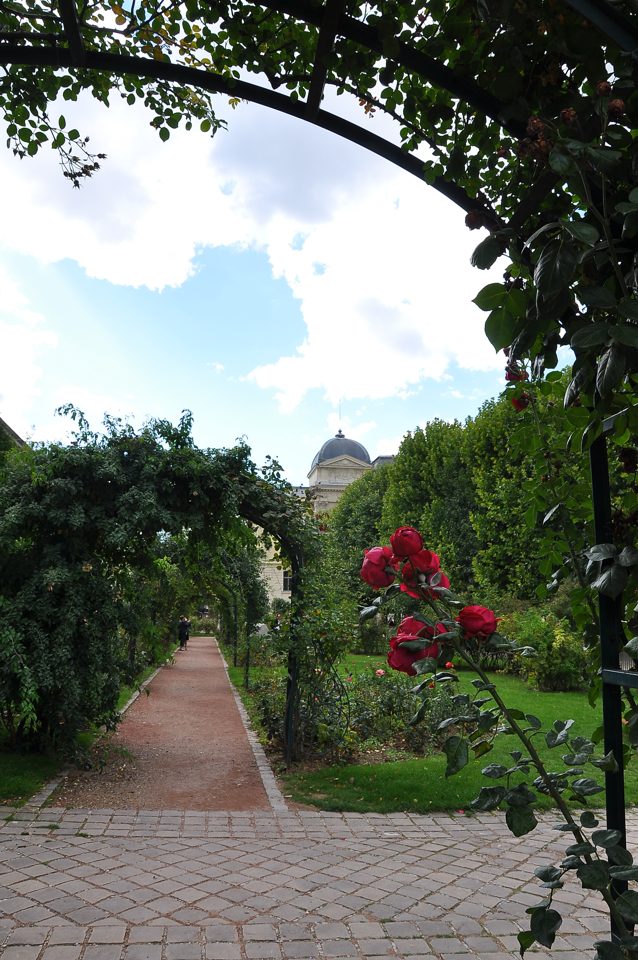
The Jardin des Plantes reaches third because it gives a walk a clear learning purpose without requiring a museum visit. The Muséum's visitor information distinguishes free entry to the outdoor garden from separately ticketed galleries, greenhouses and the zoo. That separation is central to this ranking. We recommend the ordinary garden walk, not an imaginary all-inclusive day in which every nearby attraction is free or operating. A visitor who enjoys patient observation may reasonably place it first. We put two other gardens above it for a more general first Paris afternoon, where botanical interest may not be the main aim.
Try giving the visit one manageable question rather than attempting to absorb an entire collection. You might compare leaf shapes, the way a bed is arranged or the difference between plants seen from a distance and examined from a permitted path. Read a few labels carefully instead of photographing every label for later. A garden is an opportunity to practise noticing, and noticing does not require knowing every name in advance. If a term is unfamiliar, record it and look it up afterward. The useful result can be a better question, not a complete lesson mastered during one stroll.
The distinction between ordinary grounds and particular garden areas also affects access. The operator publishes separate conditions for some spaces, including seasonal or reservation requirements. Do not assume that entering the main garden means every enclosure is available. Decide which part of the visit is essential and which is optional, then check the relevant information before travelling. That approach prevents a closure in one specialised area from making the whole day feel wasted. It also avoids the opposite mistake of entering a restricted place because its gate or boundary looks less formal than a museum door.
This is a strong choice for a group whose members enjoy looking at different scales. One person may notice an overall planting pattern while another becomes interested in a single plant. Agree on a meeting point and allow those kinds of attention to coexist. Keep the activity observational: do not collect specimens, step into planted beds for a better photograph or assume that a labelled plant is meant for handling. Public botanical collections can teach precisely because they are maintained for many visitors. A careful walk contributes to that shared purpose instead of treating the garden as a private outdoor classroom.
Check the current operator notice and timetable rather than using municipal park hours. The Jardin des Plantes is managed independently, and its published information allows temporary closure for severe weather or operational needs. During research, the operator listed a change to winter hours from 25 October and a last-admission margin before closing. We avoid turning that into a permanent timetable in the article. Consult the current schedule for your actual date, including any area-specific conditions. If the garden is only one part of a museum day, make each ticket and opening check separately so that the outdoor visit remains coherent on its own.
Choose the Jardin des Plantes when learning through looking is the main reward. Choose the Tuileries for a walk shaped more strongly by central cultural geography, or Luxembourg for our most balanced first garden visit. Third place is therefore a statement about the brief, not a judgment that knowledge is less valuable than scenery. This garden can change how you look at every planted space that follows. A successful visit might leave you with one newly noticed pattern and several unanswered questions. That is often a better outcome than trying to turn a living collection into a checklist completed in a single afternoon.
Sources: Official reference 1 · Official reference 2.
Photo: Moonik · CC BY-SA 3.0. Jardin des Plantes · 2010-09-17. Archive illustration, not present weather, foliage, water operation or access. Resized and recompressed without cropping or upscaling; original license retained. No endorsement implied.
