
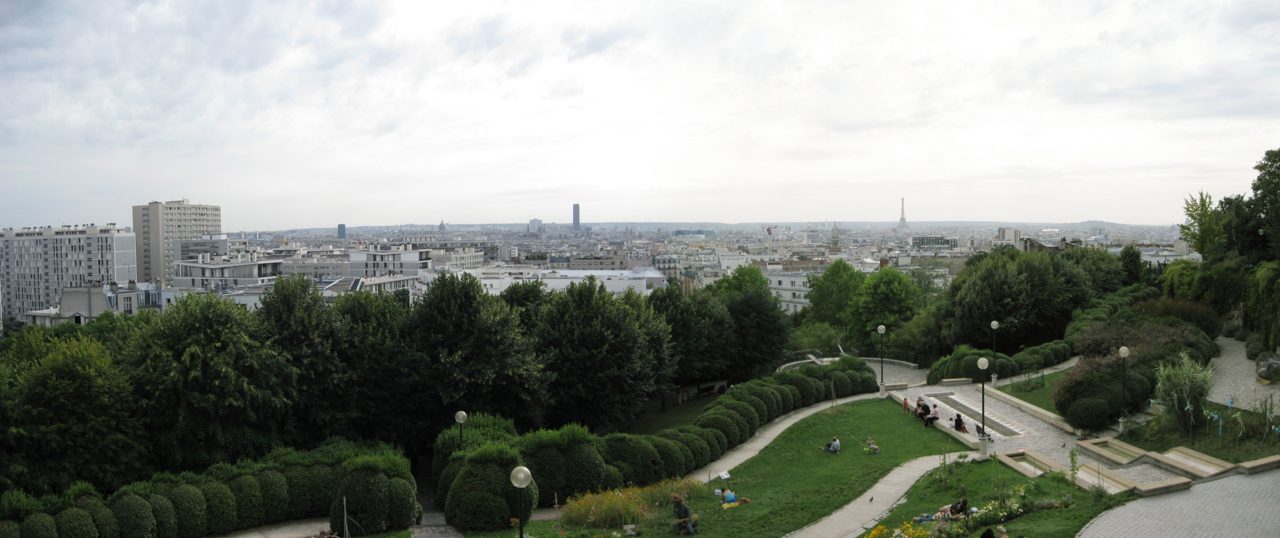
Belleville earns seventh place for a walk organised around a change in viewpoint. The City of Paris identifies the park's panoramic outlook and the Willy Ronis belvedere. That gives this entry a clear purpose: seeing the city from a landscape rather than moving only between objects at street level. A viewpoint, however, is not a guarantee of a particular photograph, clear weather or an unobstructed route on every date. We rank it as a distinctive option for visitors who enjoy that kind of perspective, while recognising that terrain and the journey there may matter more than the view itself.
Plan the approach as part of the visit. A destination described as a viewpoint naturally raises questions about changes in level. Look at the operator's current map and the specific entrance you intend to use, especially if stairs or gradients would change your decision. Do not rely on an attractive photograph to answer a practical route question. A useful plan can be deliberately modest: reach an appropriate part of the park, spend time looking, then leave by a route you have checked. There is no requirement to explore every level in order to have made a worthwhile visit.
At the outlook, try identifying relationships rather than merely identifying monuments. How do nearer roofs, farther buildings and the horizon form layers? Which parts of the city feel close, and which seem separated by the view? These are observations you can make without a specialist guide or a claim about exact distances. If visibility is poor, the exercise changes rather than fails. You may notice the immediate frame of the viewpoint more clearly than the far skyline. A walk is not a contract for a postcard. Allowing weather to change the experience is different from ignoring conditions or access restrictions.
Belleville also challenges the usual ranking habit of making centrality the main measure of value. A visitor staying nearby may gain more from a park that connects with the surrounding neighbourhood than from another journey to the centre. On the other hand, someone with one short afternoon should compare the travel time with the amount of time they can actually spend outside. Neither choice is more authentic by definition. Avoid treating residential streets as a stage set or assuming that a park exists mainly to provide a visitor's photograph. The neighbourhood context is part of the reason to come thoughtfully.
Check seasonal hours before planning a late visit. A panorama often tempts travellers to aim for the end of the day, but the garden's closing time and the time of sunset are different facts. Gates may need to be cleared before you expect to leave, and an onward journey still needs planning. Keep a comfortable margin and follow staff instructions. We do not recommend waiting near a closed entrance in the hope that an old timetable is more accurate than the sign in front of you. The operator's latest information should decide whether this particular visit works.
Choose Belleville when a citywide perspective is the main attraction and the actual route suits your needs. Choose a more level, central garden if the goal is an easy interval between indoor visits. This is not a contest between adventurous and cautious travellers; it is a choice between different afternoons. The seventh position rewards a memorable purpose while leaving room for practical limits. A successful visit might be a sustained look from one suitable place, not a long circuit. If the view helps you understand how the city fits together, the walk has already done something useful.
Sources: Official reference 1.
Photo: JHvW · CC BY-SA 3.0. Parc de Belleville · description July 2009; metadata 21 August 2010, capture date uncertain. Archive illustration, not present weather, foliage, water operation or access. Resized and recompressed without cropping or upscaling; original license retained. No endorsement implied.
