
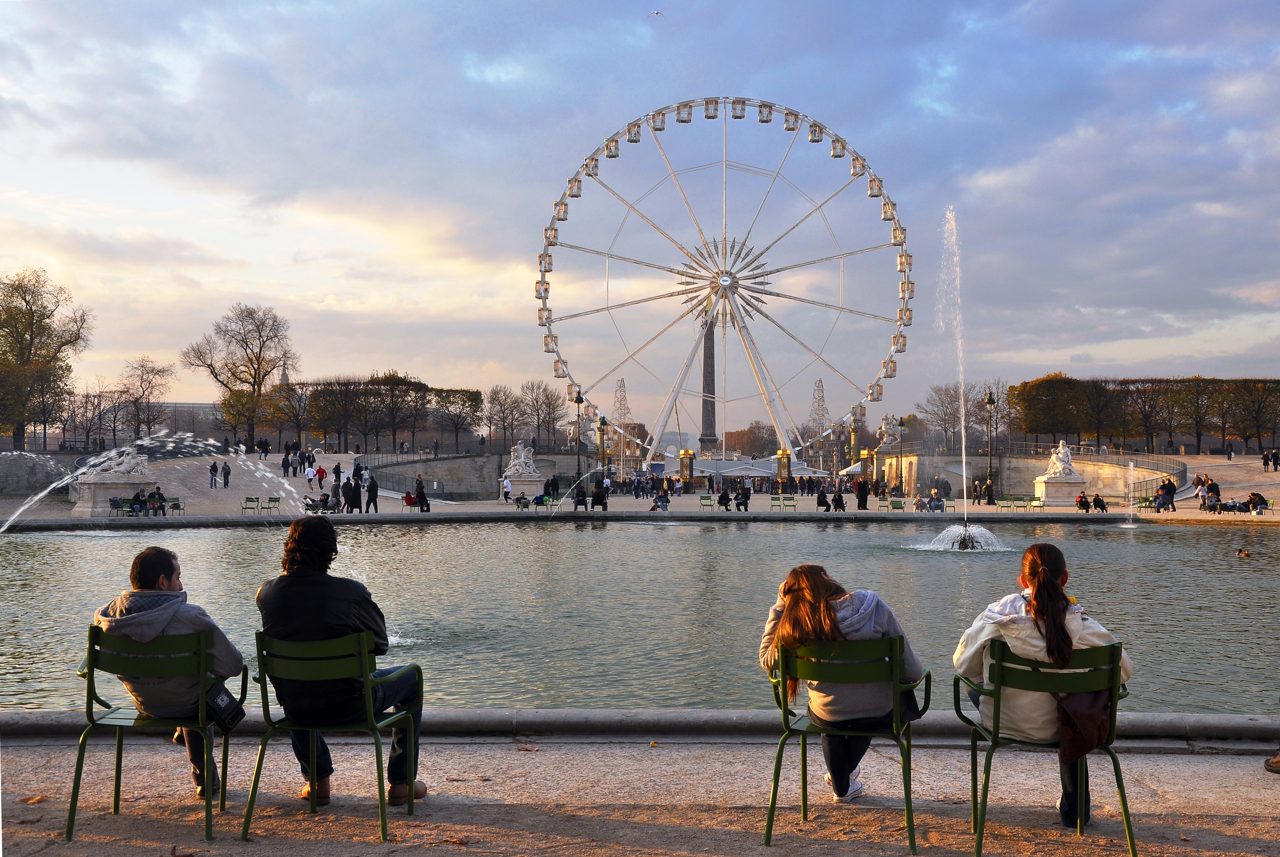
The Tuileries takes second for making a garden walk feel closely connected to a central cultural day. The Louvre identifies year-round free entry to the garden while publishing seasonal hours and temporary access notices. We recommend the outdoor landscape as a destination in its own right, not merely a passage between ticketed attractions. Its strength under our criteria is the clarity of a visit that can be shortened or extended without losing its identity. Luxembourg stays ahead because we favour a slightly more self-contained garden afternoon over a walk whose surrounding cultural itinerary can easily dominate attention.
Begin by deciding whether this is a crossing or a visit. Both are legitimate, but they require different expectations. If you only have time to pass through, choose the appropriate entrance and exit and allow a small margin for stopping. If the garden itself is the purpose, give yourself permission to leave the most direct line and look from another permitted position. Notice how a long view changes when you move sideways rather than forward. This simple exercise can reveal more about a formal landscape than collecting photographs from the busiest-looking point and immediately continuing toward the next appointment.
A central setting can create a particular kind of pressure: everything seems close enough to add one more stop. Resist making the garden responsible for repairing an overloaded itinerary. A museum visit, an outdoor walk and a meal all need their own time and energy. Decide which one leads the day. If the garden is the interval between two fixed bookings, keep the intended route simple. If it is the main activity, leave the next stop optional. The quality of the walk often depends less on the number of nearby landmarks than on whether you have enough attention left to see it.
The Tuileries also offers a useful way to think about public space and individual pace. Some visitors will move directly, others will stop often, and groups may want to gather around the same view. Choose a place to pause that does not block circulation. When taking photographs, let the route continue to work for people who are simply passing through. A shared landscape can accommodate different purposes when those purposes remain considerate. There is no need to describe the garden as always peaceful or always crowded. The experience changes with the day, and a good plan leaves room for that variation.
Pay attention to the operator's actual access notice. During research, the Louvre displayed a restriction dated 22 October naming a particular entrance. That is a reason to check current information, not to present the old restriction as an indefinite rule. The published garden hours also differ by season and include a margin for clearing visitors before closing. Use the current official page for the intended date. Free garden entry does not include every museum or organised activity associated with the site. Keeping those boundaries clear prevents a simple outdoor recommendation from becoming a misleading ticket or access promise.
Choose the Tuileries when your Paris day already has a central cultural focus and you want the garden to be more than a convenient shortcut. Choose Luxembourg if you want the outdoor visit to feel less dependent on the sequence of surrounding sights. The second-place result is close enough that personal priorities can readily reverse it. Our ranking has no invented score to disguise that judgment. The question is practical: will this landscape give the day a useful rhythm, or will you only hurry through it? If you can make space to look, its central position becomes an advantage rather than another demand on the itinerary.
Sources: Official reference 1.
Photo: Moonik · CC BY-SA 3.0. Jardin des Tuileries · 2011-11-21. Archive illustration, not present weather, foliage, water operation or access. Resized and recompressed without cropping or upscaling; original license retained. No endorsement implied.
