
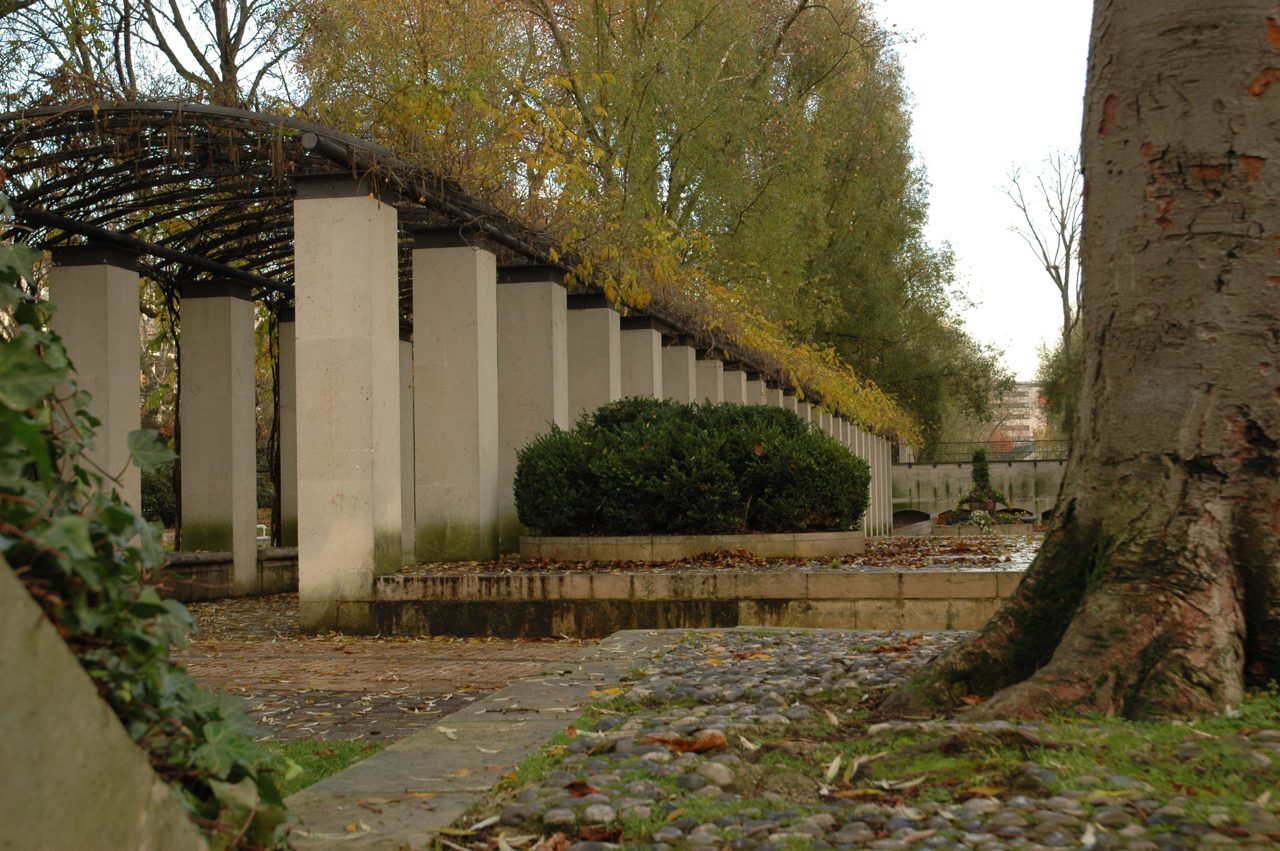
Bercy takes sixth for offering a walk with distinct parts rather than a single view to collect. The municipal description separates broad lawns, cultivated garden areas and a romantic garden beyond rue Joseph-Kessel. That structure is a useful starting point for a visitor: choose a section deliberately instead of treating the name as one uniform landscape. We reward the opportunity to change the character of a walk within one park. We place it below the leading central choices because a first-time visitor's wider itinerary may not naturally pass through this part of Paris.
Begin by choosing the kind of attention you want to give. An open area can suit continuous movement and a broad impression; a more contained garden can reward slower looking at the relationship between paths, planting and water. These are different activities even if both are called a stroll. You can decide in advance which matters most and keep the other as an option. That makes a shorter visit coherent. It also prevents the common mistake of rushing through several different spaces and remembering only that the park was larger or more complicated than expected.
The transitions between sections are part of the planning, not a detail to discover at the last minute. Look at the current map and the route across or around the dividing street. A connection that looks simple in an overhead view may involve a level change or an entrance choice that matters to your group. Do not promise a universally accessible circuit from a general description. If only one section fits comfortably, choose it with confidence. The article's ranking is based on the range of walking possibilities, but an individual visitor does not have to use the whole range.
Bercy also offers a chance to think about cultivated landscapes without turning a visit into a gardening lesson. Notice how a planted area differs from a broad lawn in what it asks of the eye. Does it invite close inspection, a pause at an edge or movement along a repeated pattern? Keep to permitted paths and do not treat fruit, flowers or vegetables as visitor refreshments. The municipal material describes working garden elements; their value does not depend on being available for touching or picking. Looking carefully is a complete activity. It can be more revealing than trying to name every plant.
Separate this park from the similarly named Île de Bercy in the Bois de Vincennes. A name alone is a poor navigation instruction, especially when a saved map search can point somewhere different from the intended garden. Use the full municipal listing and check the address before departure. If you extend the walk toward another destination, plan that extension independently rather than assuming that every nearby connection is currently open. This is particularly important when weather, maintenance or an event changes circulation. A clear destination and a checked exit make it easier to shorten the visit sensibly.
Choose Parc de Bercy when variety within one outdoor stop matters more than being beside the most familiar central sights. It can be a satisfying place to learn how a route changes character without crossing half the city. Choose a more compact garden if the group wants a single clear frame and fewer decisions. Our middle position reflects that balance: Bercy has range, but range becomes useful only when the visitor makes a selection. The best version of this walk is not necessarily the longest. It is the one whose different parts have enough time to register.
Sources: Official reference 1.
Photo: Roman Bonnefoy (Romanceor) · CC BY-SA 3.0. Parc de Bercy · EXIF 22 November 2007; summary does not state a capture date. Archive illustration, not present weather, foliage, water operation or access. Resized and recompressed without cropping or upscaling; original license retained. No endorsement implied.
