
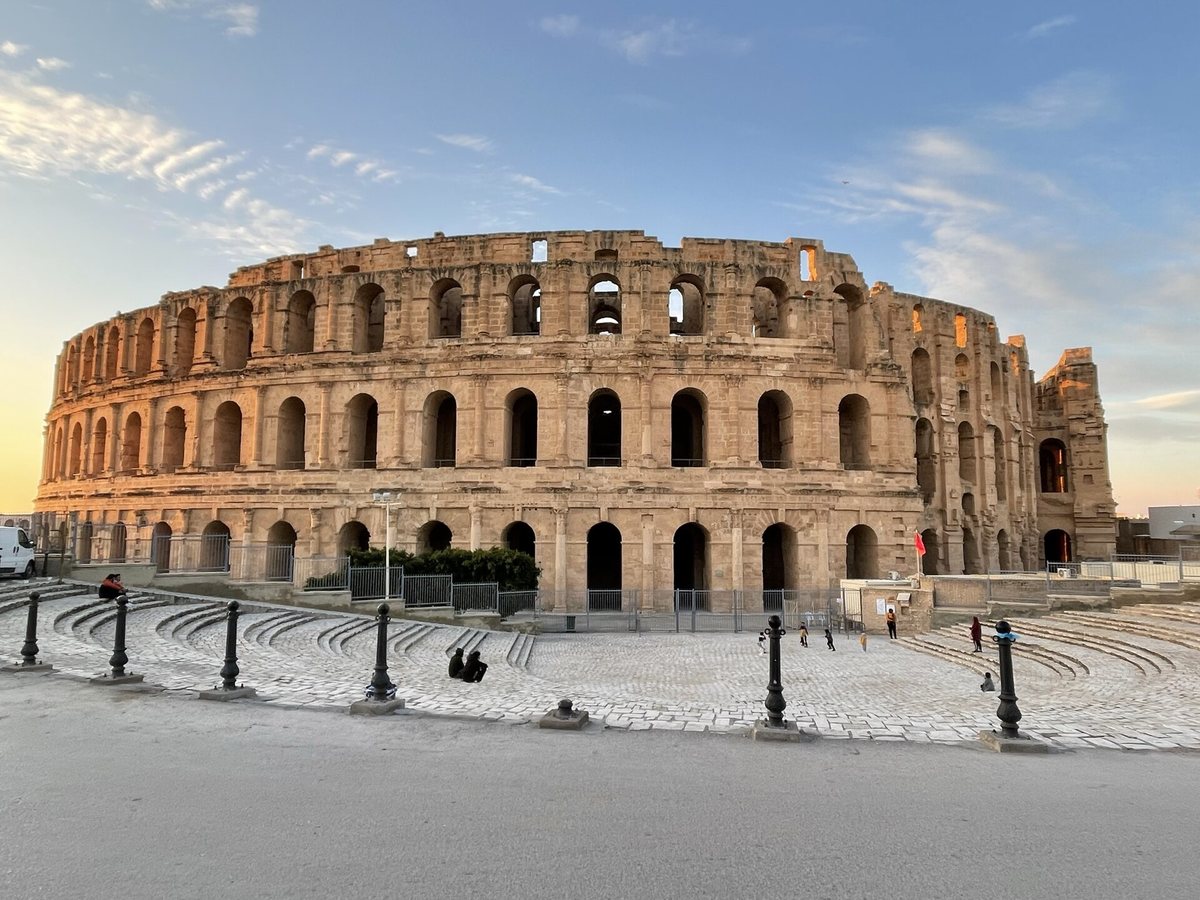
The Colosseum is famous, but it is only one way to encounter a Roman amphitheatre. These ten sites in the United Kingdom, France, Spain, Croatia and Tunisia range from excavated grassy ovals to monumental stone shells. Each gives you a different question to ask about the architecture of a crowd.
This is an editorial travel shortlist, not a ranking by size, visitor numbers or a conservation score. We favour readable surviving layouts, distinctive construction or later reuse, and a range of settings. El Jem and Nîmes lead because they make the relationship between the façade, seating and circulation particularly rewarding to explore. The countdown reads from #10 to #1.
An amphitheatre surrounds an arena; it is a different building type from the semicircular theatre. The violence of gladiatorial shows and animal hunts is part of these sites’ history, not something their beauty should obscure. Look at entrances, seating supports and later additions as well as the overall view.
Official heritage and visitor sources were checked on 5 October 2026. Ancient capacities are estimates where stated. Opening arrangements, conservation work and event access can change; follow the official links before booking, especially if steps or uneven ground affect your visit. Photographs document the sites at the time they were taken and do not establish today’s access.
For another way to read historic public spaces, see our landmarks in the history of democracy. As you explore this list, consider which reveals more to you: a complete-looking exterior or exposed archaeological remains?
Photo: Carole Raddato · CC BY-SA 2.0. Resized and recompressed; same image license.
