
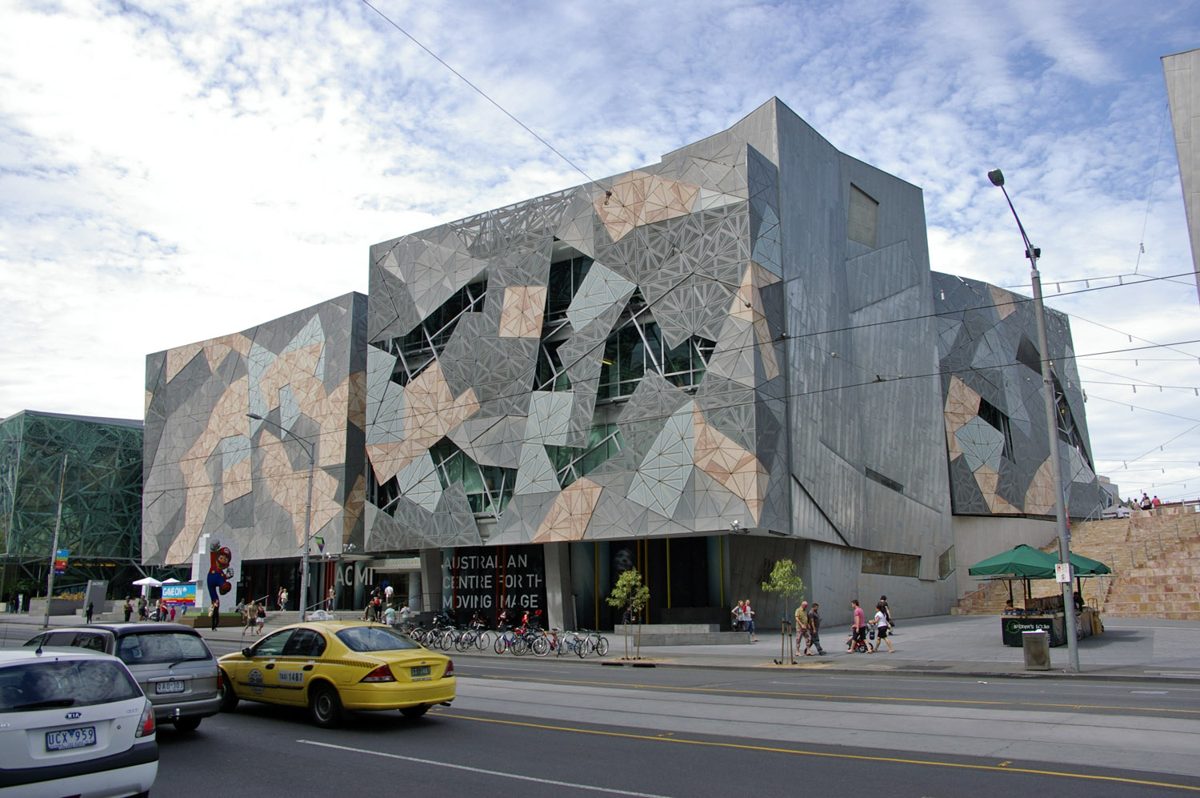
ACMI in Melbourne ranks fourth because it treats film as part of a larger screen culture without losing the pleasure of making things understandable. Its central exhibition, The Story of the Moving Image, brings together cinema, television, videogames and other screen-based work. The institution describes interactive experiences involving shadows, optical toys, time, assembling scenes and creating sound in a Foley studio. That gives a first visit an active purpose. Rather than only learning that moving images have a history, you can test how choices change what an audience sees, hears or is invited to do.
Sound is a particularly rewarding starting point. In a Foley-style exercise, an ordinary action becomes a question about how its screen presence is constructed. A sound can make a movement feel heavy, delicate, threatening or comic without changing the visible action itself. The point is not to assume every film uses the same method or that every noise is manufactured separately. It is to notice that the relationship between picture and soundtrack is a creative decision. Trying one example carefully can make you listen differently to a whole film later, which gives the interaction value beyond the moment of pressing a control.
What to notice
The inclusion of videogames also broadens the conversation about spectatorship. Watching a sequence and acting within a designed system are different experiences, even when both involve a screen. Think about what changes when your choice influences the next event instead of merely anticipating it. That does not mean you need to decide whether a game is more or less artistic than a movie. It provides a clearer way to compare how each organizes attention and time. ACMI's screen-culture framing is especially useful for a group whose everyday media habits extend beyond cinema, because those habits become part of the discussion rather than a distraction from it.
The museum's Lens offers another interpretive possibility. ACMI describes it as a free tool for collecting objects, works and creations from the exhibition, with connections that can be explored afterward. Treat that as a way to develop a personal thread, not as an obligation to accumulate everything. Choose a few things that raise the same question, such as how images move or how a fictional environment is built. A focused collection can give you a reason to revisit the ideas later. A huge list assembled automatically may be less memorable than three items whose relationship you can explain in your own words.
Choose a visit that fits
The central exhibition is listed as free, but that should not be generalized to every ACMI screening, special exhibition or event. Use the actual program to choose what belongs in your day. The Melbourne setting at Fed Square makes it natural to combine the museum with other city plans, yet interactive work can reward more attention than a quick walk through suggests. Leave room to repeat a small experiment or compare results with a companion. A family may get more from that deliberate pause than from attempting to complete every available activity, especially when different people are drawn to different kinds of screen experience.
Fourth place reflects ACMI's breadth and strong learning opportunities, while the top three provide particularly compelling alternatives for film-specific interests and memorable settings. It could be number one for someone who wants cinema connected to contemporary media rather than separated from games and television. Choose it when making, listening and comparing are as important as recognizing famous artifacts. The question to take away is how a screen work directs your participation: through a cut, a sound, a visual cue or an action you choose. Once you begin noticing those invitations, the museum can keep influencing your attention long after the visit ends.
Source: ACMI.
Photo: Australian Centre for the Moving Image.jpg · Bidgee · CC BY 3.0. Archive illustration, not evidence of current displays, crowds or access. Resized and recompressed without cropping; original image license retained.
