
Vincent Price stands eighth for Prince Prospero in Roger Corman’s The Masque of the Red Death, released in 1964. The film gives him a setting in which status, hospitality and cruelty become closely entangled. Price makes authority sound cultivated rather than merely loud. That is the key to this selection. The character’s confidence rests on an assumption that he can define the terms of everyone else’s experience, including what counts as amusement. The performance allows pleasure in language and pleasure in power to reinforce one another, so an apparently elegant exchange can carry a threat without requiring constant physical aggression.
Listen to the difference between speaking to someone and speaking for an audience. Prospero can make an exchange feel like a small performance staged for the benefit of the surrounding court. A phrase therefore has several targets: the person directly addressed, the people watching and the viewer who recognizes the imbalance. Price’s vocal precision helps us hear that social arrangement. His character’s cultivated manner is not a reassuring surface accidentally interrupted by cruelty; it can be the means by which cruelty becomes orderly and presentable. This makes the acting worth examining even when the extravagant setting initially draws more attention than a face or voice.
The performance and its competing case
Physical restraint matters as much as speech. A person who assumes obedience does not always need large gestures to demonstrate it. Watch how a modest change of posture or attention can suggest that another person has become useful, amusing or disposable in Prospero’s eyes. The effectiveness comes from treating those shifts as meaningful choices within a relationship. Price does not simply decorate the image with a sinister expression. He helps establish a social environment in which everyone else must interpret his mood. Horror can emerge from that uneven distribution of interpretive work before any spectacular element becomes the center of the scene.
The competing case for a higher rank is that this performance offers an unusually rich form of theatrical horror acting. Price can make the act of speaking itself entertaining while keeping the character’s power disturbing. If verbal elegance and stylized villainy are your main criteria, eighth is too low. Our reservation is that Prospero’s cultivated dominance gives the performance a relatively consistent governing mode. The roles above him reveal more friction between what a character intends and what emotion or circumstance allows. This is an editorial distinction between kinds of complexity, not a rule that theatrical performances must yield to naturalistic ones.
What to watch on a return
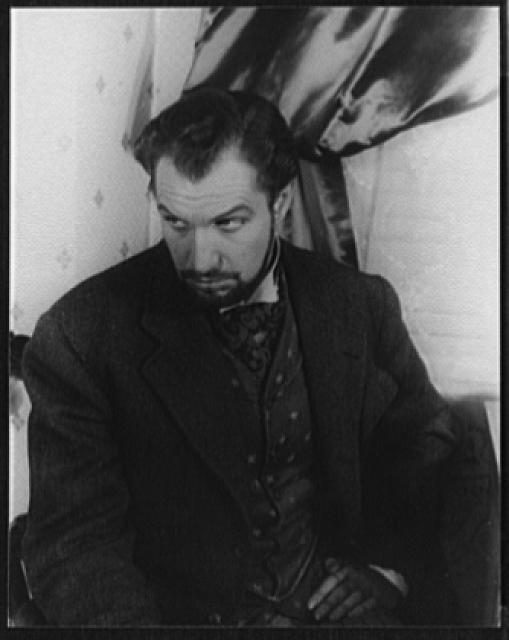
Corman’s direction, the production’s color and the ensemble provide essential support. An actor’s command feels different when the visual world appears designed to display and magnify authority. Keep that collaboration in view rather than treating every impressive composition as Price’s achievement alone. The historical photograph accompanying this entry shows him in Angel Street in 1942, not in this film; it provides actor context without pretending to illustrate Prospero’s costume or a particular scene. A useful viewing exercise is to notice an exchange before and after another character answers him. Does his apparent warmth expand, contract or become more obviously conditional?
Price ranks above Lugosi because the selected role gives our criteria more opportunities to examine language as social manipulation. Curtis comes next because her watchfulness produces a more immediate sense of vulnerability and practical response under threat. You may reasonably prefer Price’s elaborate control to that everyday immediacy. The disagreement need not become a contest between serious acting and entertainment: making a stylized villain compelling is a demanding form of dramatic work. When you remember this performance, consider whether its strongest effect is the menace of a single line or the larger impression of a court organized around one person’s enjoyment of control.
Source: Primary film record 1 · Primary film record 2.
Photo: Carl Van Vechten / Library of Congress · Public domain; LOC no known restrictions. Vincent Price in Angel Street, 11 November 1942; full original border retained; historical actor context, not a still from the ranked film. Full source frame retained; resized and recompressed, no new crop, colorization or upscaling.

