
What makes a horror performance great: the monster you recognize instantly, the ordinary person you fear for, or the villain whose politeness makes a room feel unsafe? Our answer gives Boris Karloff’s creature in Frankenstein first place, with Kathy Bates in Misery and Toni Collette in Hereditary close behind. That choice is an editorial argument, not a measured result. A different emphasis could reasonably reverse the podium. This countdown compares ten individual performances, rather than claiming that one actor’s entire career is greater than another’s. Each selection offers something specific to notice on a first viewing or a careful return.
The scope is English-language feature films, chiefly American and British productions, researched on 21 October 2026. It is a deliberately bounded selection, not a complete worldwide history of horror acting. The reading order moves from number ten to number one, with one performance per actor. We prioritize emotional specificity, command of voice and physical behavior, and the ability to shape the viewer’s experience of fear. Cultural recognition helps explain why a performance matters, but fame alone does not win. Awards, box office and an actor’s later sequels are not combined into a fictional numerical score or substituted for close observation.
The performance and its competing case
These criteria allow very different approaches to compete. Bela Lugosi can make a deliberate pause feel like an exercise of power; Christopher Lee makes a change from formal composure to sudden movement frightening. Jamie Lee Curtis gives danger meaning through watchfulness, while Anthony Perkins complicates the apparent safety of an ordinary conversation. The comparison is useful precisely because these are different jobs. A performer playing a threat must organize attention differently from someone discovering a threat. Neither assignment automatically requires more skill. What matters is whether the behavior remains persuasive within the particular film’s style and creates more than a memorable costume.
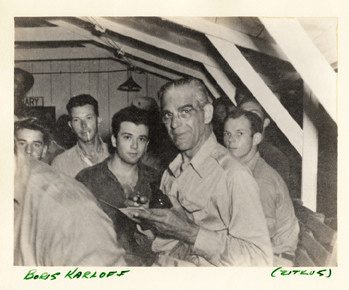
Horror also belongs to collaborators. Karloff’s work cannot be separated from James Whale’s direction and Jack Pierce’s makeup design; the creature’s appearance is not something an actor created alone. Editing decides how long we can study a reaction, lighting decides what we can see, and another performer supplies the person being listened to. Our discussion therefore asks what the acting contributes inside that system, without treating a striking camera setup as proof of acting excellence. Historical portraits accompany the entries as context. They are not screenshots, evidence of a particular scene, or photographs necessarily taken when the featured film was released.
What to watch on a return
There is a seasonal reason to revisit the subject. Google Trends Explore, inspected for the United States over the past thirty days on 21 October, showed relative average scores of 39 for horror movies, 1 for horror actors and 52 for Halloween movies. These are normalized comparison scores, not monthly search volumes or audience totals. Rising related queries included October viewing recommendations. That supports a seasonal viewing angle, while the weak exact actor term limits any claim about demand for this specific ranking. These films address adult horror themes; Halloween interest does not make the selection a children’s viewing guide.
Use the countdown as an observation exercise rather than a test of whether you agree with every position. Notice who controls the pace of a conversation, when a face contradicts a spoken reassurance, and how an apparently small movement changes your expectations. We discuss premises and acting choices while avoiding final revelations and graphic descriptions. Our classic horror movie guide offers a complementary film-focused route, and our greatest film directors ranking explains another way of thinking about authorship. Keep one question in mind: if emotional realism matters more to you than physical invention, should Bates or Collette take the crown from Karloff?
Source: Primary film record 1 · Primary film record 2 · Primary film record 3 · Google Trends.
Photo: Clell Thorpe; Courtesy of Special Collections, University of Houston Libraries, UH Digital Library · CC BY-SA 2.0. Boris Karloff signing autographs after a USO performance, Kwajalein, 1945; original low resolution retained; historical actor context, not a still from the ranked film. Full source frame retained; resized and recompressed, no new crop, colorization or upscaling.
