
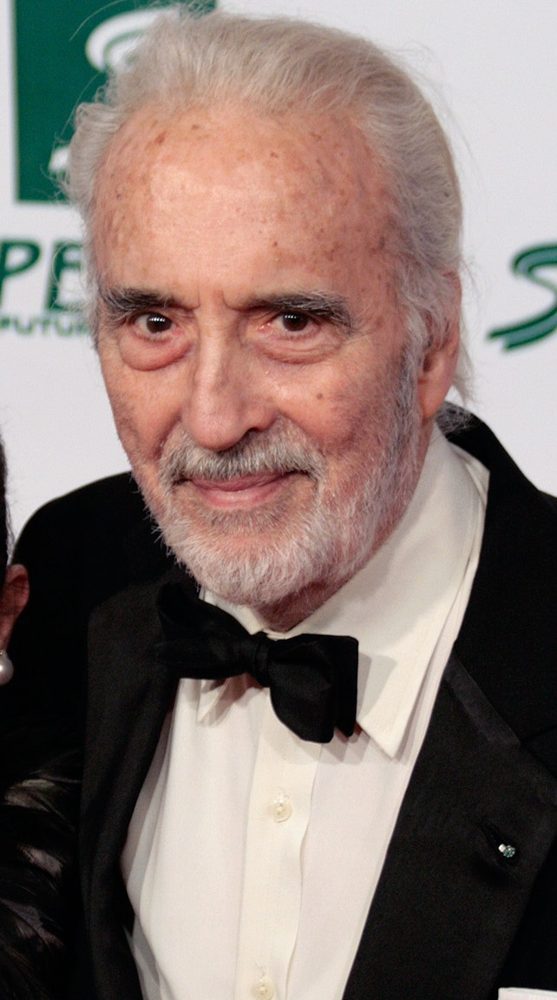
Christopher Lee takes sixth place as Count Dracula in Terence Fisher’s 1958 Dracula, also known in the United States as Horror of Dracula. This is a specific film performance, not a combined judgment on every later appearance in the role. Lee makes the contrast between formal control and physical threat central to the character. His bearing can initially suggest a person who belongs within an established social order. The unsettling force comes when that composure proves compatible with a more abrupt and predatory energy. The two modes do not cancel one another; each makes the other more consequential to the viewer.
Compare this approach with Bela Lugosi’s 1931 performance. Lugosi often lets ceremony and deliberate speech sustain the threat. Lee gives greater weight to a shift in physical intensity. Neither interpretation needs to be declared the only legitimate Dracula. They reveal different ways in which performance can transform an aristocratic exterior into something frightening. Lee’s control matters because sudden movement is more effective when we have first felt the discipline of stillness. If an actor begins at maximum intensity and remains there, the audience has less room to experience the change as a discovery about the character’s underlying capacity.
The performance and its competing case
Watch his relationship to the people around him. A commanding presence is not just a matter of height, costume or a striking close-up. It must become a pressure that other characters appear to register. Lee’s attention can make an encounter feel uneven before overt action settles the question. The role offers a useful lesson in economy: dialogue is only one way to define intention. A pause, a fixed look or a controlled approach can carry dramatic information when the surrounding scene supports it. Our interpretation concerns those choices within Fisher’s film, without inventing a psychological biography that the movie does not provide.
The competing case for a higher position is the precision of that economy. A viewer who values concentrated physical presence may rank Lee above performers with more dialogue or overt emotional display. The result does not have to resemble everyday realism to feel authoritative within the film’s world. We place him sixth because our upper five offer more sustained shifts between vulnerability, social performance and conflicting emotional demands. That distinction is open to argument. It gives no automatic advantage to a larger role or a greater number of spoken lines, and it does not treat a famous costume as a substitute for performance.
What to watch on a return
The collaboration with Fisher, Peter Cushing and the rest of the production remains essential. Horror arises through confrontation, framing, color and timing as well as through the person playing the threat. An effective comparison asks what Lee contributes to those relationships rather than awarding him every effect the film creates. The accompanying photograph shows him at an awards event in Vienna in 2009, not in the 1958 production. It is historical actor context. For a focused viewing exercise, follow one transition from polite interaction toward menace and notice which change arrives first: the gaze, the voice, the posture or the pace of movement.
Lee ranks above Curtis because our editorial balance rewards the sharply managed transformation of social authority into bodily threat. Spacek follows because her selected performance gives more space to an emotional life that remains vulnerable even as the film’s circumstances change. You can reasonably reverse either comparison depending on whether you prize controlled presence or access to a character’s inner conflict. The most useful debate is not which Dracula looks more frightening in a photograph. It is how each performance organizes time and expectation. Does Lee’s greatest achievement lie in the sudden rupture of composure, or in making you distrust the composure before it breaks?
Source: Primary film record 1 · Primary film record 2.
Photo: Manfred Werner / Tsui; existing crop by Dr. Blofeld · CC BY-SA 3.0. Christopher Lee at the Women’s World Awards, Vienna, 5 March 2009; historical actor context, not a still from the ranked film. Full source frame retained; resized and recompressed, no new crop, colorization or upscaling.
