
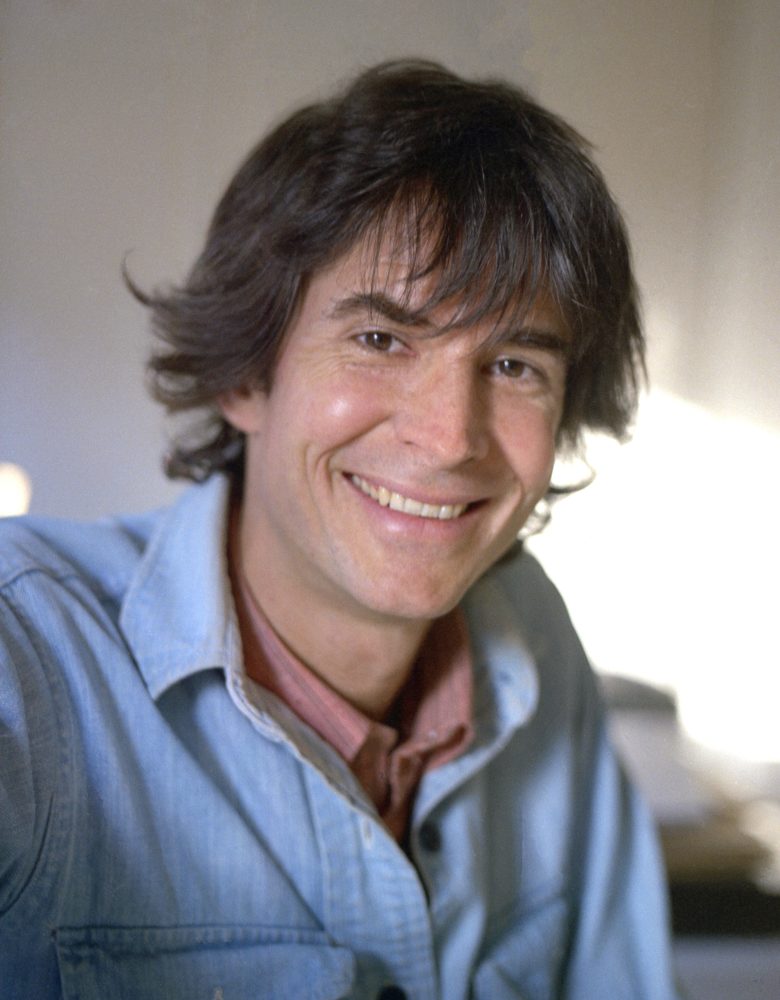
Anthony Perkins stands fourth as Norman Bates in Alfred Hitchcock’s Psycho, released in 1960. We are ranking the original film performance and will avoid its final revelations. Perkins makes an apparently ordinary encounter difficult to read. Politeness, awkwardness and an eagerness to maintain connection can share the same moment, leaving the viewer uncertain about how much confidence to place in a reassuring surface. That uncertainty is the achievement. The role is not powerful merely because audiences may arrive knowing the film’s reputation. It remains interesting when we watch how a person tries to manage an immediate conversation with another human being.
Listen to the relationship between a spoken answer and the time it takes to arrive. A hesitation can seem like embarrassment, calculation, hurt or an effort to find the socially acceptable response. Perkins allows those possibilities to remain close together. The result is more unsettling than a simple instruction to distrust everything the character says. A performance that announced danger in every gesture would narrow the scene’s possibilities. Here, the audience has to keep adjusting its interpretation. That work of interpretation gives apparently modest exchanges an unusual intensity, because small changes can alter our sense of the relationship without an obvious dramatic declaration.
The performance and its competing case
Physical behavior supports the same instability. Watch what happens to posture and attention when a topic becomes uncomfortable. A character can try to remain courteous while the body suggests a competing impulse. Perkins makes such friction readable without turning each movement into a conspicuous signal. The performance depends on the other actor and on Hitchcock’s control of what the viewer sees and when. It is therefore useful to distinguish the uncertainty created by a cut from the uncertainty already present within an uninterrupted exchange. Both are cinematic tools, but only that distinction lets us discuss the actor’s specific contribution with precision.
The case for first place is especially strong if ambiguity is your principal criterion. Perkins can make a friendly moment retain warmth while also making that warmth difficult to trust. Few tasks in horror acting are more delicate than sustaining sympathy without guaranteeing safety. Our fourth place reflects the priority we give to the more expansive emotional exposure of Collette, the relational control of Bates and the physical invention of Karloff. Someone who values the destabilization of everyday conversation above all three could put Perkins at the summit. There is no need to invent an objective measurement to make that argument persuasive.
What to watch on a return
Avoid reducing the performance to a psychiatric label or a plot summary. A suspense film is not a diagnostic case study, and its final explanation does not replace the dramatic detail that precedes it. Notice instead how Perkins responds to being listened to, questioned or momentarily understood. These are ordinary relational pressures given extraordinary weight by the surrounding story. The historical portrait accompanying this entry was made by Allan Warren in New York in 1975, not during Psycho’s production. It identifies the performer and preserves a properly credited image without pretending to document a scene, costume or facial expression from the film being discussed.
Perkins ranks above Spacek because our editorial balance favors the persistent uncertainty he places inside an apparently safe social exchange. Collette follows through the intensity and variation of a family relationship under pressure. This comparison is close enough that a small change in criteria could reverse it. Try revisiting an early conversation without treating your knowledge of the film as the character’s knowledge. Which moment makes you change your reading of Norman, and which tiny choice by Perkins makes that change possible? Answering with a pause, a glance or a shift in phrasing is more revealing than answering only with the film’s famous reputation.
Source: Primary film record 1 · Primary film record 2.
Photo: Allan Warren · CC BY-SA 3.0. Anthony Perkins in New York, 1975; source author’s existing color correction retained; historical actor context, not a still from the ranked film. Full source frame retained; resized and recompressed, no new crop, colorization or upscaling.
