
Sissy Spacek reaches fifth place as Carrie White in Brian De Palma’s Carrie, released in 1976 from Stephen King’s novel. The premise involves a bullied young person, a controlling home environment and emerging telekinetic powers. Spacek’s contribution is to keep emotional vulnerability central as those elements interact. The character is not merely a mechanism waiting to produce a supernatural effect. Her uncertainty about how she is seen by others gives ordinary encounters dramatic weight. That allows the film’s frightening possibilities to remain connected to recognizable experiences of humiliation, hope and the difficult wish to belong within a social world.
Look first at how she receives attention. A person who expects ridicule may find kindness difficult to trust, and the performance makes that hesitation visible without needing a speech explaining every feeling. Small changes in the face and posture can suggest the effort of deciding whether an invitation is safe. The audience therefore participates in a changing interpretation of the same social space. What looks promising in one moment may remain fragile in the next. This is a more demanding task than presenting a permanently frightened expression, because Spacek has to make the possibility of hope emotionally credible as well.
The performance and its competing case
The home scenes create a different pressure from the school environment. Acting across those settings requires more than carrying a single mood from one location to another. Spacek’s relationship with Piper Laurie’s performance helps define the difference between an external social threat and an intimate authority that is difficult to escape. We discuss that dramatic relationship without diagnosing the characters or treating a film as medical evidence. The useful observation is how a person’s freedom to speak, look up or occupy space changes depending on who is present. Such adjustments can reveal a history of power without turning every scene into explicit explanation.
Spacek’s case for the top three is the breadth of feeling she keeps available within a tightly controlled film. Vulnerability and supernatural power do not erase one another. A performance can remain moving even when the genre asks it to become frightening, and that coexistence is central to our admiration. We place her fifth because Perkins, Collette, Bates and Karloff each add a particularly forceful tension between the viewer’s sympathy and uncertainty about what the character may do. Other viewers may find Carrie’s emotional openness more valuable than ambiguity. That is a credible disagreement about the experience a horror performance should prioritize.
What to watch on a return
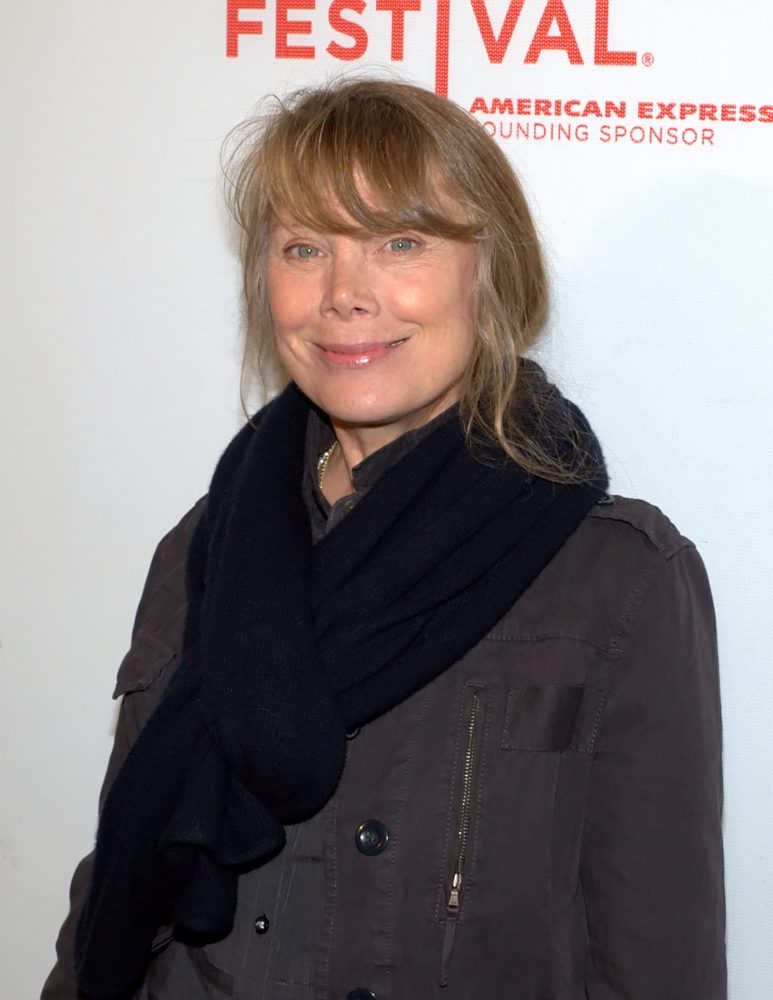
De Palma’s direction, the editing and the surrounding ensemble strongly shape what we perceive. A dramatic image is not evidence that an actor has independently created every emotion it produces. Instead, notice how Spacek supplies continuity across changes in visual style and scale. The person at the center remains recognizable even when the film’s attention shifts toward spectacle. Our accompanying photograph shows Spacek at the 2010 Tribeca Film Festival; the Commons upload date is not claimed as a verified shooting date. It is not an image of Carrie, and it should not be used to infer how the actor looked during production in the 1970s.
Spacek ranks above Lee because our criteria give greater weight to emotional transitions across relationships than to the concentration of a commanding threat. Perkins takes the next position through a more destabilizing use of ordinary friendliness and discomfort. Neither judgment makes realism the only legitimate standard: Carrie’s world includes supernatural power, and the performance succeeds within that world. On a return viewing, pay attention to a scene in which Carrie is offered something she wants. How does Spacek let the possibility of acceptance become visible while preserving the fear that acceptance may be withdrawn, misunderstood or transformed into another source of harm?
Source: Primary film record 1 · Primary film record 2.
Photo: David Shankbone · CC BY 2.0. Sissy Spacek at Tribeca Film Festival, 2010; exact capture date not established; historical actor context, not a still from the ranked film. Full source frame retained; resized and recompressed, no new crop, colorization or upscaling.
