
A steal is a credited defensive action connected to taking possession away from the opponent through a turnover. For a beginner, the important distinction is between touching the ball and actually producing the recorded change. A defender can deflect several passes without receiving a steal if the offence keeps possession. Another defender may force the decisive error while a teammate gathers the loose ball. The official attribution is not always as obvious as the final player holding it. STL therefore describes recorded outcomes within a scoring system, rather than every moment of defensive disruption.
Consider an invented sequence in which a defender reaches into a passing lane, redirects the ball and a teammate collects it. The possession has changed, but deciding the individual credit requires the provider's scoring judgment. Now imagine the same deflection flying out of bounds with the attacking team retaining the ball. That can interrupt the attack without creating the same steal outcome. Comparing these examples helps explain why a fan's personal tally of impressive touches may differ from the published number. Use the final official line when reporting a player's total, and separate observation from attribution when discussing a borderline play.
Steals can create attacking opportunities because they may leave the former offence moving in the wrong direction. Yet the STL column does not promise a fast-break basket. The new ball handler might slow down, miss a shot or commit another turnover. A useful viewing exercise is to follow the next possession rather than stop at the interception. You can then describe both the defensive event and what the team did with its opportunity. Claiming that two steals automatically produced four points would skip the part of the game that still had to happen.
There is also a risk-and-reward question that the total cannot settle. Reaching for a pass might create a turnover, but a failed gamble can leave an opponent open. Staying in position might prevent a dangerous pass without producing any steal at all. The same box-score number can therefore accompany very different styles of defending. Avoid treating a low STL total as proof of inattention or a high total as proof of flawless defence. Those are judgments about decisions across many possessions, while the column counts only a particular class of successful recorded actions.
Compare hypothetical players with three steals in ten minutes and three steals in thirty minutes. The totals match, but the playing-time context does not. You could calculate events per minute as a descriptive exercise, although such a small sample would be a fragile basis for predicting future games. Also check the opponent and the pace of play. More possessions can provide more chances for both good defensive actions and mistakes. A careful comparison identifies these differences explicitly instead of pretending that an identical total reflects an identical workload or repeatable level of ability.
STL ranks above blocks here because it points more directly toward an opponent losing possession, but it remains a partial defensive indicator. Many turnovers have no corresponding steal, including some violations and offensive fouls. Team turnover totals therefore do not have to equal the opposing team's steals. That simple reconciliation prevents a common reading error. To understand the game, locate the steals, review the uncredited pressure around them, and examine turnovers that occurred without one. The combination gives a fuller picture of how possession changed than a highlight montage or a single bold number can provide.
Sources: Jr. NBA: reading a box score · NBA statistical glossary · FIBA statisticians’ manual 2024, separate competition reference.
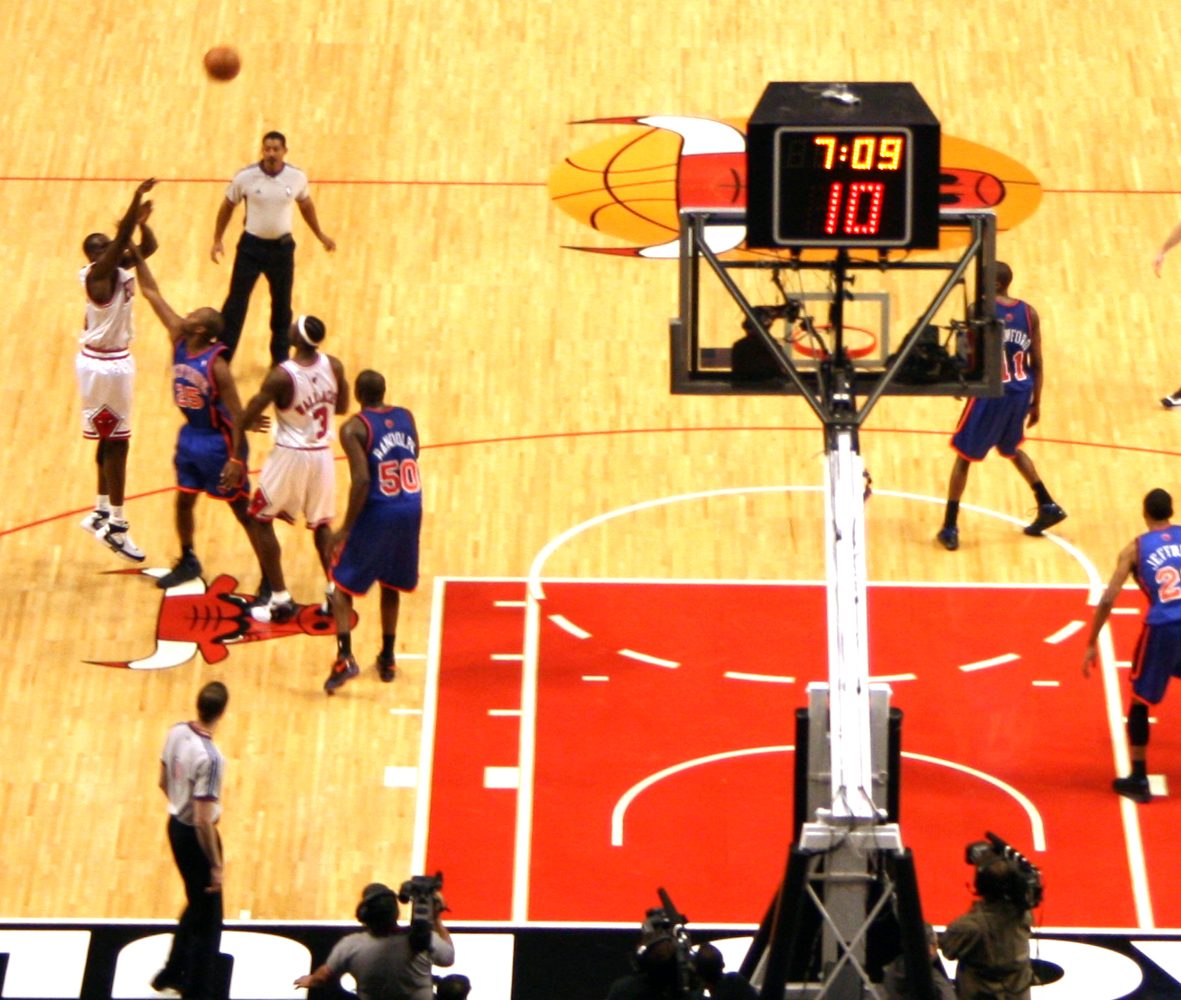
Photo: Gavin J. Dow (Gavindow); source crop/color correction by HITNOM and Adeletron 3030 · CC BY 3.0. NBA court and shot clock, 14 December 2007; context photograph, not evidence of a specific statistical event. Existing optimized local JPEG reused unchanged. Earlier resizing/recompression retained, with source crop/color adjustments where applicable. The stated license applies to this image; no endorsement or evidence of the invented examples is implied.
