
CP/M opens the countdown because it made a small computer more than a bespoke collection of parts. The Computer History Museum traces Gary Kildall's work to a 1974 prototype and explains how separating hardware-dependent functions helped the system move among microcomputers. The important idea for this ranking is not a claim that CP/M invented operating systems. It is that a shared software environment could support applications across machines from different suppliers. That changed the scale of the question facing a developer: instead of writing for one unusual device, a program could address a more recognisable platform with a wider potential audience.
To see why this mattered, imagine two computers with different disk controllers. If every application must know each controller's details, adapting software becomes repeated work. A system layer that concentrates those differences can reduce that burden. This is a conceptual illustration, not a claim that any CP/M program could run on every processor without modification. Hardware architecture and software interfaces still imposed boundaries. Portability is always a statement about what can move, between which environments and with how much adaptation. CP/M deserves credit for making that separation commercially useful in early personal computing, rather than for abolishing the underlying differences between computers.
How influence is judged
The application ecosystem is as important as the prompt. A command line may look austere to someone used to touchscreens, yet its historical value depends on the work people could perform through it. The museum describes an independent software market around CP/M, including business applications. This gives a better explanation of influence than treating every old command as a curiosity. A platform becomes meaningful when programmers and users can expect a shared environment to exist. That expectation lets training, software and documents travel more easily than they could in a world where every machine demands an entirely separate operating system and application catalogue.
CP/M also provides a useful warning about historical hindsight. Its eventual displacement by MS-DOS does not mean its contribution was unimportant, just as an early advantage does not guarantee permanent dominance. The ranking evaluates what a platform made possible in its own setting and what lessons remained, rather than awarding points only to names still familiar to buyers. Software history contains successful ideas whose original commercial vehicle disappeared. Studying those cases helps distinguish influence from survival and makes it harder to write a simplistic story in which the eventual market winner must also have invented every useful feature that preceded it.
Sources and competing cases
The strongest argument for a higher position is that compatibility and a supplier-independent application market were foundational to personal computing. If the list focused entirely on early microcomputers, CP/M could rise substantially. We leave it tenth because the other selections either reached broader settings or carried a larger bundle of enduring ideas under our three-part method. That is a comparative judgment, not a dismissal of Kildall or the people who built its applications. Nor does the article repeat colourful stories about missed meetings or personal decisions as if an anecdote could substitute for the documented technical and commercial development of the system.
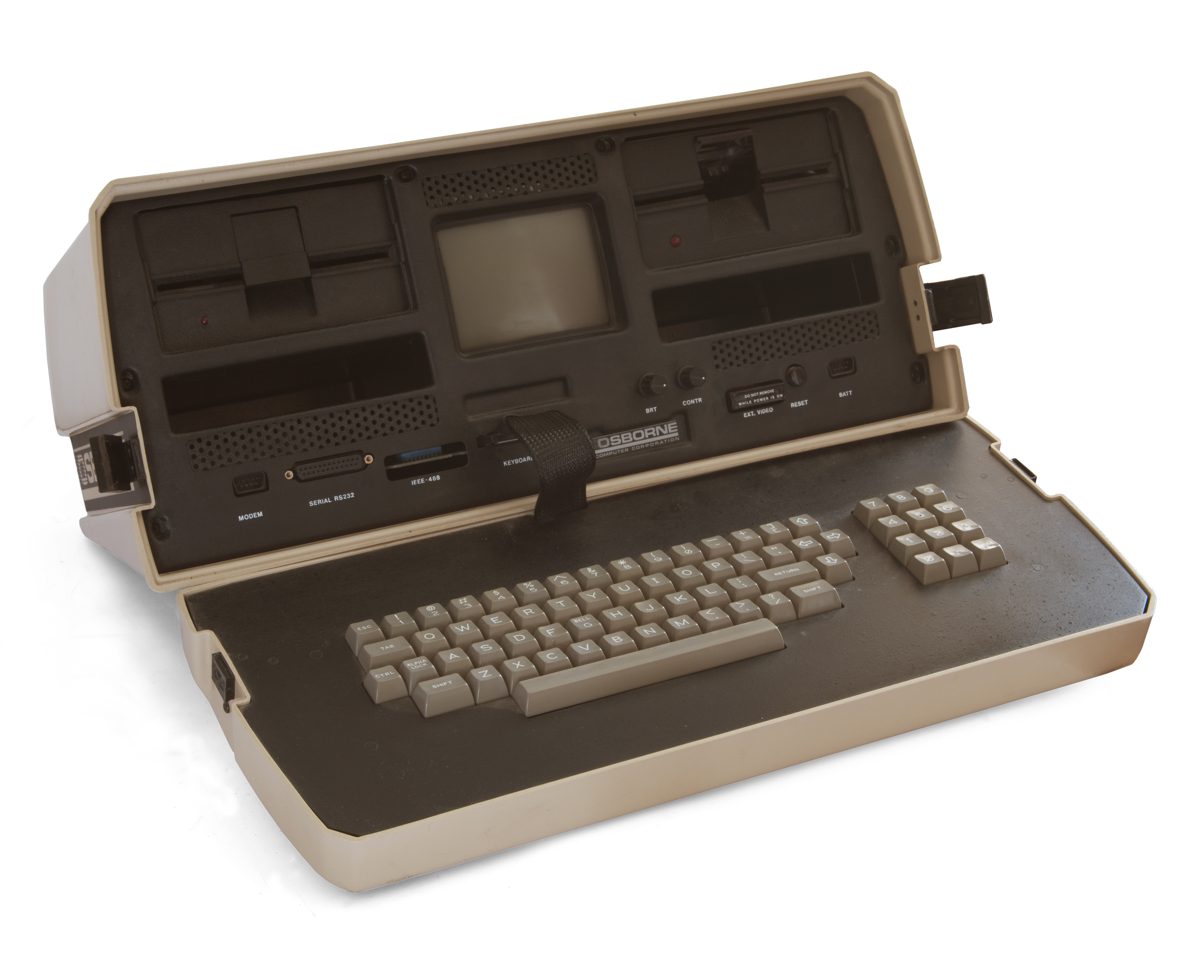
The illustrated Osborne computer is archive hardware associated with this wider era, not proof of a particular software installation. To understand CP/M, ask where the application stops and the machine-specific layer begins. That question remains useful even when today's interfaces hide the boundary. The entry earns its place because it helped turn compatibility into a practical platform concern for small computers. Its limitation is that the portability operated within real architectural constraints, not across every conceivable device. Holding both points together gives CP/M a stronger historical case than either nostalgia or a claim that it solved modern software compatibility once and for all.
Source: computerhistory.org.
Photo: Osborne 1 open.jpg · Bilby · CC BY 3.0. Hardware archive illustration; no installed operating system or benchmark is authenticated. Resized and recompressed without cropping; transparent areas flattened to white where present. Original image license retained.
