
IBM OS/360 ranks ninth because it belongs to a major shift from isolated computer models toward a compatible systems family. IBM introduced System/360 in 1964, and the associated operating-system programme had to make a broad hardware ambition usable for organisations and their software. The entry concerns OS/360, not a claim that every System/360 model ran exactly the same operating system or that all software compatibility was effortless. Its influence lies in treating the operating environment as a substantial part of an expandable computing platform, rather than an accessory that could be replaced without consequences whenever an organisation changed its machine.
For a business, compatibility has a different emotional weight from a new desktop animation. Programs, staff training and established procedures represent accumulated work. A system family promises that some of that work can survive a hardware change, though the exact promise depends on models, configurations and software requirements. This is the central question to take from OS/360: how can computing capacity change without forcing every customer to begin again? The question is not unique to IBM, but this platform made it unusually visible at the scale of institutional computing, where a disruption could affect much more than one person's preferred application.
How influence is judged
The operating system also has to coordinate resources rather than merely launch a program. Input and output, storage and the ordering of work all become part of a shared environment. In a conceptual batch-processing example, users submit jobs that must be managed consistently instead of each person controlling an entire machine directly. This example explains the organisational problem, not the precise configuration of every OS/360 release. The details varied, and the article does not flatten them into a fictional single feature set. Historical influence can arise from making a difficult class of problems manageable across a platform, even when the implementation is complex.
That complexity is part of the case, not something the ranking needs to conceal. Large software projects face coordination, compatibility and maintenance problems of their own. A powerful architectural ambition does not guarantee a simple development process or an easy experience for every customer. OS/360 is valuable for thinking about operating systems as long-lived institutional commitments. A user interface is only one visible surface of that commitment; procedures, data and applications can matter just as much. This makes the entry different from a consumer-device success story, and explains why a general list should include mainframe software rather than treating computing history as personal computers alone.
Sources and competing cases
The strongest argument for moving OS/360 higher is the importance of durable enterprise compatibility. A reader who places organisational continuity above changes in personal interaction may judge it more consequential than several later consumer systems. We place it ninth because the leading entries have a broader cross-platform or developer-cultural influence under our chosen method. That weighting is debatable, and the result should not be read as a claim that mainframes became irrelevant. A historical rank is not a measurement of the importance of every workload still associated with a platform's descendants, nor does a lower position predict what any current business should replace.
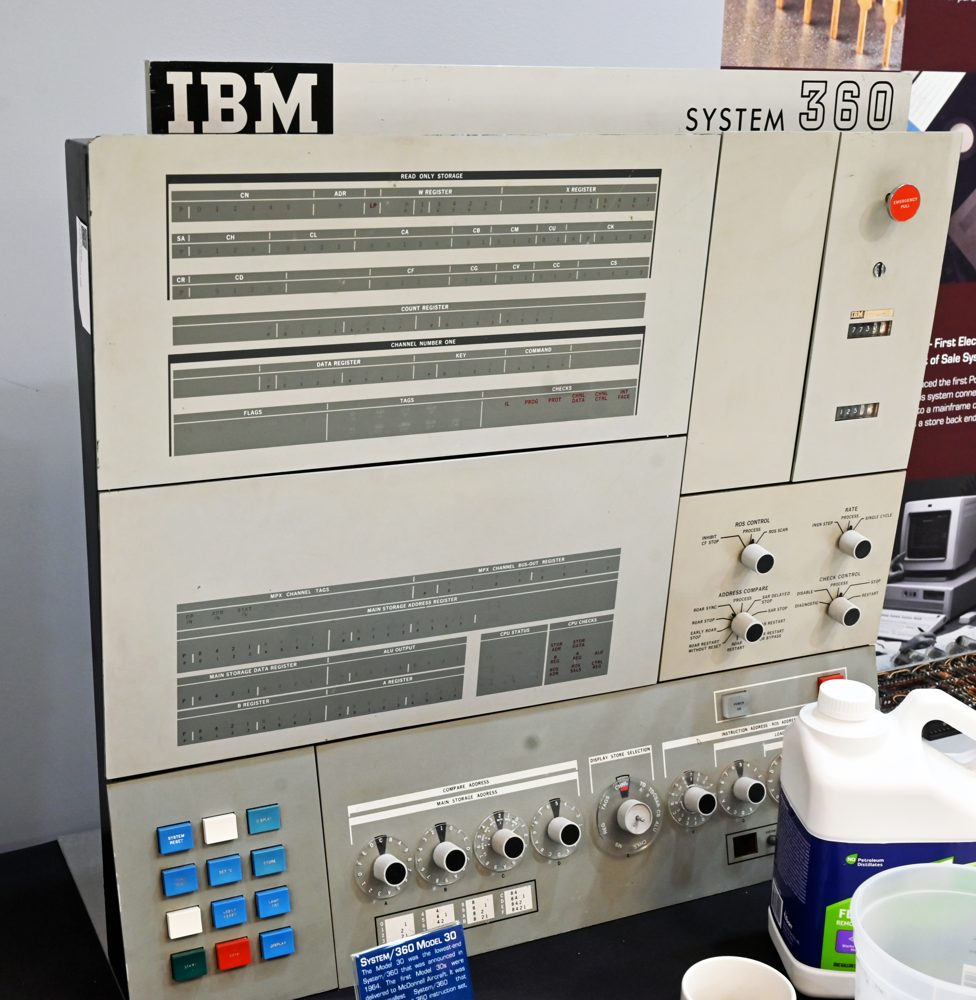
The photographed System/360 equipment illustrates the hardware family, not an authenticated display of OS/360 running in a particular configuration. Read the hardware and software names separately: System/360 is not simply another spelling of OS/360. That distinction prevents a common shortcut in technology history, where a product family and one operating system become interchangeable. The entry matters because it brings compatibility, resource coordination and the cost of accumulated software into the debate. It falls short of the top because those achievements are being weighed against systems whose ideas travelled through a wider range of everyday devices and programming environments, rather than judged in isolation.
Source: www.ibm.com.
Photo: IBM 360 model 30 at System Source, Maryland, US.jpg · Bubba73, Jud McCranie · CC BY-SA 4.0. Hardware archive illustration; no installed operating system or benchmark is authenticated. Resized and recompressed without cropping; transparent areas flattened to white where present. Original image license retained.
