
UNIX takes first because this ranking gives a narrow edge to a durable framework of ideas over the later scale of any one implementation. The Open Group's history places its beginnings at Bell Labs in 1969 with Ken Thompson, Dennis Ritchie and colleagues. Ritchie's own accounts explain the development and the importance of expressing much of the system in C for portability. This is not a claim that UNIX invented every operating-system concept or that later systems were merely its copies. Its winning case is the combination of ideas that became a recurring reference point for how programmers organise computing environments.
The technical lesson is bigger than a command prompt. A system's value can lie in the relationships among files, processes, tools and the interfaces through which they communicate. A small program can become more useful when it can be combined with another rather than expanded into one enormous application. This is an interpretive account of the tradition, not a promise that every task is best solved with tiny command-line tools. Graphical applications and tightly integrated environments also have real strengths. UNIX wins for giving later developers a powerful way to think about composition, not for making every competing design approach irrelevant or incorrect.
How influence is judged
Portability is central but should not be romanticised. Writing software in a higher-level language can reduce dependence on one machine, while machine-specific work and practical adaptation still remain. Ritchie's portability discussions make that engineering problem more interesting than a slogan that code simply runs everywhere. The contribution is a method and a direction of travel, not a magical absence of hardware boundaries. This helps explain why UNIX matters beyond one original computer. The framework could inform systems on other hardware, and the continuing work of adaptation became part of the tradition rather than evidence that the idea of portability had somehow failed.
The family tree also requires care. Unix-like, derived from historical Unix, and certified under the UNIX name are not interchangeable descriptions. This article does not award certification to every related system or claim that Linux contains the original Bell Labs implementation. It compares influence at the level of ideas and system traditions. The distinctions protect the achievement of later developers as well as the accuracy of the winner's story. If every related platform is simply called UNIX without qualification, the comparison loses precisely what makes it interesting: different projects inherited, reworked and extended parts of a powerful framework in different ways.
Sources and competing cases
The objection is substantial. Linux may deserve first for collaborative adaptation, Windows NT for practical application continuity, and mobile systems for changing how people encounter computers every day. A ranking built around any of those priorities could produce a different winner. Our choice gives a slight preference to the earlier framework because its influence is visible across several of those later stories. That is editorial weighting, not an objective proof, current market-share result or instruction to use historical UNIX today. Older does not automatically mean better; the argument depends on the durability and spread of the ideas, not the date alone.
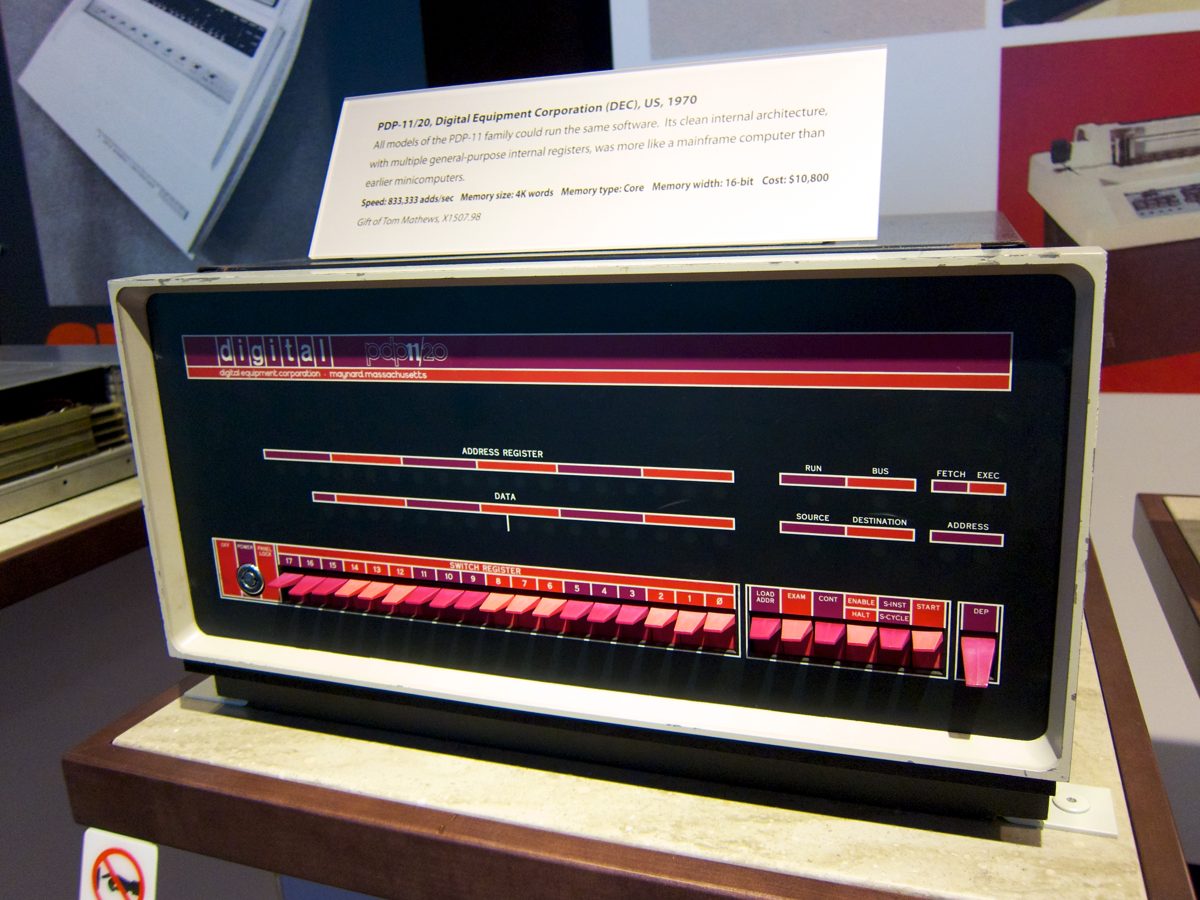
The PDP-11 photograph illustrates later hardware in the broader UNIX era, not the original 1969 PDP-7 or an authenticated software session. UNIX wins because the list values a framework that developers repeatedly returned to, while Linux remains the closest challenger for turning adaptability into a collaborative practice at broad scale. Windows NT offers the strongest competing case from continuity and applications. Which would you place first: the inherited vocabulary, the community that made it widely adaptable or the ecosystem that kept existing work usable? The facts define the comparison, but that final choice is a real argument about what influence means, and the ranking is stronger for leaving it open.
Source: www.unix.org · www.nokia.com.
Photo: DEC PDP-11 20 computer at the Computer History Museum.jpg · Don DeBold · CC BY 2.0. Hardware archive illustration; no installed operating system or benchmark is authenticated. Resized and recompressed without cropping; transparent areas flattened to white where present. Original image license retained.
