
MS-DOS ranks eighth because its historical importance came from an application and hardware ecosystem, rather than the claim that a text prompt was the most advanced possible interface. Microsoft's system became associated with the IBM-compatible personal-computer world. The crucial distinction is between a familiar user experience and a platform that developers could target. A modest interface can have enormous influence when software, peripherals and expectations gather around the environment beneath it. That is the basis of this entry's case: the practical durability of a shared platform, weighed against the broader architectural contributions that give the leading systems their higher positions.
The naming needs care. IBM's PC DOS and Microsoft's MS-DOS belong to a related licensing and development story, but the names should not be treated as evidence that IBM and Microsoft were interchangeable organisations. The Computer History Museum's account of early MS-DOS explains the route from acquired software to the IBM PC environment and other compatible manufacturers. This ranking does not turn that history into a claim that Microsoft invented every underlying idea. CP/M had already demonstrated the importance of a shared microcomputer environment. The more interesting issue is how technical continuity, commercial distribution and a hardware ecosystem can combine to give one platform extraordinary staying power.
How influence is judged
Consider the practical task of moving a document or an application between office machines. Similar commands and interfaces reduce some learning costs, but processor compatibility, devices, file formats and application versions still matter. A familiar prompt does not guarantee that every program will behave identically everywhere. The lesson is to separate several kinds of compatibility rather than praise the word as if it were one universal property. MS-DOS is useful for this distinction because the operating system, the compatible-PC idea and the applications people remember are often compressed into a single nostalgic object, even though they were related layers with different responsibilities.
Its limitations also make the history instructive. A system designed around an earlier personal-computer environment is not automatically the strongest architecture for protected multitasking, modern networking or isolation between applications. That observation is not a security rating of every historical configuration. It explains why influence and technical superiority are different criteria, and why later systems could preserve familiar software expectations while changing foundations. A platform can be consequential partly because of the problems successors must solve when moving beyond it. The challenge is to preserve useful accumulated work without pretending that every old constraint must remain a permanent feature of personal computing.
Sources and competing cases
The best case for moving MS-DOS higher is its role in making the compatible PC a widely understood application target. If historical impact means the environment many people first learned to use at work, it deserves a strong challenge to the leaders. We nevertheless place the systems with broader architectural or cross-device influence above it. The order does not claim that command-line work is obsolete, since command interfaces remain valuable in very different modern environments. A contemporary shell and a historical DOS prompt should not be treated as the same architecture just because both display text and accept commands typed through a keyboard.
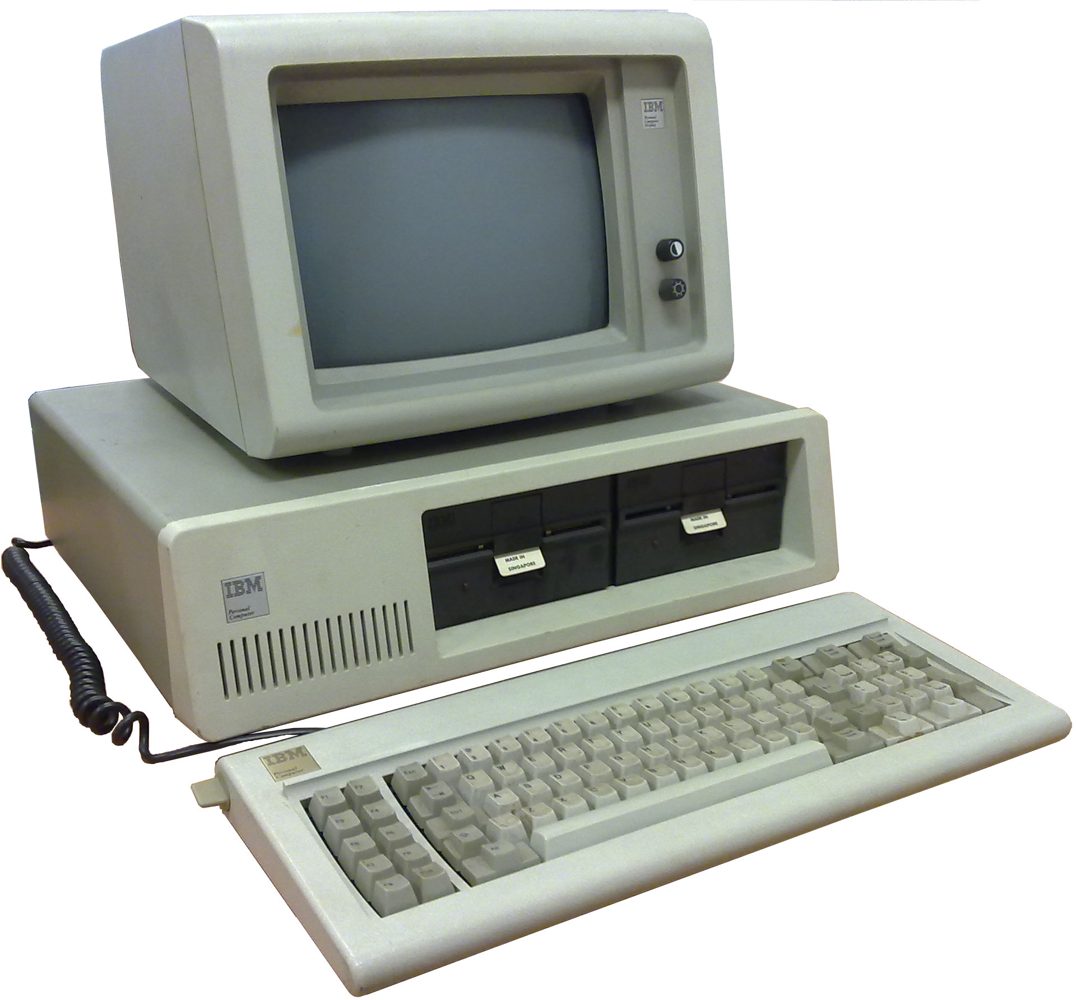
The IBM PC photograph illustrates the hardware era rather than proving the installed software or the machine's precise configuration. The question to carry forward is how an ecosystem makes an operating environment durable beyond any one release. MS-DOS belongs here because software habits and compatibility can shape computing as powerfully as an elegant kernel design. Its position reflects the larger scope of the list, not a verdict that people who used it were choosing badly. The next entries shift attention toward graphical interaction and then modern platform foundations, while retaining this entry's central lesson about the weight of applications people already depend on.
Source: computerhistory.org.
Photo: Ibm pc 5150.jpg · Ruben de Rijcke · CC BY-SA 3.0. Hardware archive illustration; no installed operating system or benchmark is authenticated. Resized and recompressed without cropping; transparent areas flattened to white where present. Original image license retained.
