
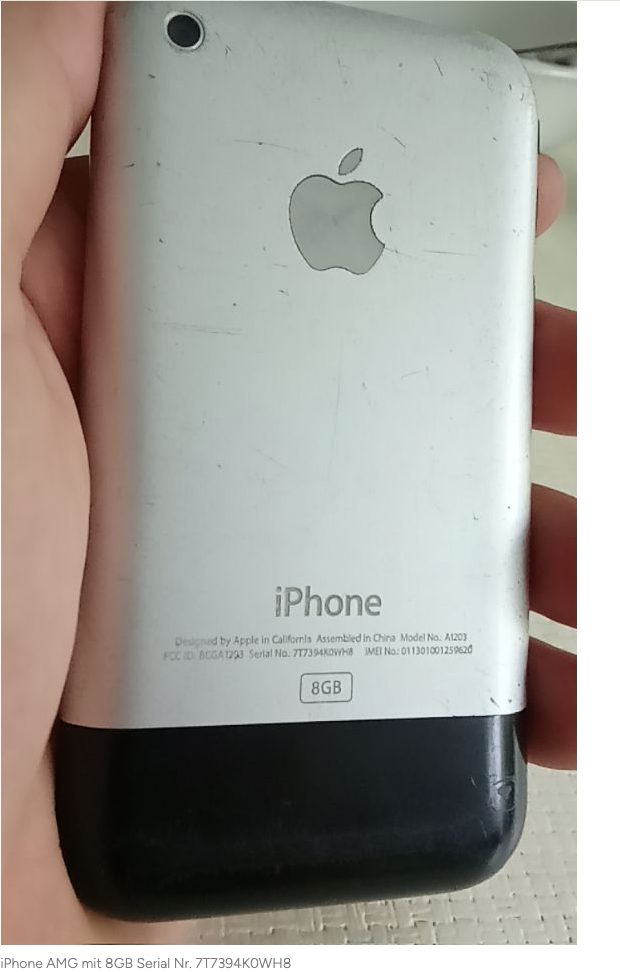
The iPhone operating-system lineage, later known as iOS, ranks fifth because it made the relationship between a handheld device and its software environment a central public experience. Apple's January 2007 iPhone announcement described an integrated phone, media player and internet device with a multitouch interface. The entry does not claim that smartphones, mobile software or touch interaction began there. Its argument is that the platform combined interaction, applications and a tightly controlled device experience in a way that became an important reference point for later mobile computing. Historical influence comes from the complete proposition, not a claim to have invented every ingredient.
The chronology matters. The original iPhone arrived before the App Store, which Apple dates to July 2008. Treating the entire later ecosystem as present in the first demonstration would make the history easier to tell but less accurate. The platform developed, and part of its influence lay in that development. A handheld computer could become a place where third-party software was discovered, obtained and used through a common distribution experience. This ranking recognises the operating environment and the application relationship together, while keeping the first phone and the later store as related but distinct milestones rather than collapsing them into one launch.
How influence is judged
Touch interaction changes the assumptions an application makes about its user. A finger is not a mouse pointer, and a pocket-sized screen is not a desktop with less room. Controls, attention and movement all need different treatment. This is a design interpretation, not a claim that one company alone discovered every mobile convention. The influence of the iPhone lineage is clearest when asking how software was organised around the device's everyday use. A system can shape developers by establishing a strong set of expectations about interaction, even when the applications built on it serve very different purposes and users never think about the operating system itself.
The integrated model also creates a real tradeoff. Consistent distribution and a coordinated platform can simplify some decisions, while concentrating power over what software is offered and how it reaches users. Calling the result influential is not an endorsement of every policy or a legal judgment about a current dispute. Nor should a historical comparison become an unsupported assertion that all mobile software is safe or unsafe because it uses a particular store. The relevant point is that technical design and distribution rules can jointly shape an ecosystem. That combination belongs in an operating-system ranking even though it extends beyond kernel implementation.
Sources and competing cases
The strongest case for moving iOS higher is the importance of everyday mobile interaction. A reader who judges influence primarily by how people encounter software away from a desk may place it above every desktop system. We keep it fifth because Android, Windows NT, Linux and UNIX provide stronger combinations of reach, adaptability or inherited technical ideas under our method. The comparison is deliberately open to dispute. It does not use current unit sales, active-device estimates or an invented numerical score to settle a question that depends on the value assigned to integration versus openness, or to user interaction versus developer flexibility.
The early iPhone photograph is archive hardware, not proof of a particular software release or the current state of the platform. A useful way to revisit this entry is to separate three moments: the device interface, the application platform and the distribution relationship. Their combination explains its place better than a familiar row of icons alone. Fifth recognises a major change in the public meaning of a handheld computer while preserving the role of earlier mobile systems. The next entry tests the competing proposition that a platform can gain influence by spanning multiple device manufacturers rather than maintaining one closely coordinated hardware-and-software identity.
Source: www.apple.com · www.apple.com.
Photo: IPhone (Original) von Apple mit 8GB.png · Kaiser KurzydloVII · CC0. Hardware archive illustration; no installed operating system or benchmark is authenticated. Resized and recompressed without cropping; transparent areas flattened to white where present. Original image license retained.
