
Mac OS X ranks sixth for a difficult kind of achievement: changing foundations without abandoning the expectation that a Mac should still feel like a Mac. Apple announced the system for release on 24 March 2001. Its underlying Darwin environment combined technologies including Mach and BSD, while the desktop and application frameworks formed a distinctive Apple product. This entry concerns that transition and the family it established, not every release carrying the later macOS name as if it were identical. The historical influence lies in bringing a different technical base into the everyday experience of an established personal-computer platform.
A platform transition creates two competing needs. Developers want access to improved facilities, while users want familiar work to continue. Preserving every old assumption can prevent progress; discarding them abruptly can make accumulated applications and habits unusable. Mac OS X is a useful case for thinking about how an operating system mediates that tension. The article does not claim that every application migrated easily or that compatibility was complete on the first day. The significance is the direction of the transition: an existing desktop identity could coexist with a substantially different foundation, rather than forcing the choice between permanent stagnation and a wholly unrecognisable product.
How influence is judged
The architecture should not be reduced to the slogan that a Mac became merely another Unix computer. Mach, BSD-derived services, Apple's frameworks and the user interface occupy different layers with different roles. A user opening a familiar application does not need to see those layers, but a historical explanation should acknowledge them. Likewise, a Unix-related foundation does not mean that every Mac release is automatically the same as every other Unix system or that all software moves between them unchanged. Shared ideas and interfaces create relationships; they do not erase implementation details, application dependencies or the practical work required to support a platform.
This entry also shows how integration can itself be influential. A cohesive experience can depend on decisions across hardware, software and developer tools rather than on the invention of one isolated component. The result can be easier for some users to understand while offering less freedom to substitute parts than a more modular alternative. Neither property automatically wins this ranking. The interesting question is what kind of continuity the design enables and what choices it concentrates in the platform owner. Mac OS X makes a strong case because it connected architectural change with an already established set of user expectations instead of treating those concerns as unrelated projects.
Sources and competing cases
The argument for moving it higher is that successful transitions are rarer and harder than retrospective timelines make them appear. A system can be important by demonstrating how inherited software cultures adapt, not only by introducing a new category of machine. We leave it sixth because the leading entries reshaped a broader range of devices or development practices under our criteria. This is not a recommendation about which computer to buy or a current comparison of security and performance. A person's present workflow might favour macOS decisively while the historical ranking still gives other platforms greater overall influence.
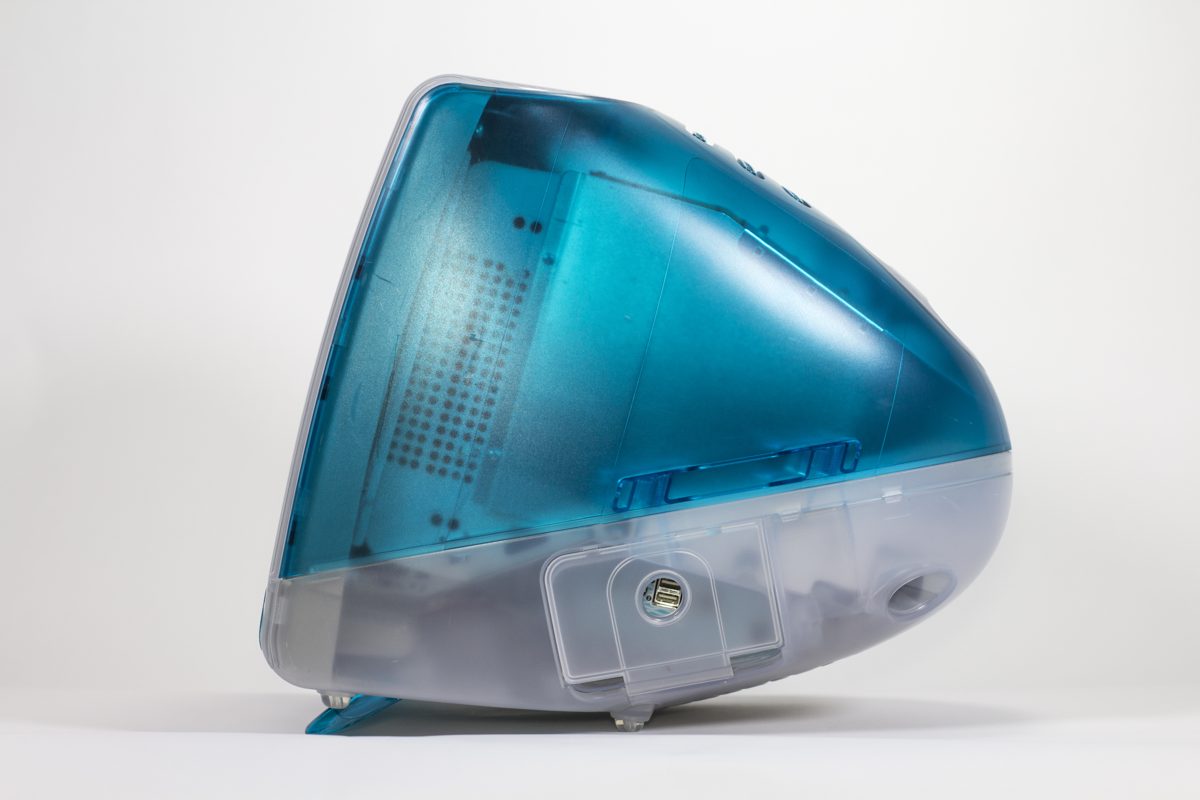
The iMac photograph is period hardware context, not proof that the photographed unit is running Mac OS X or that every model supported every release. Its purpose is to illustrate the desktop world around the transition without borrowing a proprietary screenshot as evidence. The lesson to carry forward is that operating-system history includes migration, not just invention. Mac OS X earns sixth through the way a new foundation was connected to familiar interaction. It remains below the top because this list gives more weight to contributions that spread through multiple hardware makers, whole application markets or the underlying vocabulary inherited by many later systems.
Source: www.apple.com · developer.apple.com.
Photo: Imac G3 Blueberry side.jpg · Stephen Hackett · CC BY-SA 4.0. Hardware archive illustration; no installed operating system or benchmark is authenticated. Resized and recompressed without cropping; transparent areas flattened to white where present. Original image license retained.
