
The Taycan ranks sixth as the clearest break with the combustion-engine assumptions that connect most of this countdown. Porsche presented the four-door electric sports saloon on 4 September 2019. Its relevance here is historical: it was the company's first fully electric production sports car, and its launch put an 800-volt electrical architecture into a series-production road vehicle. Those facts describe the original project, not every later specification. We do not rank it by a current range claim, a charging-time promise or a forecast about the whole industry. It earns its place by changing the engineering questions through which Porsche could express performance.
Begin by separating energy storage from propulsion. The battery stores energy, electric motors turn it into motion, and the charging system connects the vehicle with external infrastructure. These roles are related but not interchangeable. A higher system voltage is not the same measurement as battery capacity, driving range or peak power. Keeping the terms separate helps a reader understand why a launch-era technical glossary matters. It also makes the Taycan a useful comparison with the 959: both entries show a manufacturer coordinating several systems rather than simply increasing the output of one familiar engine.
Storage, propulsion and the shape of an electric car
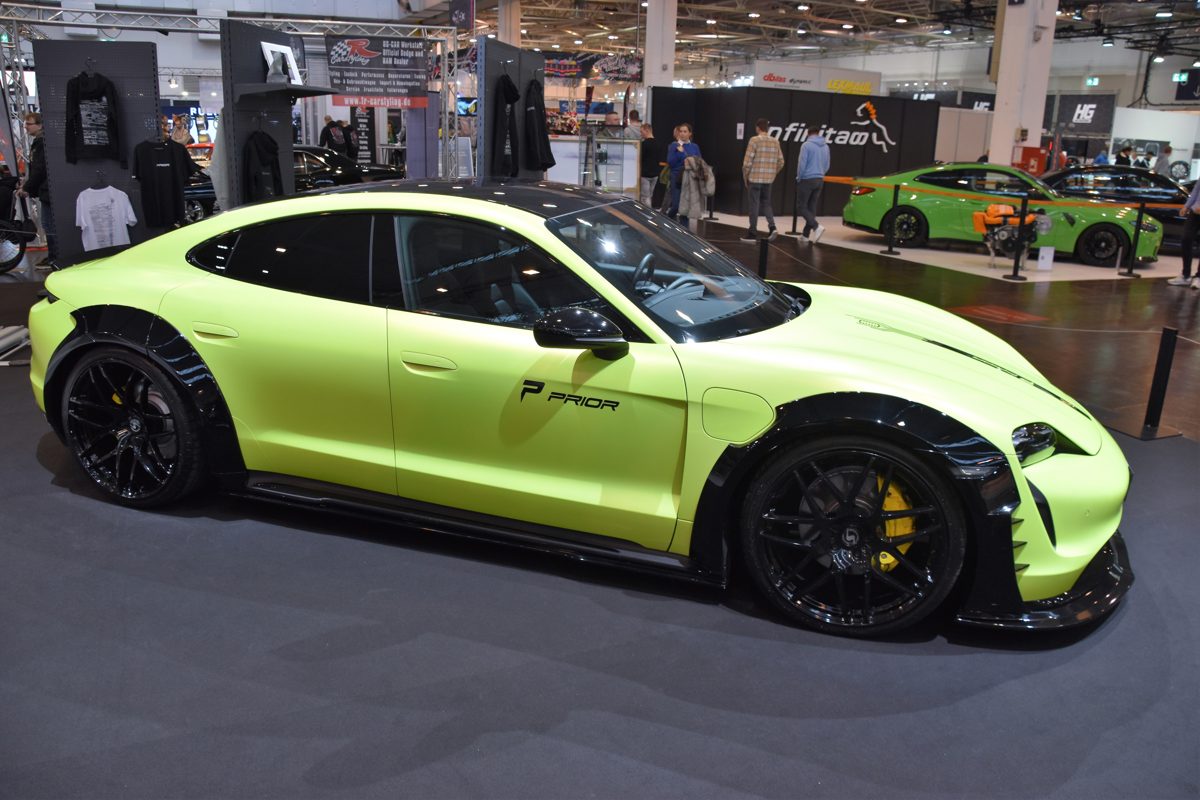
The shape offers continuity through a different package. A low, broad body and four doors must coexist with space for people and the components of an electric vehicle. You can examine how the roofline and front-end treatment refer to the wider brand without claiming the result has the same layout as a 911. The absence of a conventional combustion engine changes the problem, but does not eliminate design decisions about space, cooling or use. That is why an electric car belongs in a historical road-car list rather than being confined to a separate story about batteries with the body treated as an afterthought.
Read historical claims with their dates attached. The 2019 announcement and glossary describe the original launch context; later revisions changed the range and its capabilities. Likewise, Turbo in a Taycan model name is a designation, not evidence of an exhaust-driven turbocharger in an electric powertrain. A reader who understands the distinction can recognize both the marketing continuity and the mechanical difference. This entry is not a comparison of today's charging networks or a recommendation about ownership. Its subject is the point at which the manufacturer's production-car story acquired a substantially different technical foundation.
Read the original launch in its own period
Our photograph shows a Taycan Turbo S example recorded in 2022, rather than the precise launch car on the 2019 stage. The date and variant matter because an image cannot establish battery specifications or software for every car in the family. Use it to study the proportions and the visible design, then return to the correct technical source for a particular version. This is especially helpful when a modern product page replaces older figures with new ones: a current number may be accurate for a current car while remaining wrong for the historical vehicle under discussion.
Sixth place reflects a major engineering transition whose long-term legacy is still less settled than that of the cars above it. Someone prioritizing the change in propulsion could reasonably move the Taycan much higher. The 911 wins this guide for a longer combination of continuity and reinvention, while the 356 supplies the foundational story. Comparing those cases makes the list more useful than declaring one technology the sole definition of progress. The Taycan's lesson is that a marque can preserve recognizable design questions while changing the mechanism that answers them. Its place in history comes from that challenge, not from assuming every future development has already happened.
Photo: Taycan Turbo S example, photographed 5 December 2022. Charles from Port Chester, New York · CC BY 2.0. Resized and JPEG recompressed; no cropping added. Source image license retained.
