
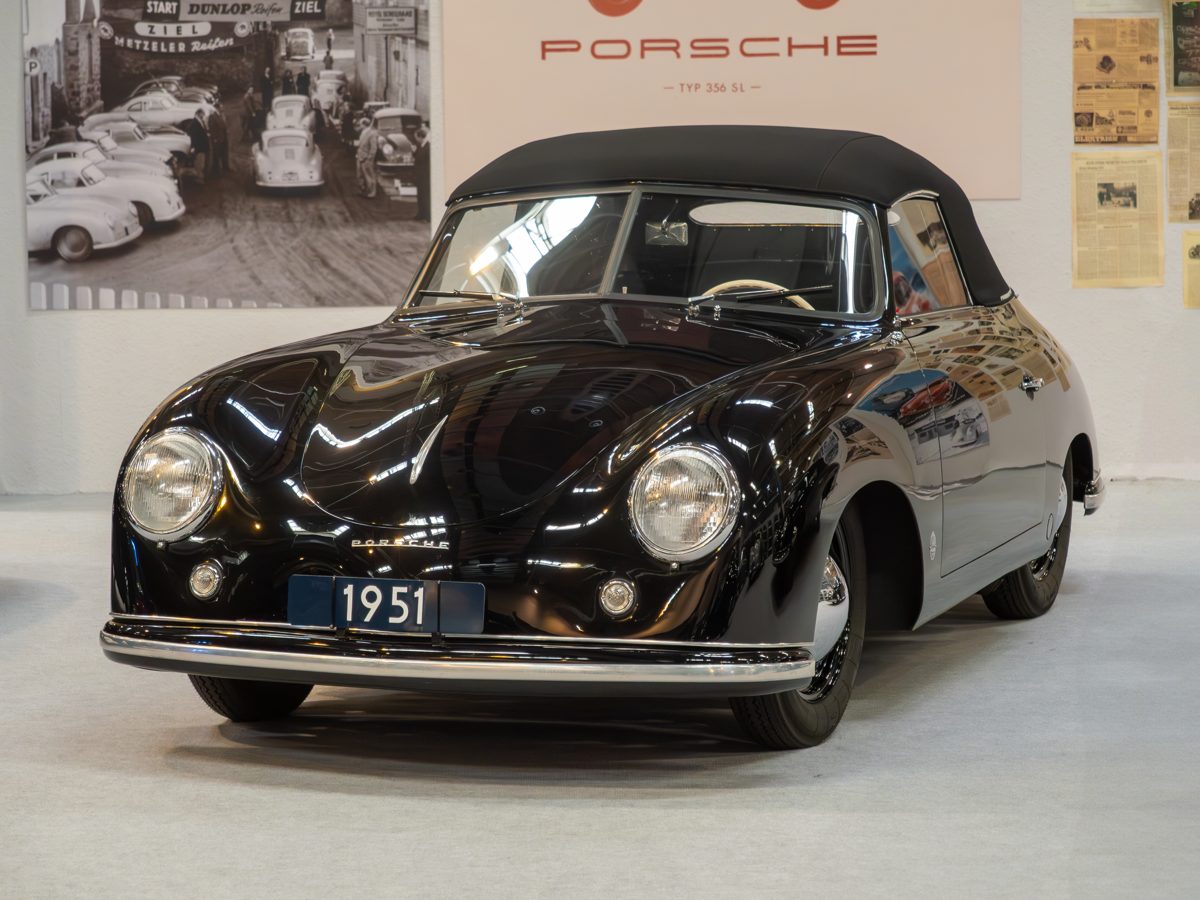
The 356 takes second place because it establishes the foundation from which this whole road-car history becomes possible. On 8 June 1948, the 356 No. 1 Roadster received its operating permit in Austria. That first car had a mid-engine layout. The subsequent 356/2 placed its engine at the rear, an important distinction that is easily lost when every early photograph is labeled simply the first Porsche. This entry covers the production family as well as that origin story. Its high position reflects foundational influence, not a claim that every 356 used the same construction, body style or specification throughout its life.
The engine-position change is a particularly rewarding starting point. It shows that a defining brand tradition could emerge through development rather than arrive fully fixed in the first prototype. Compare the No. 1 Roadster with a later production coupé and identify what changed around the cabin and rear body. The exercise turns a birth date into an engineering story. A beginner does not need to calculate weight distribution to appreciate the significance of moving a major component. What matters is recognizing that the familiar rear-engine arrangement belonged to a developing solution rather than an unbroken rule from the first car onward.
A developing layout and a production story
The production story also connects place and manufacture. Early cars were built in Austria, while Porsche's return to Stuttgart led to a different industrial setting and body-building arrangements. The official archive describes the move from the early aluminum-bodied cars to later series production. These details help explain why construction materials, dates and body styles need to be attached to specific examples. The 356 is a family with a history, not a single immutable object. A museum can display a later car that expresses the recognizable design while differing substantially from the machine that received the 1948 permit.
Look at the compact proportions and the relationship between cabin, rounded wings and rear body. The visual connection with the later 911 is a useful comparison, but resemblance should not erase the mechanical development between them. A family tree is more informative when its branches and changes remain visible. Our iconic-car-design guide provides a broader setting for comparing recognizable shapes across manufacturers. With the 356, ask which details belong to an enduring identity and which are responses to the construction and requirements of a particular period. That question makes a familiar silhouette into something more than a nostalgic logo in three dimensions.
Recognize the family without flattening its history
The photographed example is identified as a 1951 356, displayed in 2025. It is not the No. 1 Roadster and not a photograph taken in the founding year. Clear captioning protects both its value and the origin story. Later A, B and C versions also belong to their own contexts, so a feature from one should not automatically be assigned to another. The ranking does not use current market prices as a proxy for historical importance. A more valuable auction result would not change the dates, the engineering distinctions or the foundational role that give the family its place here.
Second place is the strongest challenge to our winner. A reader who believes origins should outweigh all later development can reasonably put the 356 first. We choose the 911 because it carried a recognizable Porsche identity through a longer, more varied sequence of reinventions, while retaining its central place in the marque. That preference should not make the foundation seem merely preliminary. The 356's lasting lesson is that a brand is built through an evolving vehicle, a production process and a recognizable idea of use. It is both a beginning and a reminder that beginnings contain decisions that could have developed differently.
Photo: 1951 Porsche 356 at Techno-Classica Essen, 9 April 2025. Matti Blume · CC BY-SA 4.0. Resized and JPEG recompressed; no cropping added. Source image license retained.
