
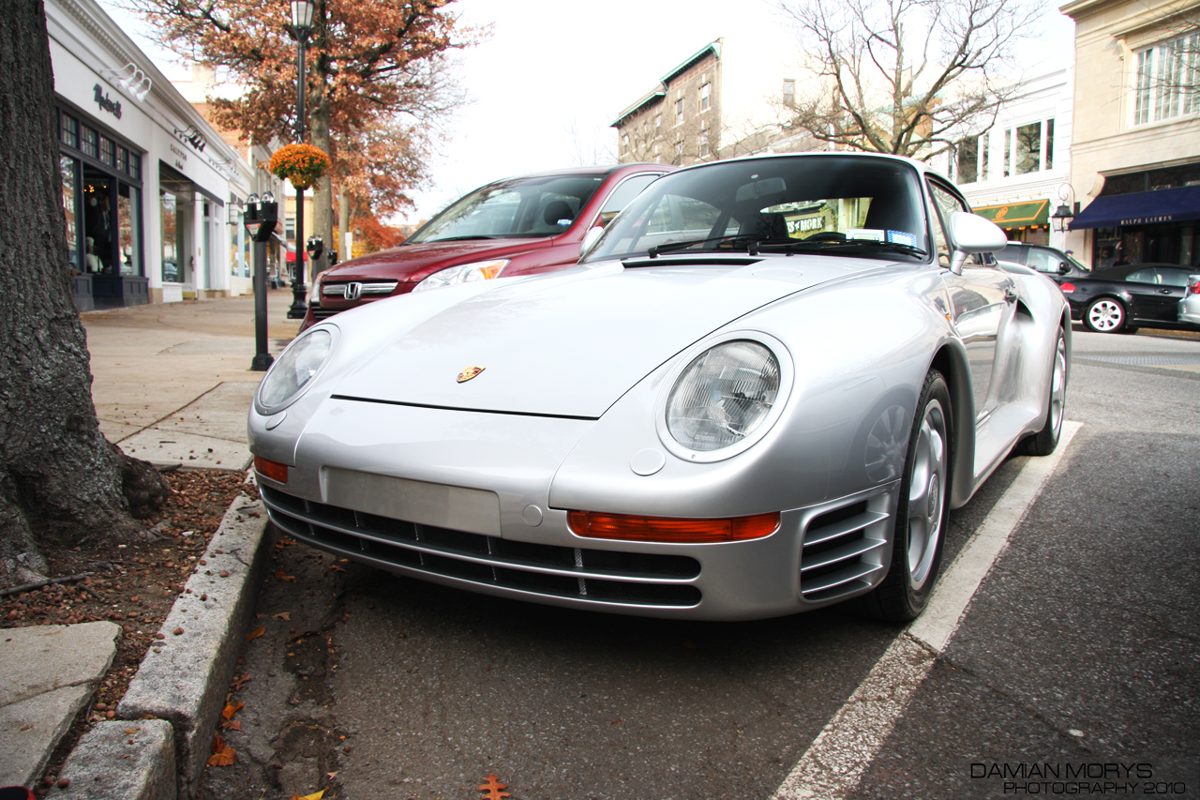
The 959 ranks third because it makes a technological showcase intelligible as a coordinated road car. Porsche presented the Group B study in 1983 and the production model at the Frankfurt motor show in 1985; the main series-production run followed in 1987 and 1988. Those stages should not be collapsed into one launch date. The car combined a twin-turbo flat-six with electronically controlled variable all-wheel drive and other advanced systems. Its importance for this guide lies in integration. Rather than treating the engine, chassis and body as separate attractions, it provides a way to ask how several technical decisions can reinforce a common aim.
Begin with the relationship between traction and power. All-wheel drive describes how torque can reach the wheels, while turbocharging describes a way of supplying the engine with air. They solve different problems and are not alternative words for the same kind of speed. The 959 helps connect them without making the result sound effortless. A system needs control and coordination, not simply a longer list of features. That observation is useful when reading modern specifications as well: adding several impressive terms to a brochure does not explain the way they work together or the conditions in which a particular benefit occurs.
Coordinating traction and power
The sequential turbocharging arrangement adds another distinction. Two turbochargers need not operate in precisely the same way under every condition. Porsche's technical retrospective explains the staged approach used to improve the response of the engine. For an introductory history, the useful point is the relationship between the arrangement and the intended behavior, not an unsupported promise about how any surviving car feels today. Place that idea beside the Carrera GT's naturally aspirated V10. The comparison presents two different ways to organize a flagship powertrain, neither of which can be evaluated responsibly by cylinder count or turbo count alone.
The body and chassis are part of the same argument. Composite materials, aerodynamic development and adjustable suspension belong to a complete vehicle rather than a collection of decorative cues. A photograph can help identify the broad body and integrated rear treatment, but it cannot establish the material under every painted panel or the settings of an individual car. That is why the dated technical source matters. Learning to move between the visible object and the documented engineering is one of the 959's strengths as a museum or archive subject. Its apparently familiar Porsche outline carries a much less familiar set of decisions.
Separate road cars from racing relatives
Racing associations require their own labels. A Dakar competition car and a road-going 959 are related, but they are not interchangeable photographic evidence. The vehicle illustrated here is a road example recorded in 2010. We do not attach a competition result to that particular chassis or assume the photograph documents its original specification. Similarly, production totals can depend on whether later builds and special versions are included, so this ranking does not rely on a single rarity number. Historical importance is easier to discuss when the identity of the object is clear before the story becomes a collection of superlatives.
Third place gives the 959 the strongest technological-showcase position in our order. It could win if that were the sole criterion. The 356 ranks above it as the foundation of the road-car marque, while the 911 wins for a much longer relationship between an enduring identity and repeated technical change. Those are different achievements, not a denial of the 959's ambition. Its lasting lesson is that progress can be architectural and systemic. A car may matter because several ideas are made to work together in a road-going package, even when later vehicles exceed one of its individual performance figures.
Photo: Road-going Porsche 959 example, photographed 20 November 2010. Damian Morys from New York City, United States · CC BY 2.0. Resized and JPEG recompressed; no cropping added. Source image license retained.
