
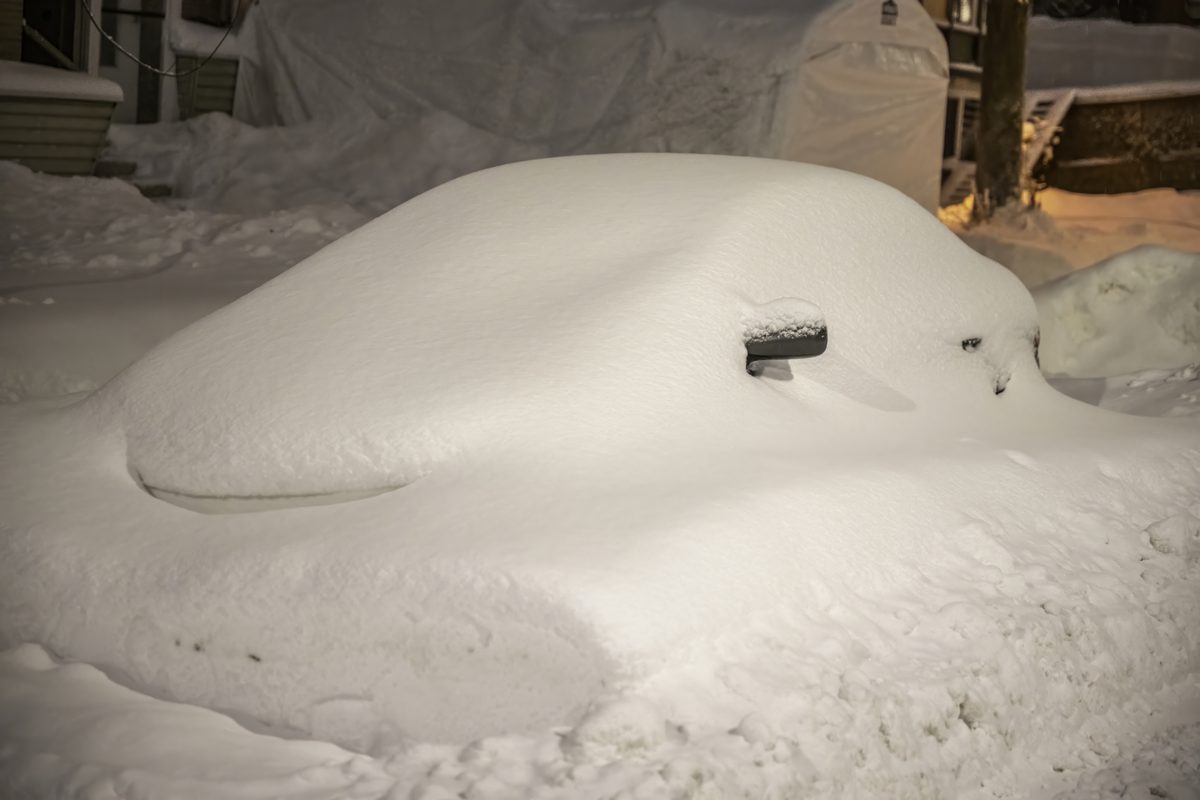
An emergency kit is useful only if it matches the people, route and likely delay. Start with warmth, communication, visibility and basic practical needs, then consider tools appropriate to your experience. The National Weather Service recommends preparing a winter survival kit for vehicles; its guidance includes blankets, food, water and a phone charger among other supplies. This ranks ninth because it helps when plans fail, rather than fixing the car's ability to stop or see. It is still worth assembling before a journey, especially when the route has long gaps between staffed places.
Pack for the actual occupants. A blanket count based on the driver's seat ignores passengers, and a cable that fits yesterday's phone may not charge today's device. Check whether the power outlet works with the equipment you carry and whether a portable battery is itself charged. Keep essential contact numbers accessible without depending entirely on a mobile data connection. Food should be something the people travelling can actually use. For any personal medical requirements, bring the person's usual supplies and follow their existing care instructions rather than improvising a new emergency treatment from a motoring checklist.
Make supplies accessible
Accessibility matters as much as ownership. An ice scraper under several heavy bags is difficult to use when you first reach the car. A torch buried in the boot is inconvenient when you need light to find the boot contents. Choose sensible storage locations, secure objects so they do not interfere with driving, and tell passengers where shared items are. A small bag for frequently needed winter equipment can simplify departure. Keep it distinct from tools that should only be used under the vehicle maker's procedures, such as equipment for a puncture or an approved jump-start arrangement.
Do not confuse carrying equipment with knowing how to use it. A recovery strap, jack or jump lead can introduce new problems when used at an unsuitable point or in an unsafe location. Read the manual before a cold roadside incident, and identify the limits of the supplied puncture system. Some cars have a spare wheel; others have a repair kit with its own restrictions and expiry dates. The preparation question is whether you understand your arrangement and have a realistic assistance option. It is not whether you can fill every remaining luggage compartment with unfamiliar hardware.
Prepare for an actual delay
Imagine a routine trip delayed by a closed road. The important difference may be a charged phone, dry clothing and water, rather than an elaborate recovery tool. Before departure, let someone know the intended route and expected arrival, then update them if plans change when it is safe to do so. Assistance arrangements should be checked for the country and vehicle involved, including any trailer. Do not assume a stored membership card proves that every type of recovery is covered. Reading the existing terms helps identify a practical contact plan without turning this article into an insurance recommendation.
Review the kit periodically. Replace consumed items, check dates where relevant, dry damp clothing and recharge portable electronics. A kit assembled once and forgotten for years can create false confidence. It should support a sensible response while you follow local emergency instructions, not encourage entry into a forecast storm. Advice about remaining in or leaving a stopped vehicle depends on the location and immediate hazards, so contact local services and follow their directions. The best outcome remains an uneventful journey; the kit is a backup for uncertainty, never evidence that uncertainty has been removed.
Source: National Weather Service · NHTSA.
Photo: Car buried in snow on a Quebec City street.jpg · Wilfredor · CC0. Archive photo; resized and recompressed.
