
Winter energy planning begins before the fuel warning or low-charge message appears. A familiar route can take longer when traffic slows, a road closes or a charging stop is unavailable. This check ranks eighth because enough usable energy supports the journey and its contingency plan, but cannot compensate for unsuitable tires or poor visibility. Treat petrol and diesel fuel planning separately from EV charging planning. Both need a margin, yet the equipment, stopping options and vehicle instructions differ. There is no single percentage or distance reserve that suits every route and every car.
For a combustion car, plan refuelling around the route you can actually take, including a plausible diversion. NHTSA recommends keeping the tank close to full when possible in winter. That is a preparation principle, not permission to run the engine in an enclosed garage or ignore a blocked exhaust. Look at the likely opening hours and spacing of useful stops, particularly away from major roads. A station shown on a map is not a guarantee that it will be available during severe disruption. Refuelling earlier can preserve choices without requiring you to predict the precise duration of a delay.
Understand your EV setup
For an EV, cold-weather range is affected by conditions and energy used for heating. The Department of Energy explains the value of preconditioning while connected to power when the vehicle supports it. Use the manufacturer's departure and charging settings, and check what your particular car actually does. Cabin warming and battery preparation are related but not identical functions. Do not assume that a feature name in another brand's manual describes your system. A journey estimate based on mild-weather experience should be reconsidered when the route, temperature or load changes substantially.
Plan charging stops as places with workable alternatives. Check connector compatibility, access, payment arrangements and current operator information before departure. A large advertised site does not automatically mean every connector fits your vehicle. Think about where you could go if the planned location is unavailable, and whether the alternative still fits the energy margin. Navigation that includes vehicle-aware charging planning can be useful, but its assumptions still deserve attention. A saved screenshot of a route is not a live availability report, and an early estimate should not become an obligation to continue when circumstances change.
Keep a workable fallback
For example, a driver might normally arrive with a comfortable margin on a direct trip but face an extra detour on the return. The useful response is to revise the plan while choices remain, not defend the original calculation. Consider passenger comfort, a meal stop and charging together where possible, without leaving the car connected longer than the operator's rules allow. Do not switch off necessary demisting or compromise clear windows merely to improve the displayed range. A plan that saves energy by removing the driver's view fails the more important preparation test.
Finish with a clear departure decision: enough fuel or charge for the actual conditions, an appropriate vehicle setup, known stopping options and a fallback if the journey changes. Avoid borrowing a universal winter range-loss percentage from a headline; different vehicles and journeys behave differently. Keep the plan flexible and check current road information. This page does not set a charging target that overrides the battery maker's guidance. It asks you to replace last-minute improvisation with a realistic energy plan, including the possibility that delaying a trip is more sensible than stretching the final available mile.
Source: NHTSA · U.S. Department of Energy.
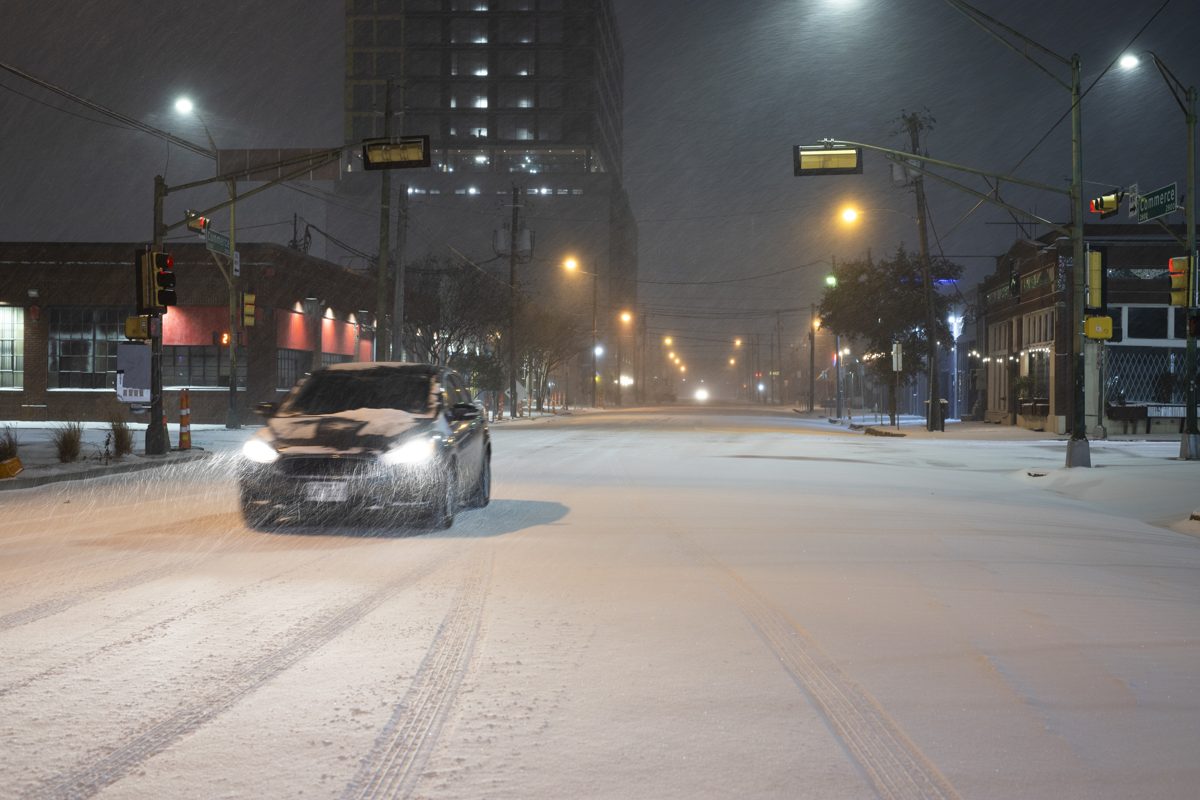
Photo: Dallas snow 2021.jpg · Matthew T Rader · CC BY-SA 4.0. Archive photo; resized and recompressed. Same image license retained.
