
Winter lighting is about both seeing and being seen. A functioning headlamp does not establish that the brake lamps, indicators and rear lights work correctly. Check the complete set while the car is safely parked, including any trailer connections relevant to your journey. This ranks fifth because darkness and poor weather make communication between road users especially important. NHTSA specifically recommends checking exterior and interior lights before winter travel. The goal is an accurate working picture of the car's lighting, not replacing approved equipment with the brightest-looking aftermarket product you can find online.
Work methodically around the vehicle. With a helper where useful, observe each function rather than assuming that a reflection in a wall proves everything is satisfactory. Confirm how the normal lighting controls work in your car. Automatic settings and daytime running lights are not identical to every other lighting mode, and unfamiliar controls can cause confusion when weather deteriorates. Read the manual for the relevant functions and dashboard indicators. A driver sharing a newer car should know these controls before the trip, rather than discovering them through trial and error on a dark road.
Cleanliness and sensor limits
Cleanliness is a separate check from operation. A lamp may illuminate behind a layer of dirt, slush or snow that reduces its usefulness. Clear the relevant surfaces with methods suitable for the vehicle and check them again after dirty winter journeys. Look for visible damage or condensation that needs assessment, without assuming every mark means the same repair. If the beam seems wrongly aimed or lighting performance has changed, ask a qualified workshop to inspect it. Changing the bulb alone does not answer every question about the lamp, its alignment or its electrical supply.
Driver-assistance sensors deserve attention alongside lighting because many occupy exposed areas. NHTSA describes assistance technologies that use cameras and other sensors, but their capabilities vary. Consult your model's instructions for cleaning locations and interpreting unavailable-system warnings. A clear camera image does not certify that every sensor is working, and a cleaned sensor does not turn an assistance feature into a substitute for the driver. Avoid scraping or treating a sensor surface with a product that the maker has not approved. If a warning remains after the specified checks, seek service guidance rather than repeatedly dismissing it.
Learn unfamiliar controls
Imagine collecting a rental car after dark in rain. The first useful action is to identify the controls and inspect operation while parked, not to assume they match your usual vehicle. Add the rear-window heater, hazard lights and relevant displays to that short orientation. If something fails, report it before beginning the journey and agree a proper remedy. This example also applies to family cars shared between drivers. Familiarity with one person's preferred setting does not guarantee the next driver understands what the car will do when visibility changes or automatic functions behave differently.
Finish by resolving failed lamps and unexplained warnings, confirming approved replacement specifications and keeping the light surfaces clear. Do not infer local lighting laws from this general guide; requirements and permitted equipment vary by jurisdiction. Use the vehicle manual and official local guidance where a legal question arises. The editorial reason for this position is straightforward: lighting helps the driver obtain information and helps others interpret the car's movement. It works together with clear glass and suitable speed, rather than compensating for either. A completed lighting check should leave fewer assumptions hidden behind an apparently bright front end.
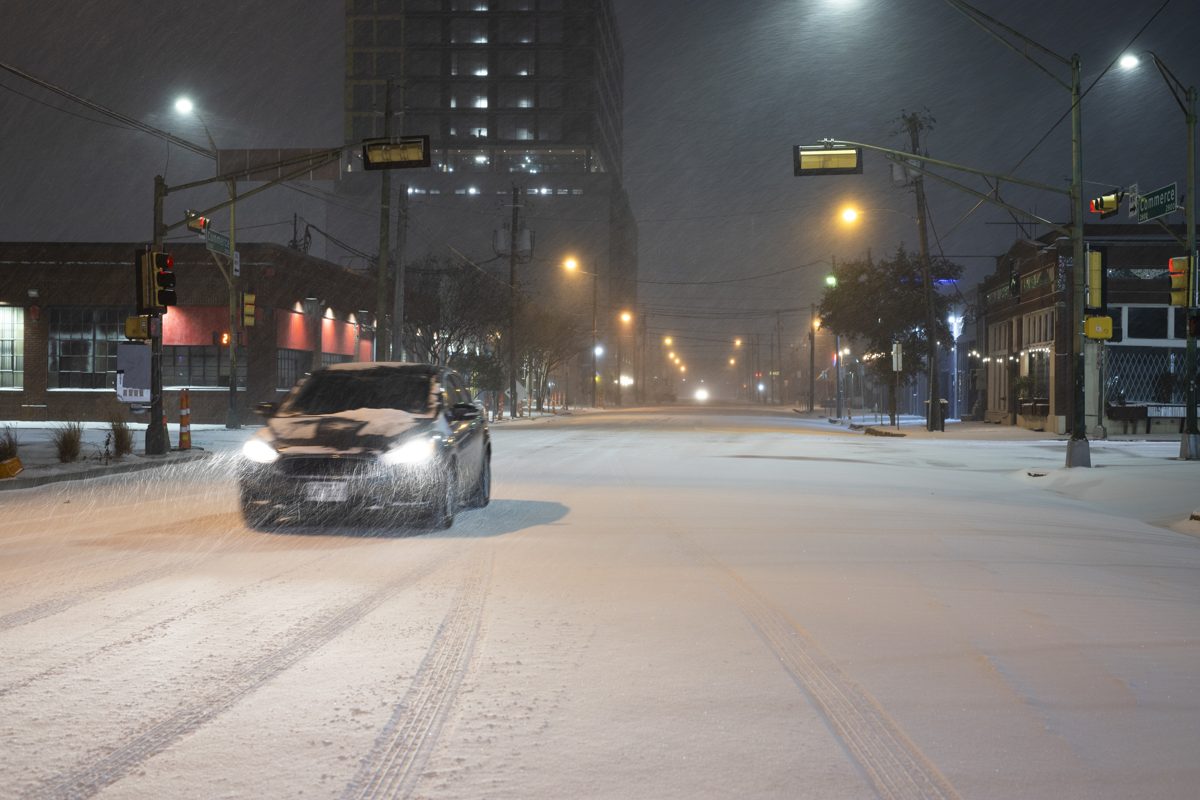
Photo: Dallas snow 2021.jpg · Matthew T Rader · CC BY-SA 4.0. Archive photo; resized and recompressed. Same image license retained.
