
A battery can seem healthy through mild weather and then expose a weakness on the first cold morning. NHTSA notes that lower temperatures reduce battery power while combustion engines need more starting energy. The useful winter check is therefore the battery together with the relevant charging system, not a guess based solely on whether the dashboard lights illuminate. This ranks sixth because starting reliably and maintaining electrical functions matter, while the higher positions address what happens once the car is moving. A confirmed electrical fault can of course make any planned journey inappropriate immediately.
For a petrol or diesel car, describe changes in starting behaviour accurately. A slower crank, repeated need for assistance or a warning message is information for a technician, not proof of one particular component failure. The battery may be part of the problem, but diagnosis should consider the system. Keep a record of when the symptom occurs and whether it followed a long period parked. Replacing a battery without understanding why it became discharged can leave the original issue unresolved. Conversely, waiting for a complete failure is not necessary before asking for a condition check.
Match the replacement correctly
Battery replacement is also vehicle-specific. Size, specification and any required registration or adaptation procedures can differ, especially where stop-start functions are involved. Match the manufacturer's requirements rather than choosing only by price or physical appearance. Ask what the test found, what replacement is proposed and whether associated charging concerns were checked. A dated receipt then becomes useful evidence for later troubleshooting. Do not treat a remembered battery age as a universal expiry rule: service conditions and measured condition matter, and this article does not assign every battery the same guaranteed lifespan.
An EV introduces an important distinction between the large traction battery and the vehicle's low-voltage electrical supply. A high displayed driving charge does not by itself explain the condition of every electrical system. Read the particular manual's warning and recovery instructions. Jump-start procedures and approved connection points are not interchangeable between cars, and some models have specific restrictions. Never experiment with high-voltage components or assume that a battery pack can be assisted like a conventional starter battery. Knowing the correct roadside contact and the manufacturer's procedure is more valuable than improvising from another vehicle's experience.
Make the result actionable
Consider a car used mainly for occasional short errands. A driver may notice that it starts differently after several days parked and assume a longer drive will necessarily cure it. A better preparation step is to describe the pattern and arrange an appropriate check. If maintenance charging is recommended for that model and use pattern, confirm compatible equipment and instructions before buying anything. Chargers, connection points and battery chemistries are not all interchangeable. The purpose of the winter check is to select the correct response, not prescribe a charging routine for every household regardless of its car.
Complete the page with a practical status: tested and satisfactory, replacement or repair arranged, or further investigation required. Make sure anyone sharing the car understands that status. Keep recovery information accessible and do not rely on a booster pack whose operation you have never reviewed. A battery check cannot promise that no electrical fault will occur, but it can replace uncertainty with an informed decision before conditions become less forgiving. That is the main benefit: fewer unresolved questions when the morning is cold, the schedule is tight and the vehicle needs to work as expected.
Source: NHTSA.
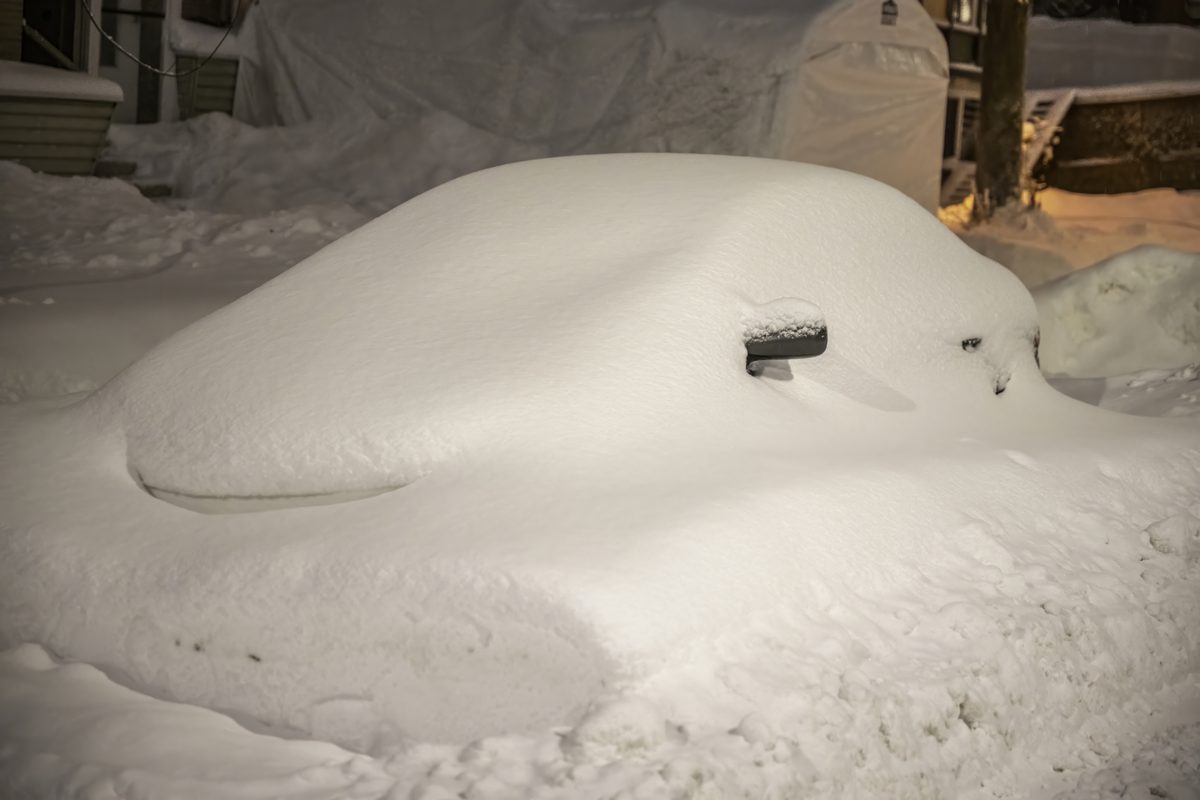
Photo: Car buried in snow on a Quebec City street.jpg · Wilfredor · CC0. Archive photo; resized and recompressed.
