
Wipers and washer fluid face a demanding combination in winter: dirty spray, cold glass and the need to restore a clear view quickly. Check the blades, the washer supply and the way the system behaves while parked. This ranks fourth because a view that starts clear can deteriorate during the journey. It sits below complete glass clearing because frozen or obscured windows must be dealt with before departure, but the systems are partners. A clean windscreen is only the beginning if the first passing vehicle covers it with grime that the wipers cannot remove effectively.
Inspect the wiping result as well as the rubber. Streaks, missed areas, juddering or obvious damage are reasons to investigate the blades and glass condition. Use the correct blade type and fitting procedure for the vehicle. Some cars require a service position before the arms can safely be moved, and a rear wiper can be easy to forget. Do not force a mechanism because a replacement video for another model looked simple. Follow the manual and seek help where access or attachment is unclear. Replacing the right part correctly is more useful than fitting a vaguely similar bargain.
Choose suitable washer fluid
Select washer fluid according to the vehicle and product instructions, including protection suitable for expected temperatures. A reservoir full of summer mixture is not automatically ready for freezing conditions. If dilution is required, follow the stated ratio rather than estimating by colour or smell. Do not put engine coolant into the washer system: these are different products and different jobs. If the contents are uncertain, ask a workshop how to prepare the system correctly. The practical objective is usable fluid reaching the glass when needed, not merely a full-looking container under the bonnet.
Frozen blades need patience. The AA warns that operating wipers frozen to the glass can damage the rubber or motor. Clear and release them using the manufacturer's recommended approach before switching them on, and understand any automatic-wiper setting that might activate unexpectedly. A vehicle with a dedicated winter or service mode may have instructions worth reviewing in advance. Do not assume that leaving the arms raised is appropriate for every design or parking situation. The correct preparation is to know your system and avoid forcing frozen parts, rather than repeat a universal trick without checking its suitability.
Test before road spray
A useful parked test also considers where the fluid goes. If a jet does not reach the intended area or nothing emerges despite the expected supply, investigate before travel. Do not keep demanding operation from a frozen or faulty system in the hope that repeated activation will repair it. Record the symptom and follow service guidance. Consider the whole journey: a long motorway trip in dirty spray may use more fluid than a short local errand. Carrying an appropriate spare bottle can be practical, but it does not resolve a leaking reservoir or a pump that is not functioning.
Complete the check by confirming clear wiping, suitable fluid and an understood cold-start routine. Keep the scraper and relevant cleaning supplies accessible so the system is not asked to remove heavy ice it was never meant to shift. Recheck performance when weather changes or a blade begins leaving marks. The ranking does not claim a particular blade brand creates a measured safety advantage. It emphasizes a simple functional question: can you maintain a usable view after departure? If the answer is uncertain while parked, the correct next step is to resolve that uncertainty before road spray makes the issue immediate.
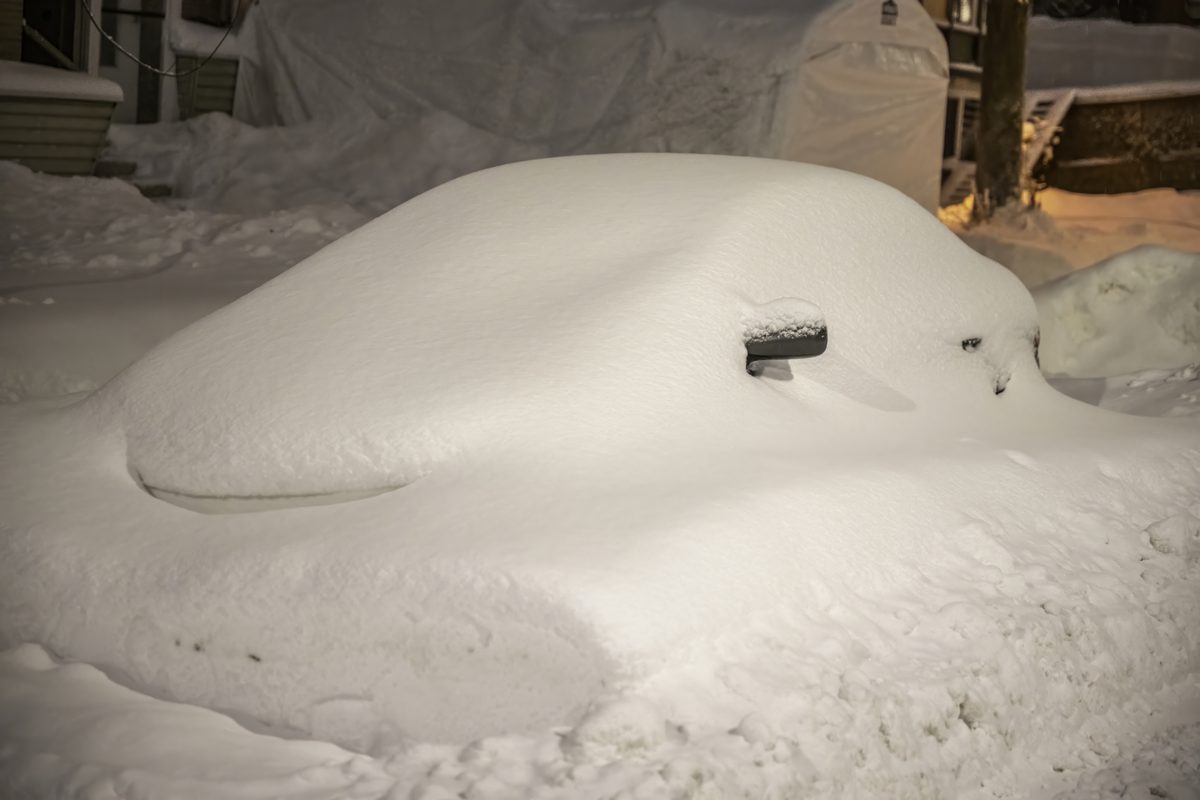
Photo: Car buried in snow on a Quebec City street.jpg · Wilfredor · CC0. Archive photo; resized and recompressed.
