
Chronicling America takes first place for a general starting session on historical American newspapers because access to the material is supported by unusually useful Library of Congress research guidance. The current collection lives on the Library's main website, with topical guides and search advice that help readers move from a vague interest toward identifiable pages. Its strength is not a promise that every American newspaper or every issue is included. It is the combination of a substantial historical collection and an explained route into it. For a beginner, understanding how to ask the next question can matter as much as obtaining the first search result.
Start by distinguishing the thing you want to search. The Library's current advice explains separate title, issue and page-level approaches. Searching titles concerns the newspaper's name; searching full text concerns words printed within the material. Page-level results can be useful when you need to inspect the actual location of a term rather than identify an entire issue. That distinction helps diagnose a common failure: a researcher enters the subject of an article while accidentally asking only for newspaper titles. Before changing your keyword, confirm what part of the collection the search is meant to examine and how the results are being presented.
Use the guides without assuming completeness
The topical guides provide another productive route. They introduce subjects, suggest search strategies and point to selected articles. Use them as starting points rather than as the complete archive of a topic. A guide can help you discover vocabulary or a relevant date, after which your own question may lead into other titles and issues. This is particularly useful when historical language differs from the wording used in a modern summary. Keep the source's terminology in the research log while making clear how you interpret it. That lets another reader reproduce the search without requiring them to guess which contemporary phrase you silently substituted.
Compare original pages, not just highlighted snippets. A word can occur in a headline, an advertisement, a letter or a report quoting somebody else's claim. Those contexts support different conclusions. If several papers use the same language, investigate whether the items are independent accounts or repeated text. A useful exercise is to find one report and then read the rest of its page before searching again. The surrounding notices, layout and competing headlines can change your understanding of its prominence and intended audience. A digital match identifies a place to look; it does not by itself explain what the item meant to its first readers.
Return to the original page
Use the current Library site rather than assuming that every instruction for the older Chronicling America interface still applies. The Library documents the migration, and modern research notes should preserve the working item record and its identifying information. If an old link redirects, verify that you have reached the intended title, date and page before citing it. For a present-day claim based on a historical clipping, our fact-checking websites guide offers a related verification route. You still need to establish the clipping's provenance and context, even when its text is being shared as if the age of the page made the claim automatically authoritative.
Chronicling America wins this editorial ranking for its accessible combination of sources and guidance, with Trove and Papers Past the strongest general alternatives for their respective regions. A local specialist can reasonably beat all three when it holds the exact newspaper you need. End a first session with a source you can identify, a statement it directly supports and a question it leaves unanswered. That modest standard protects the excitement of discovery from becoming overconfidence. Would you rather trace an ancestor through small notices, compare how a public event traveled between newspapers, or investigate how the language of a familiar place changed across generations of readers?
Source: Chronicling America · Chronicling America · Chronicling America.
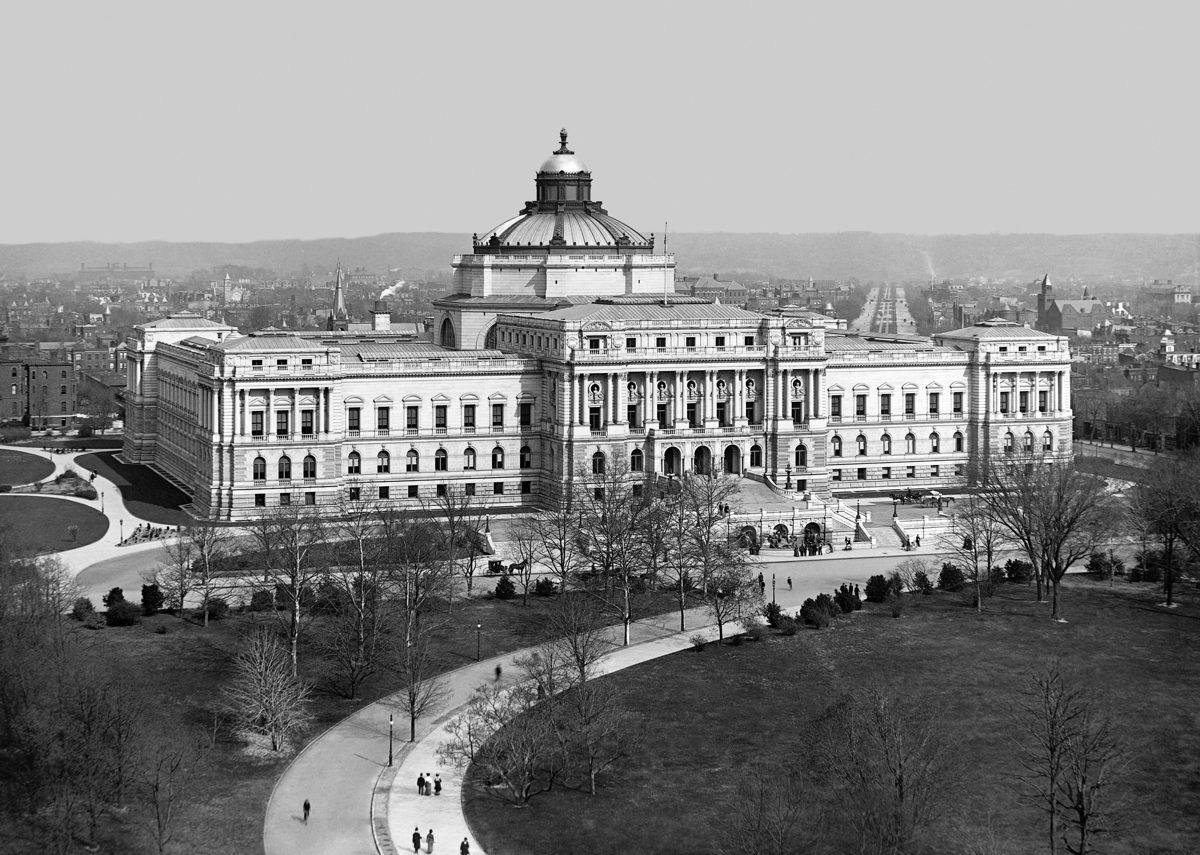
Photo: Library of Congress, Washington, D.C. - c. 1902.jpg · William Henry Jackson · Public domain. Archive illustration, not a current website screenshot or a guarantee of collection holdings. Resized and recompressed without cropping; source image license retained.

