
Papers Past takes third place for offering a coherent introduction to historical newspapers from New Zealand and the Pacific. The National Library of New Zealand organizes its digitized material into separate collections, including newspapers, magazines and journals, letters and diaries, parliamentary papers and books. Its newspaper descriptions identify each title and the material available online. This structure is useful because it makes the kind of evidence visible from the start. A parliamentary paper, a private letter and a newspaper report may discuss the same event, but they are not interchangeable accounts of who knew what or how information reached a public audience.
The first practical lesson is to choose the collection before searching. Papers Past's help explains that there is not a single search covering the whole site in the way a newcomer might expect. If your question concerns a newspaper story, start in the newspaper section and examine its title and date options. If you later need a diary or an official paper, make that a separate stage in the investigation. This small decision prevents a disappointing result from being interpreted as proof that the wider library has nothing relevant. It also encourages a cleaner record of which source category supported each part of your explanation.
Track language and circulating reports
The newspaper collection includes early te reo Māori publications as well as other New Zealand and Pacific material. For multilingual research, preserve names and wording as the page presents them, then add an explanation or translation separately. Search vocabulary can reflect the language and perspective of a publication, and a modern English phrase may not be the best route into another kind of text. A careful approach lets the source supply new search terms. It also avoids treating one newspaper's description of a community as the only possible account of that community or silently replacing a historical term with a modern interpretation.
An accessible project is to trace an event across a local report and another publication's later account. Note the issue dates, the places of publication and any wording that appears to have been repeated. Similar text can reveal the movement of a report, but it should not automatically be counted as several independent confirmations. Compare what each item adds: a local name, a corrected detail, a different headline or no new information at all. That exercise turns a collection of matches into a documented explanation of how a story circulated, which is often more interesting than merely establishing that several papers mentioned it.
Define what your search can establish
Papers Past's search guidance also discusses Boolean approaches and warns that methods useful for confirming one occurrence may require more care when the aim is to find every occurrence. That distinction should shape a first session. A narrow query can answer whether you can locate a particular notice, while a comprehensive claim about all coverage needs a much more systematic method and an understanding of gaps. Do not let a successful search encourage an unsupported statement that you have found the complete history of a person or topic. The archive gives you access to evidence; the scope of your conclusion remains your responsibility to explain.
Third place rewards the clarity of this collection-based approach and its strong fit for a first research project. For a New Zealand or Pacific question, Papers Past can be the obvious winner rather than a distant alternative. Use the title descriptions to set expectations, the original pages to confirm readings and a research log to keep source types distinct. A useful final note might explain both how a report was located and why it matters. That is a more durable result than a saved image alone: another reader can follow the route, inspect the context and judge whether the evidence supports the claim you have drawn from it.
Source: Papers Past · Papers Past.
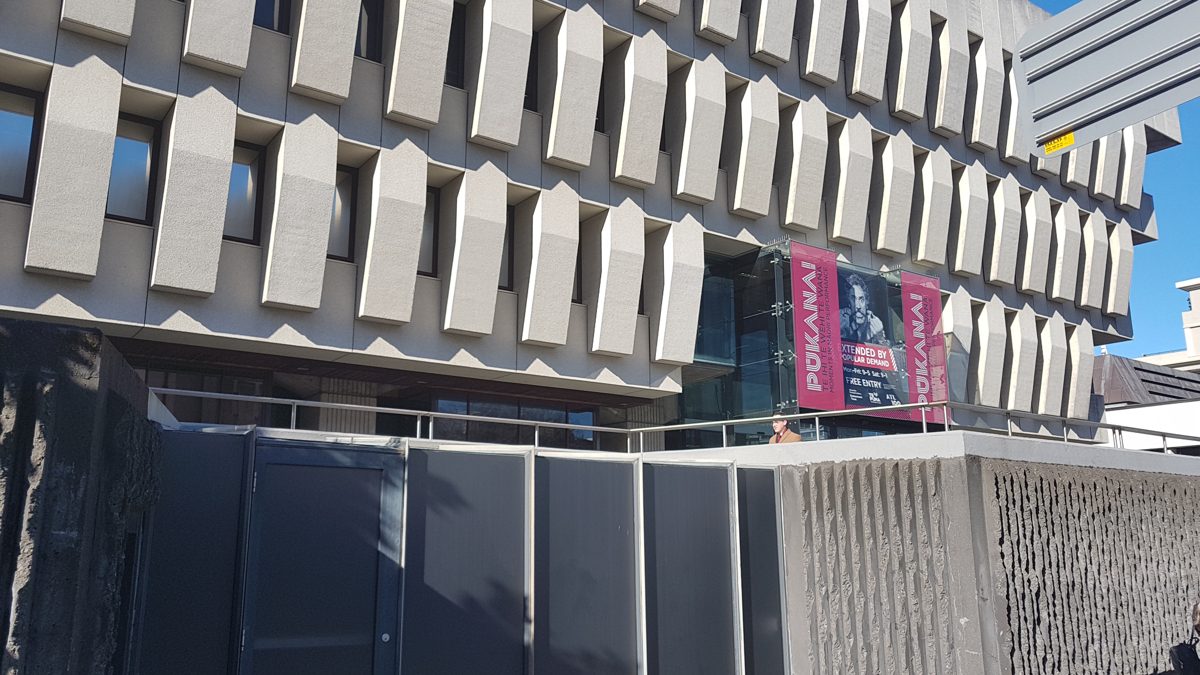
Photo: National Library in Wellington 01.jpg · L Maule · CC BY 4.0. Archive illustration, not a current website screenshot or a guarantee of collection holdings. Resized and recompressed without cropping; source image license retained.
