
ANNO, the Austrian National Library's historical newspaper and periodical reading room, ranks ninth for opening a substantial Central European press landscape to remote readers. Its current site offers a simple search, an advanced-search option, an alphabetical list, a year overview and thematic entry points. Those routes serve different purposes. A reader who already knows a title can browse toward an issue, while someone starting with a subject can investigate words across material. Do not assume that a familiar modern country name describes the entire historical geography of publication or readership. Establish the place and period before interpreting what a search result represents.
The alphabetical and chronological routes are especially useful when full-text search produces an apparent silence. Historical printing, damaged pages and older letterforms can interfere with automatic recognition. If you know approximately when an event occurred, inspect the relevant newspaper issues around that date instead of endlessly repeating the same modern keyword. News may appear after the event, and a weekly publication follows a different rhythm from a daily. A practical search window should reflect that publication rhythm. This does not justify assuming a fixed delay; it gives you a reason to inspect the surrounding issues and document the dates actually found.
Use historical names and title routes
Historical language adds another layer. A place can appear under a name different from the one used today, and spelling conventions may have changed. Make a vocabulary note before expanding a search: record the exact form visible in a genuine article, then use that form as another query. This lets the evidence teach you how the collection names its world. Avoid silently replacing every unfamiliar term with a modern equivalent in your notes. A translation can help you understand a passage, but the original wording remains important when someone else needs to reproduce the search or assess what a newspaper actually said.
ANNO's thematic routes can also help a reader discover titles they did not know to request. Treat them as introductions rather than complete lists of everything relevant to a subject. A productive exercise is to compare a specialist publication with a general newspaper during the same period. Ask whether the specialist assumes background knowledge, names different participants or devotes more space to technical details. Those differences can explain why an event leaves unlike traces in different publications. They do not provide a numerical measure of how important the event was. The absence of a front-page headline is not evidence that nobody cared about the subject.
Check the current collection
Check the current collection rather than relying on old descriptions of ANNO's coverage. The live homepage announces additions, and the library's separate research datasets represent subsets of the reading-room material. A dataset's date boundaries should not be presented as the limits of the entire archive. Similarly, a digitized issue, searchable text and a downloadable research dataset are related products with different purposes. For an ordinary reading project, begin with the issue you can inspect and identify. If you later need a large collection of text for analysis, examine the relevant documentation separately instead of assuming a page viewer grants identical access to every underlying file.
Ninth place recognizes ANNO's value while acknowledging that language and historical geography can demand more preparation from a general first-time reader. For an Austrian or Central European question, it can outrank the broader leaders immediately. Choose it when the publication itself is part of the investigation: where it appeared, whom it addressed and how it organized a subject. Save the issue date and page with every useful extract. A strong outcome is not merely a translated sentence but an explanation of which newspaper printed it, in what context, and what further evidence would be needed before turning that statement into a wider historical conclusion.
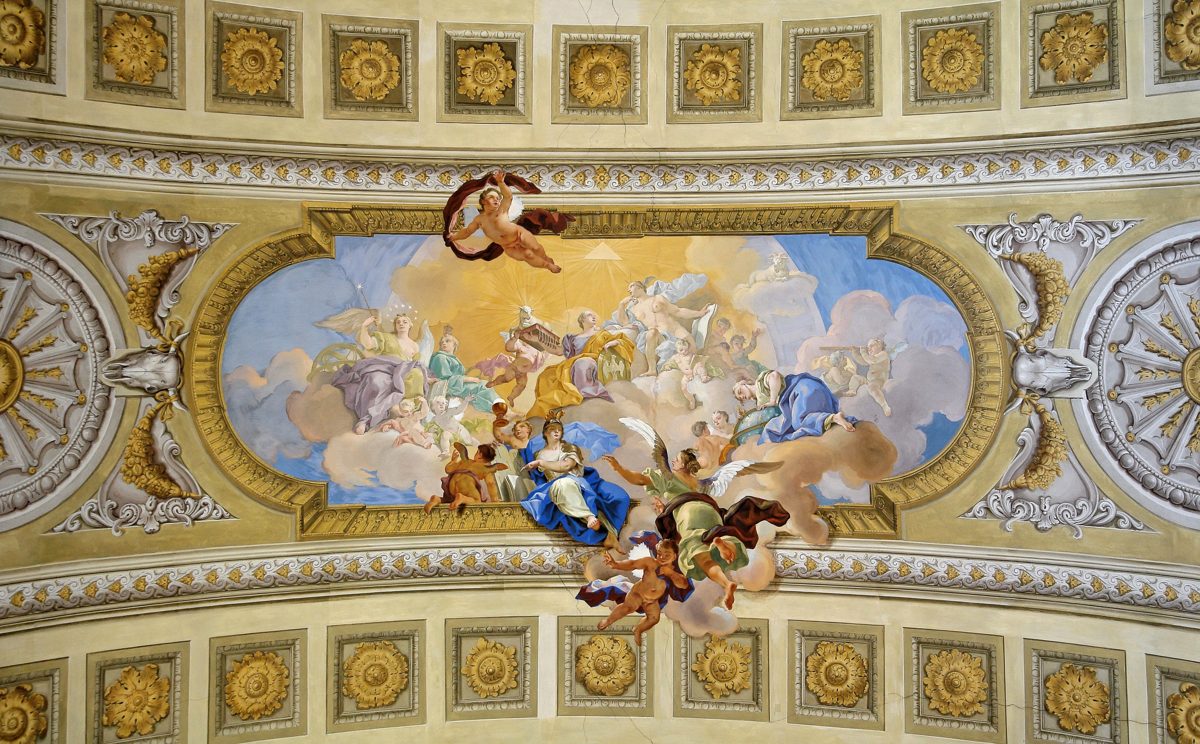
Photo: Allegory of peace and heaven - Prunksaal - Austrian National Library.jpg · Alberto Fernandez Fernandez · CC BY 2.5. Archive illustration, not a current website screenshot or a guarantee of collection holdings. Resized and recompressed without cropping; source image license retained.
