
Delpher ranks seventh for readers investigating Dutch-language newspapers and the wider historical worlds connected with them. The service brings together searchable digitized texts from newspapers, books, magazines and radio bulletins. Its newspaper material includes publications associated with several geographic settings, and it also points toward external newspaper resources. That breadth is useful, but it creates an immediate research choice: decide which type of material and which collection you are actually searching. A newspaper article, a later book and an external catalog record can all mention the same name while representing very different kinds of evidence about the past.
The newspaper filters give you ways to turn a broad question into a manageable set of pages. Delpher's own guidance describes choices including period, publication title, publication place, circulation area and type of item. Use those distinctions deliberately. The place where a paper was printed does not necessarily match the place its story discusses or the audience it hoped to reach. A search limited to one city can therefore mean different things depending on the field selected. Write the filter in your notes alongside the keyword. This makes it possible to reproduce the search and avoids treating an accidental boundary as a historical pattern.
Make filters part of your method
Language is another practical strength of the service, provided you use it carefully. A historical form of a name or a variant ending can matter, and Delpher's guidance illustrates wildcard searching with Nederland followed by an asterisk. Such a technique can broaden a query, but broadening is not always an improvement. Inspect a few results to see which extra words you introduced. If the results become less relevant, refine the question rather than assuming that a larger number is automatically a better search. The purpose is to find interpretable evidence, not to maximize a counter on the screen.
A useful exercise is to follow an advertisement across several issues of one title. Note whether the address, wording or product description changes. Those observations can help frame a question about a business or a neighborhood without requiring an unsupported claim about sales or popularity. An advertisement proves that a particular message was printed, not how many people believed it or bought the product. Compare it with a separate report or notice when possible. That second genre may support another part of the story, while also making clear that the newspaper itself contains voices with different purposes and degrees of accountability.
Keep sources and claims distinct
Keep the distinction between Delpher's own newspaper material and external newspaper banks visible in your workflow. Being directed to another resource can be helpful, but the destination may have its own interface and conditions. Likewise, searchable text should be checked against the page image before you quote an unusual name or number. Historical type and imperfect scans can produce plausible-looking transcription errors. If a result seems extraordinary, inspect the surrounding column and neighboring lines instead of copying the snippet immediately. A few minutes spent on that check can prevent a mistaken reading from becoming the foundation of an entire family-history or local-history argument.
Seventh place acknowledges a rich tool whose language and geographic distinctions reward preparation. For Dutch or connected colonial-history questions, Delpher may be a much better first choice than our American winner. Approach historically charged wording with context: an archive preserves how a publication described people, not an instruction to adopt its descriptions today. Finish by stating precisely what the page shows, what the filter excluded and which interpretation remains tentative. That combination makes a discovery useful to another reader. The archive's value is not just access to old text, but the chance to explain how a particular printed claim fits within a wider, carefully documented conversation.
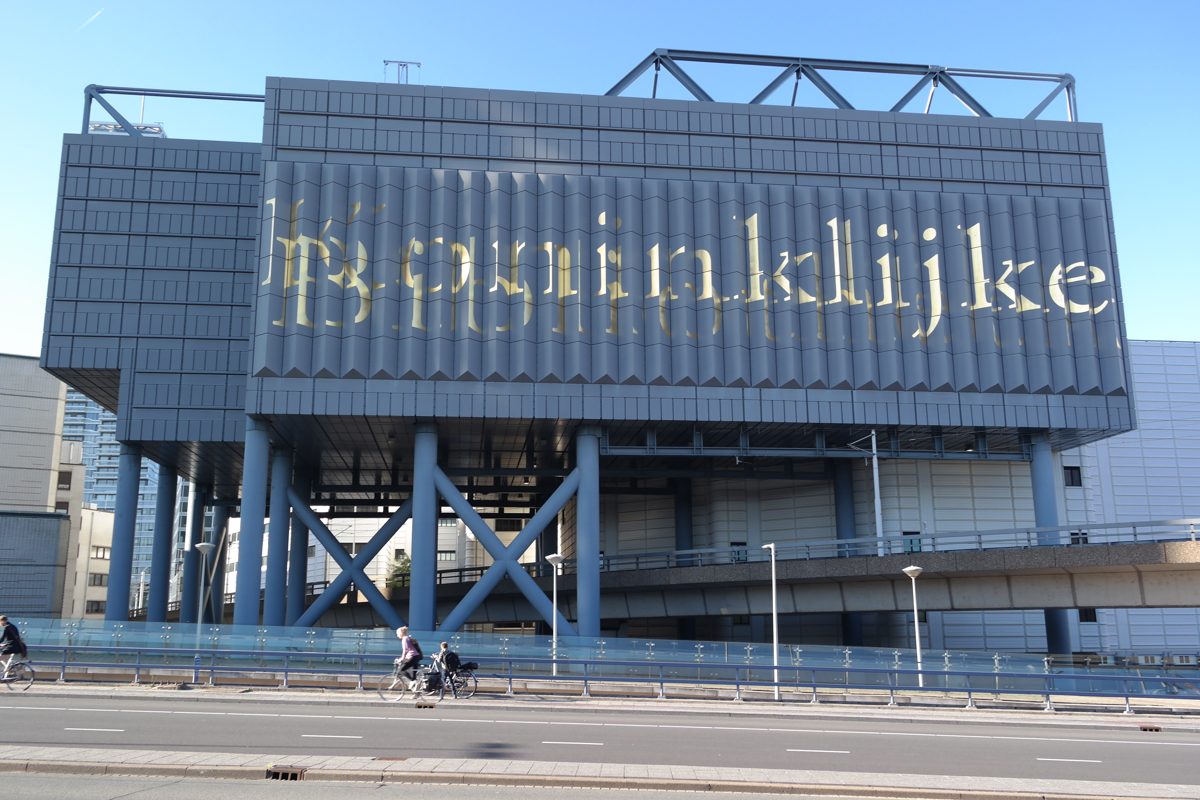
Photo: Koninklijke bibliotheek building.jpg · Steven Lek · CC BY-SA 4.0. Archive illustration, not a current website screenshot or a guarantee of collection holdings. Resized and recompressed without cropping; source image license retained.
