
Trove ranks second for making Australian historical newspapers part of a wider discovery environment while retaining a dedicated Newspapers and Gazettes route. The National Library of Australia's service allows readers to search newspaper material by words or browse toward a particular issue. That combination is important. Sometimes you know a name but not a date; sometimes you know the date of an event but cannot predict the vocabulary used in the report. A useful archive should support both approaches. Trove is especially persuasive when your question is tied to an Australian place, publication or sequence of events rather than to an undifferentiated global keyword.
Begin in the newspaper and gazette area instead of assuming every result across Trove is a newspaper article. A catalog entry for a book, an image and a digitized newspaper page can all be useful, but each needs a different interpretation. If you are following a public announcement, distinguish an official gazette notice from a newspaper's account of it. One may establish that an administrative statement was published, while another shows how a journalist or editor presented the matter to readers. The relationship between them can be informative precisely because they serve different purposes. Combining them without labels erases that distinction rather than strengthening the evidence.
Distinguish pages, genres and claims
For local research, inspect the available titles before drawing conclusions from a date range. The place where a newspaper appeared, the area it covered and the locations mentioned in its stories can differ. A regional paper may carry an item relevant to a nearby settlement whose name is absent from the title. Start with a plausible locality, then let genuine details in a promising page suggest the next search. This is more productive than widening every query immediately. It also gives you a defensible account of the research path: each new location follows a documented clue rather than a guess hidden behind an impressive-looking collection of search results.
Use the page image to test automatic text, especially for names, monetary amounts and short notices. A damaged character can change a price or a date, and a column break can attach text from one item to another. If a passage seems surprising, inspect the surrounding layout before treating it as a discovery. Historical newspapers also mix reporting with advertisements, opinion and submitted notices. Label the type of item in your notes. An advertisement can illuminate how something was marketed without proving that the promised result occurred. A report can establish that a claim circulated without independently confirming the event it describes.
A strong route into Australian history
A useful exercise is to compare coverage before and after a public event. An advance notice may show what organizers wanted readers to expect; a later report may describe what a newspaper said happened. Differences can produce good questions, but they should not be turned automatically into allegations that someone lied. Circumstances, reporting access and editorial priorities can change. Build the comparison from the dated items and state its limits. If your project grows into a systematic analysis, consult current help for the relevant search and sorting behavior instead of assuming that a method remembered from an old tutorial still behaves identically in the present interface.
Second place reflects a strong combination of dedicated newspaper access and wider contextual discovery. Trove can be the best choice for Australian research, while Chronicling America wins our general American-oriented starting comparison. The order is an editorial preference, not a claim that one country's historical press is more valuable. Choose Trove when its actual titles fit the question and be explicit about the material you searched. A successful first session may yield only one carefully identified article, but that article can supply a place, a phrase or a date that transforms the next stage of the investigation. That is genuine progress without pretending the archive is complete.
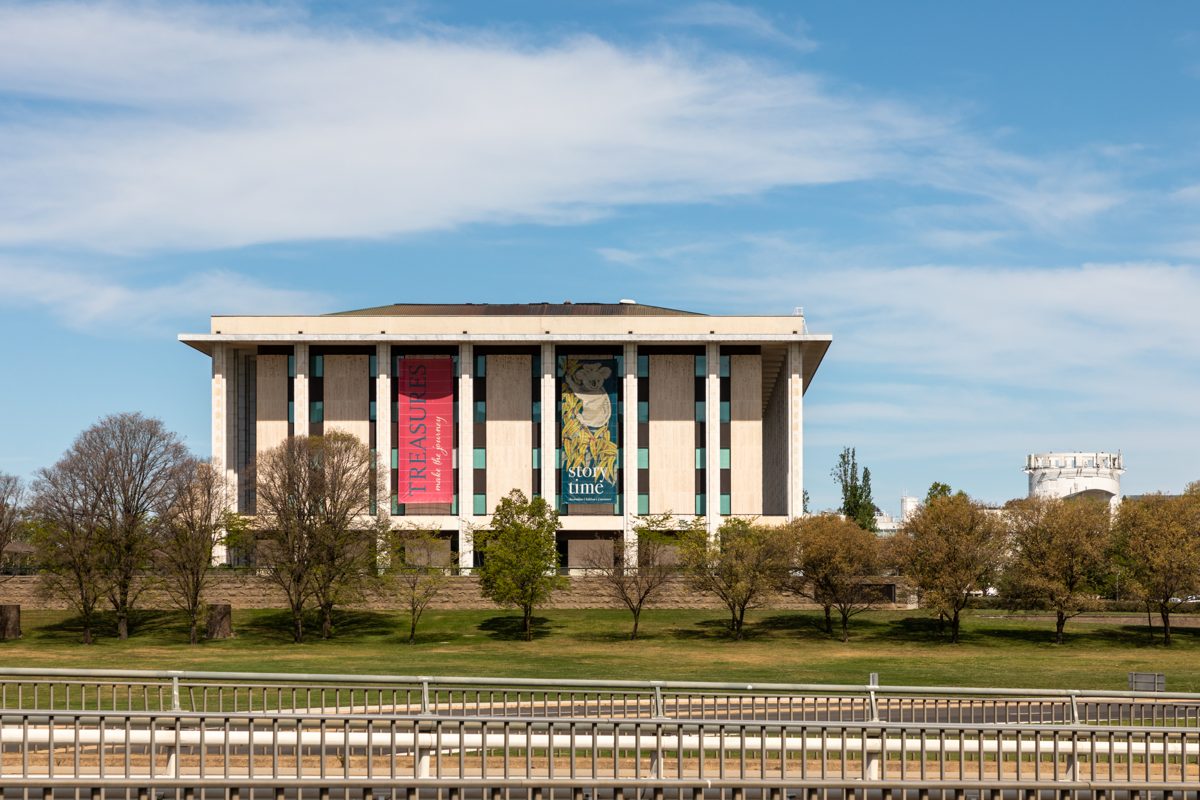
Photo: Canberra (AU), National Library of Australia -- 2019 -- 1729.jpg · Dietmar Rabich · CC BY-SA 4.0. Archive illustration, not a current website screenshot or a guarantee of collection holdings. Resized and recompressed without cropping; source image license retained.
