
Digi, the National Library of Finland's digitized-material service, takes sixth place for making the distinction between digitization and open access unusually important to understand. A current library announcement says newspapers through 1959 have been digitized, while its access guidance identifies freely available Finnish-language newspaper material through the end of 1939. Those statements describe different things and should not be collapsed into a promise that every digitized page is remotely open. Begin with the current service and the issue-level access information. A title can be present in a catalog even when the particular year you need has a different reading arrangement.
For a first project, choose a place and an event whose approximate date is already known from another source. Search the relevant newspaper material and compare the original page with the text returned by the system. This gives you a bounded way to learn how names, dates and older printing appear in the collection. It is much easier to diagnose a missed result when you have a plausible issue to inspect. Searching a very common name across a long period can create the opposite problem: many apparent matches, little context and no clear test of whether you have found the right person.
Work with language and source type
Finland's multilingual press history also requires attention to the language of a publication rather than only the modern language of your question. A locality or institution can appear under another form, and translated search words may not reproduce the vocabulary used in the period. Build alternatives from authentic examples rather than guessing endlessly. Record the original form and your explanation separately. This is especially useful if several people are collaborating in different languages. One researcher may understand a passage while another is better placed to identify a town, a publication or a historical administrative term. The notes should preserve enough detail for both to check the reasoning.
The service's broader digitized collections can help place a newspaper discovery in context, but keep the source type clear. A newspaper notice and another kind of printed item do not carry identical implications simply because one search interface can help locate both. If you are investigating a public event, ask whether the item announces it, reports it afterward or remembers it much later. These are different points in the event's documentary life. Comparing them can be productive, provided you preserve their dates and purposes. The exercise becomes less reliable when every matching phrase is placed in one undifferentiated pile of evidence.
Digitized does not always mean open
Do not use an old coverage statement as a substitute for current access information. The library's pages and announcements reflect an evolving digitization program, and special arrangements can apply to particular material or readers. This ranking concerns the freely readable historical route, not a promise about institutional authentication or access to newer years. If the issue you need is restricted, note that boundary honestly and look for an open earlier issue, another title or another kind of source. A limitation in your current reading access should not be transformed into a claim that the newspaper did not exist or contain anything relevant.
Sixth place rewards a substantial national resource while recognizing that the language and access distinctions require a little orientation. For Finnish historical research, it can be the first tool to try. The best result is a traceable passage whose title, issue date and page you can explain, not simply an extracted line that happens to resemble your search terms. A productive final note might distinguish a direct statement, a likely reading of a damaged word and a question still awaiting confirmation. Keeping those categories separate allows the archive to support careful discovery without making uncertainty disappear behind the apparent precision of a digital search result.
Source: Digi — National Library of Finland · Digi — National Library of Finland · Digi — National Library of Finland.
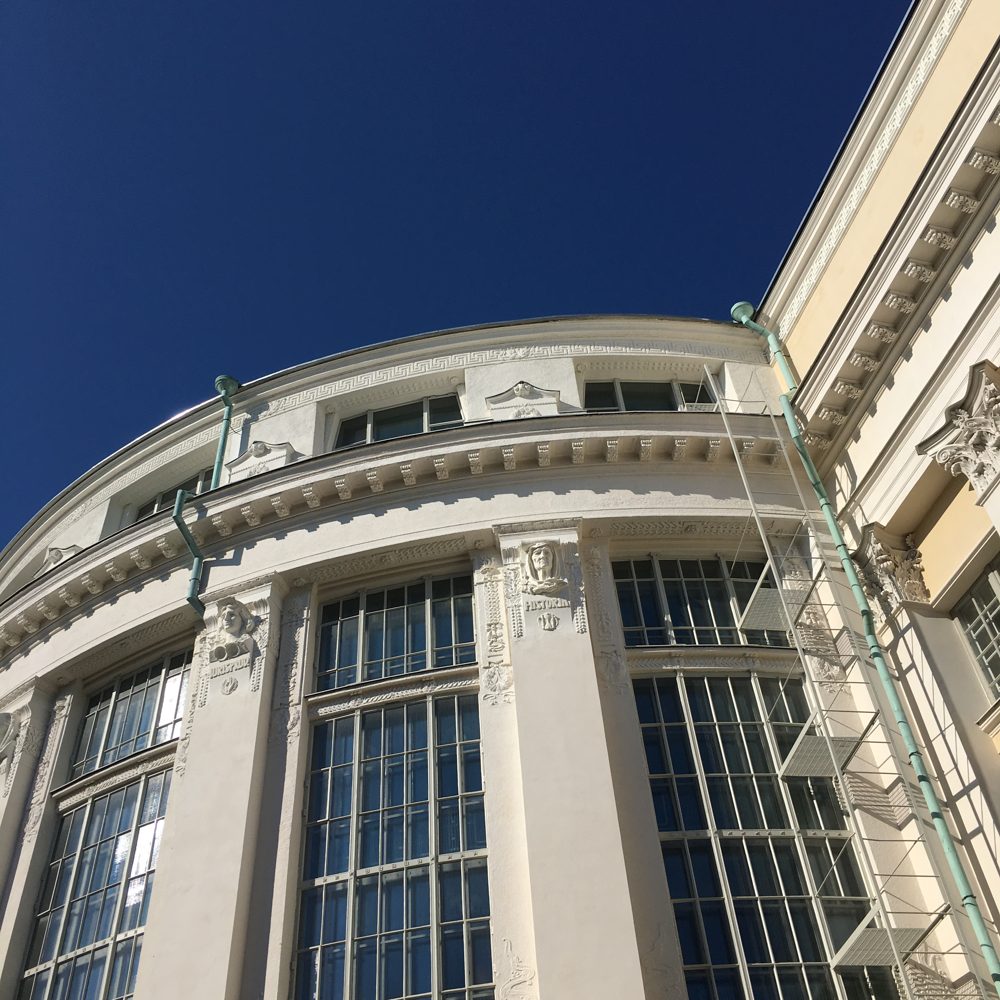
Photo: Kansalliskirjaston rotunda ulkoapäin.jpg · Eteil · CC BY-SA 4.0. Archive illustration, not a current website screenshot or a guarantee of collection holdings. Resized and recompressed without cropping; source image license retained.
